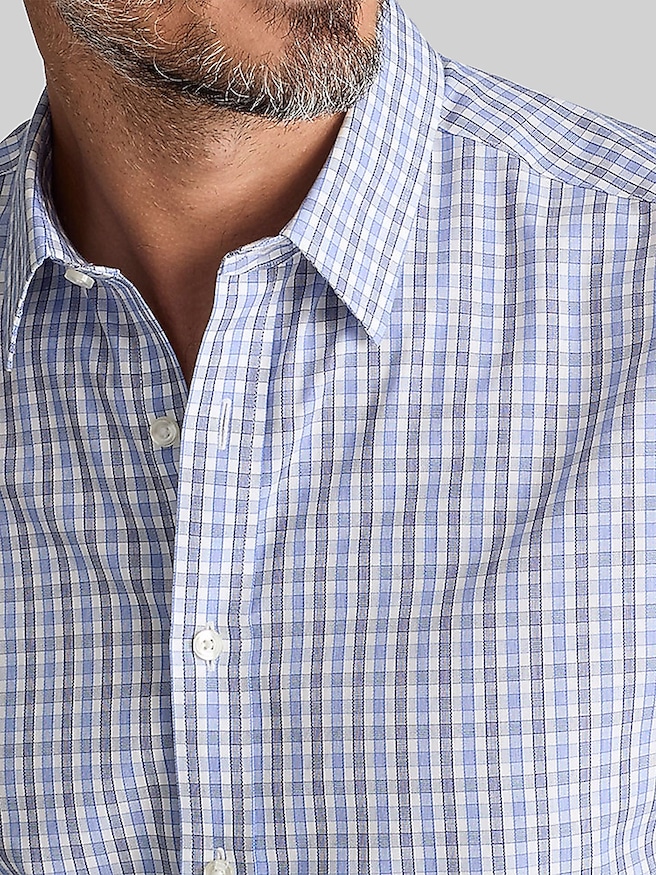
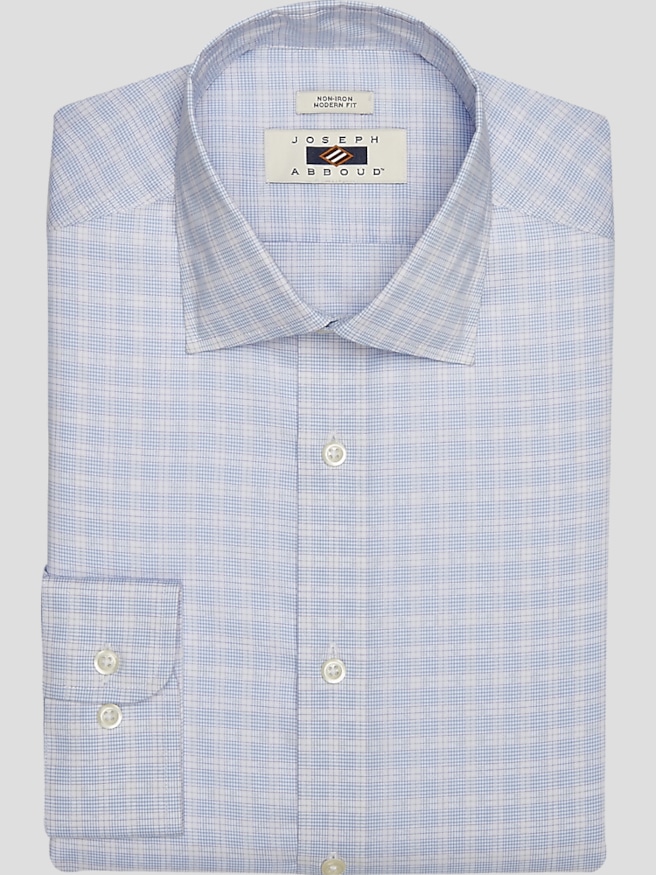
Men’s cotton plaid shirts combine a familiar crossed-line pattern with a natural fiber valued for its softness, breathability, and everyday versatility. The category spans smooth poplin, textured twill, brushed flannel, and more substantial woven fabrics, so plaid describes the design rather than a single fabric weight or feel. Poplin typically has a fine, even surface that looks neat beneath a casual jacket, while twill has a diagonal weave that gives the cloth subtle texture and often a more substantial drape. Flannel gets its soft hand from a brushed surface; it is not a separate fiber, and its exact composition depends on the shirt’s label. A shirt marked 100% cotton has an all-cotton fiber composition, while a cotton blend includes another fiber that can affect stretch, wrinkle resistance, or drying time. Cotton itself does not guarantee a wrinkle-free finish, and breathability depends partly on fabric weight and weave density. These distinctions matter as much as the plaid itself when a shirt needs to move comfortably from a desk to dinner or stand up to a full day of errands. Pattern scale also changes the impression. Small, closely spaced lines can read almost like a texture from across a room, while broad checks and strong contrasts make the shirt a more noticeable part of an outfit. Tonal plaids keep the effect restrained; combinations with several distinct colors offer more ways to coordinate with pants and layers. Some plaids are yarn-dyed, meaning the yarns receive their color before weaving, while others are printed onto the fabric. Neither method alone determines overall quality. The feel of the cloth, consistency of the stitching, and construction at frequently handled areas all contribute to everyday satisfaction. For someone who likes the ease of a button-front shirt but wants more visual interest than a solid color provides, cotton plaid offers a balance of texture, pattern, and practical wearability without requiring an elaborate outfit.
Fit determines whether a cotton plaid shirt feels comfortably put together or distracting throughout the day. A shoulder seam that sits near the natural edge of the shoulder helps the sleeves hang cleanly, while enough room across the chest keeps the front from pulling into gaps between buttons. The back should allow an easy reach toward a steering wheel or across a desk without making the entire shirt ride up. Slim, tailored, and classic fit labels describe general silhouettes, but their measurements can vary, making chest, neck, sleeve, and body dimensions more useful than the name alone. Slimmer cuts usually sit closer through the torso, while roomier cuts allow more ease for movement or an undershirt. Cotton fabric without stretch needs sufficient room built into the cut rather than relying on the material to expand. Length matters, too: a curved hem with enough coverage is easier to keep tucked, while a shorter hem can look more balanced worn loose. The right choice depends on the shirt’s proportions and the intended outfit, not simply the plaid. Collar construction adds another distinction. In traditional shirting terms, a button-down collar has points fastened to the shirt with small buttons; a button-front shirt does not necessarily have that collar style. Related men’s cotton button-down shirts share that easy-to-coordinate appeal, with collar shape and fabric helping establish how relaxed or polished the result feels. A fine-scale plaid tucked into chinos can work well in an office with a business-casual dress code, while a broader pattern worn with dark denim suits a casual meal or a day spent visiting friends. Beneath an unstructured jacket, a quieter plaid adds interest without competing with every other element. Repeating one color from the shirt in the pants or jacket creates a clear connection, while keeping the remaining pieces solid gives a bolder pattern room to stand on its own.
Care and construction have a lasting effect on how cotton plaid shirts look and feel after repeated wear. The care label is the starting point because fabric finishes, trim, and fiber blends can require distinct treatment. Cotton may shrink, particularly with high heat, so wash temperature and drying method deserve attention even when the shirt feels sturdy. When the label permits machine washing, separating similar colors and avoiding an overloaded drum can help reduce unnecessary friction and creasing. Promptly removing a shirt after washing or drying, smoothing the collar and placket, and hanging it neatly can make the next wear easier. Some cotton shirts still benefit from ironing; the appropriate setting depends on the fabric composition and any finish, rather than the plaid pattern. Brushed surfaces may need gentler handling to preserve their feel. Durability is also about more than thickness. Even seams, firmly attached buttons, secure buttonholes, and well-finished cuffs support repeated use, especially where sleeves rub against a desk or buttons are fastened each morning. Neatly aligned plaid at prominent seams or pockets can create a more considered appearance, though pattern matching is an aesthetic detail rather than proof of strength. For regular rotation, a shirt that fits comfortably and works with familiar pants is often more useful than one chosen only for a striking color combination. Cotton plaid shirts can also make thoughtful gifts for a father, brother, partner, or friend whose everyday style includes casual woven shirts. An existing shirt that fits well provides useful clues about sleeve length, body width, preferred collar, and whether the recipient usually tucks it in. Familiar colors can make the gift easier to wear immediately, while a subtle change in pattern adds variety without asking someone to adopt an entirely new look. The enduring appeal is straightforward: a comfortable cotton fabric, a plaid with character, and proportions that suit the person wearing it create a shirt that earns its place in an everyday wardrobe.