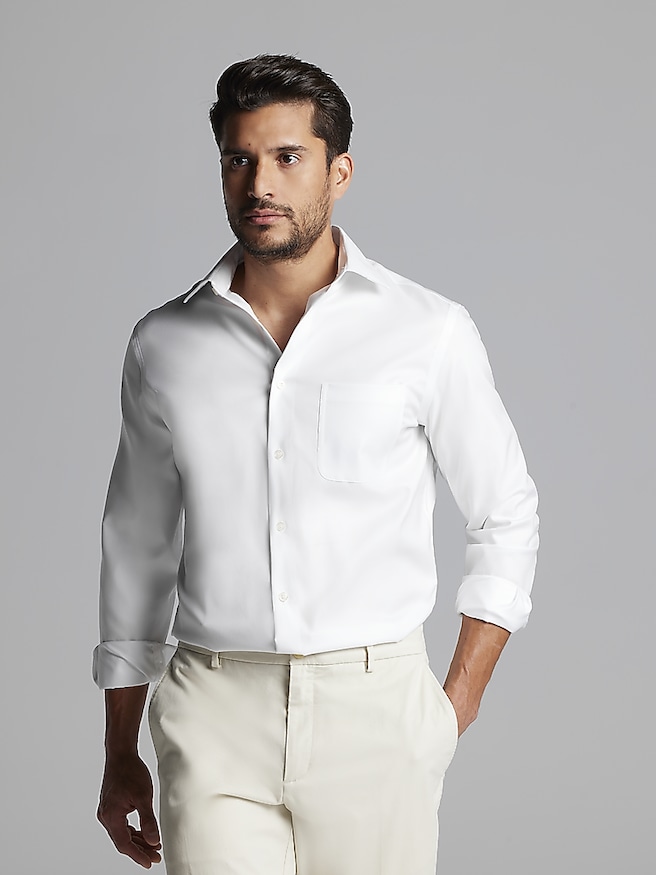
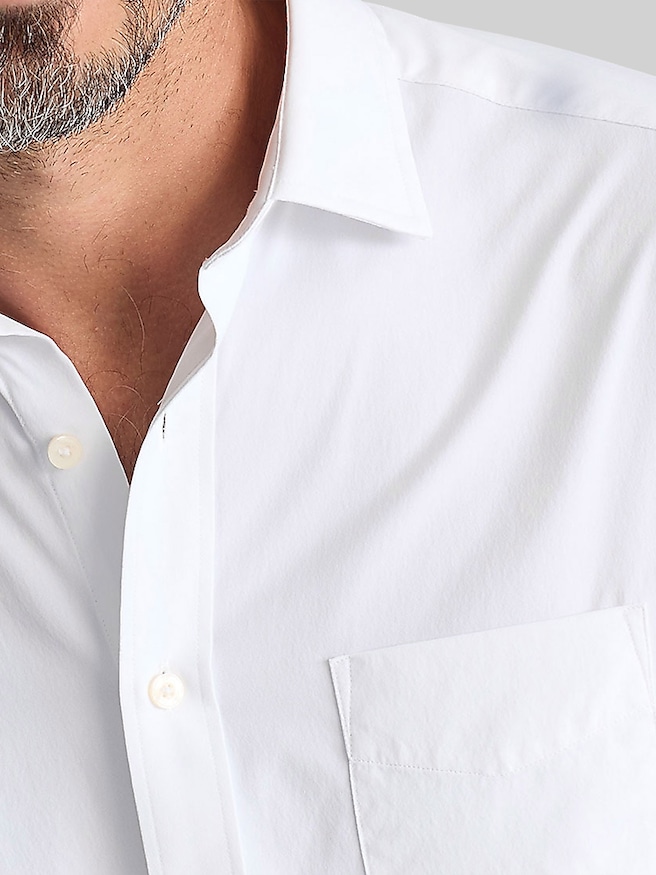
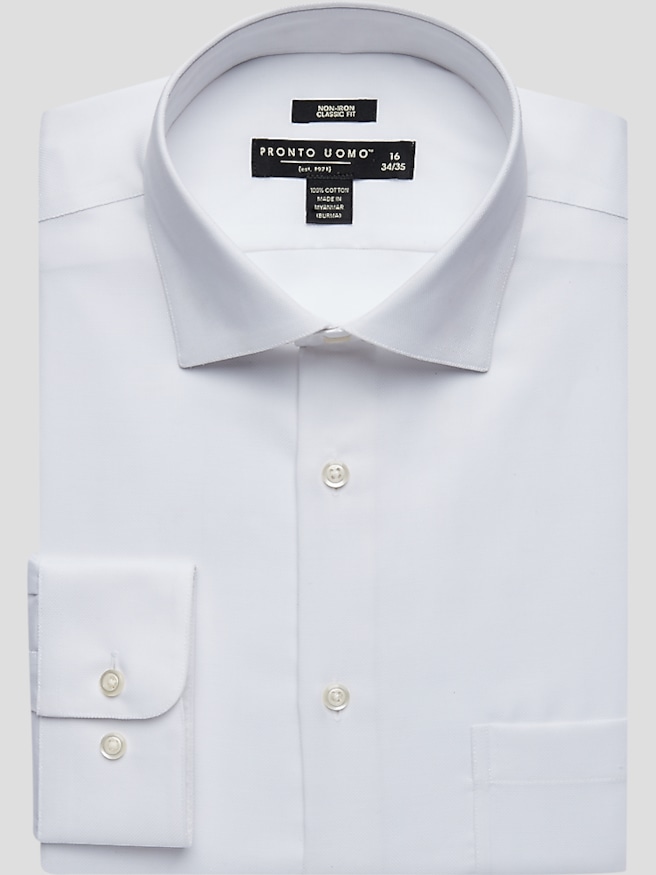
Men’s cotton button-down shirts bring a clean, familiar shape to everyday dressing, combining the softness of cotton with a collar that stays neatly in place. In the traditional sense, “button-down” refers to the small buttons securing the collar points to the shirt; “button-up” describes the front closure. That distinction gives a true button-down its characteristic balance of polished and relaxed, equally comfortable alongside chinos at the office or jeans at a neighborhood restaurant. Cotton is a natural fiber valued for its breathability, absorbency, and soft feel against the skin, but the weave has a substantial effect on how a shirt looks and wears. Oxford cloth has a lightly textured basket weave and enough body to give the collar and cuffs a substantial feel. Cotton poplin is typically smoother and more finely woven, creating a crisp surface that works well beneath a sport coat. Twill has a subtle diagonal texture and often a supple drape, although its weight and finish vary. A 100% cotton shirt emphasizes the fiber’s natural feel, while a cotton blend may include stretch or other performance characteristics, depending on its composition. Neither description alone determines quality or comfort; fabric weight, construction, and fit all contribute. Solid white and light blue offer straightforward combinations with navy trousers, gray chinos, and dark denim. Stripes add definition without requiring an elaborate outfit, while checks introduce a more casual note. For a pattern with intersecting lines and a familiar everyday character, men’s cotton plaid shirts complement denim, canvas pants, and understated layers. Small patterns tend to look quieter from a distance, while larger checks become a more noticeable part of the outfit. Across these variations, a cotton button-down serves a practical purpose: it provides more structure than a T-shirt without automatically making an outfit formal. That flexibility makes the category useful for regular office wear, casual gatherings, campus schedules, and dinners where a little polish feels appropriate.
Fit determines whether that versatility translates into a shirt that feels good through a full day. A well-fitting cotton button-down should follow the shoulders cleanly, with shoulder seams sitting close to the point where the shoulder meets the arm. The front should lie reasonably flat rather than pull into gaps between buttons, and the back should allow comfortable movement when reaching forward or sitting at a desk. Slim fits generally reduce fabric through the chest, waist, and sleeves; classic or relaxed fits usually provide more room. Those labels are not standardized, so body measurements and the intended silhouette matter more than the name alone. A close fit can look streamlined under a jacket, but enough ease through the torso helps woven cotton move comfortably, especially when it contains no stretch. For long sleeves, cuffs should sit around the wrist without slipping over the hand, and the collar should feel comfortable when fastened rather than press against the neck. Short sleeves create a more casual outline and should allow room through the upper arm without excessive flaring. Hem length also changes how a shirt functions. A longer, curved shirttail helps keep the shirt tucked during a commute or a day of meetings, while a shorter hem designed for untucked wear gives a cleaner finish over jeans or chinos. An untucked shirt should not overwhelm the pants beneath it or bunch awkwardly under a jacket. These details become especially noticeable in ordinary situations: reaching for a bag, leaning across a table, or lifting an arm to a shelf. For an office with a business-casual dress code, a tucked cotton button-down with tailored trousers and leather shoes offers a composed starting point. For a casual dinner, the same general style can work with dark jeans and loafers. A button-down collar also sits neatly beneath a crewneck sweater, with the collar points secured rather than spreading outward. Although some button-downs pair comfortably with ties and sport coats, they are generally less formal than dress shirts with spread or point collars, making the occasion’s dress expectations an important consideration.
Care and construction influence how well a cotton button-down maintains its shape, texture, and usefulness over repeated wear. Cotton can wrinkle and may shrink, particularly with excessive heat, so the care label should guide washing, drying, and ironing. Many cotton shirts can be machine washed, but finishes, trims, and fabric treatments may call for specific handling. Washing with similar colors, treating marks promptly with a fabric-appropriate method, and avoiding unnecessary heat can help preserve the shirt’s appearance. Removing a washable shirt promptly after the cycle and smoothing the placket, collar, and cuffs can reduce the amount of pressing needed. When tumble drying is permitted, following the recommended setting and avoiding overdrying may help limit shrinkage and deep creases. Ironing at the labeled setting gives a sharper result, while steaming can soften lighter wrinkles for a more relaxed finish. Easy-care or wrinkle-resistant treatments may reduce maintenance, but cotton content alone does not establish those properties, and no finish eliminates the need to follow care instructions. Durability also depends on details such as even stitching, securely attached buttons, neatly finished buttonholes, and reinforced areas that experience repeated strain. A heavier fabric is not automatically better; a smooth, lighter weave may be well suited to wearing beneath a jacket, while a more substantial oxford offers texture and body for everyday outfits. Frequent friction at cuffs, collar edges, and elbows makes those areas worth checking as a shirt ages. Rotating shirts between wears and storing them on supportive hangers can help keep them neat and ready to use. As a gift, a cotton button-down suits someone building an office wardrobe, starting a new job, or simply preferring a collared shirt for daily wear. Knowing the recipient’s measurements, usual fit, and preference for tucked or untucked styling makes the choice more personal. A familiar color or restrained pattern can be easier to incorporate than a bold design. Ultimately, the appeal is practical and enduring: comfortable fabric, a recognizable collar, and enough styling range to earn a regular place in everyday dressing.