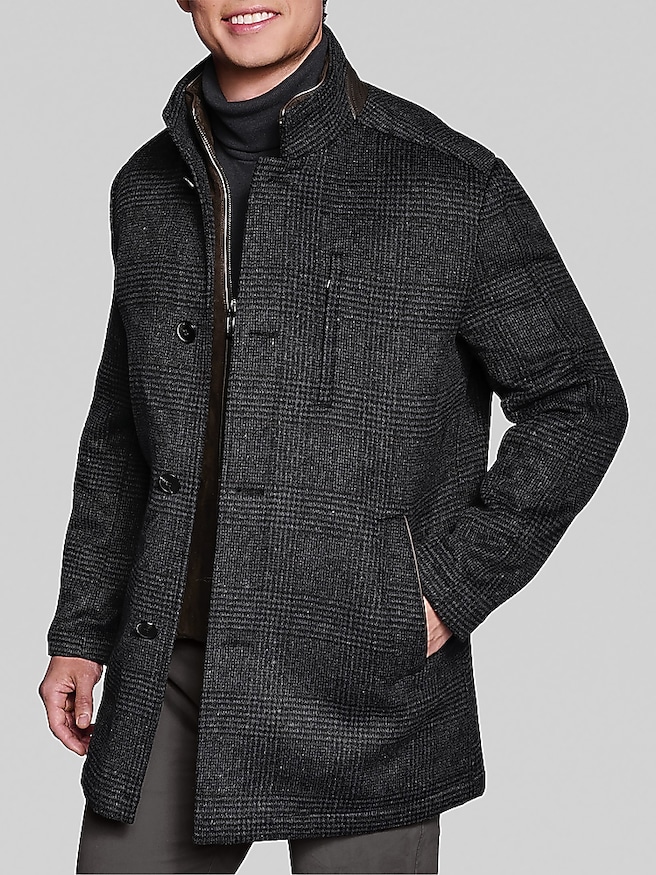
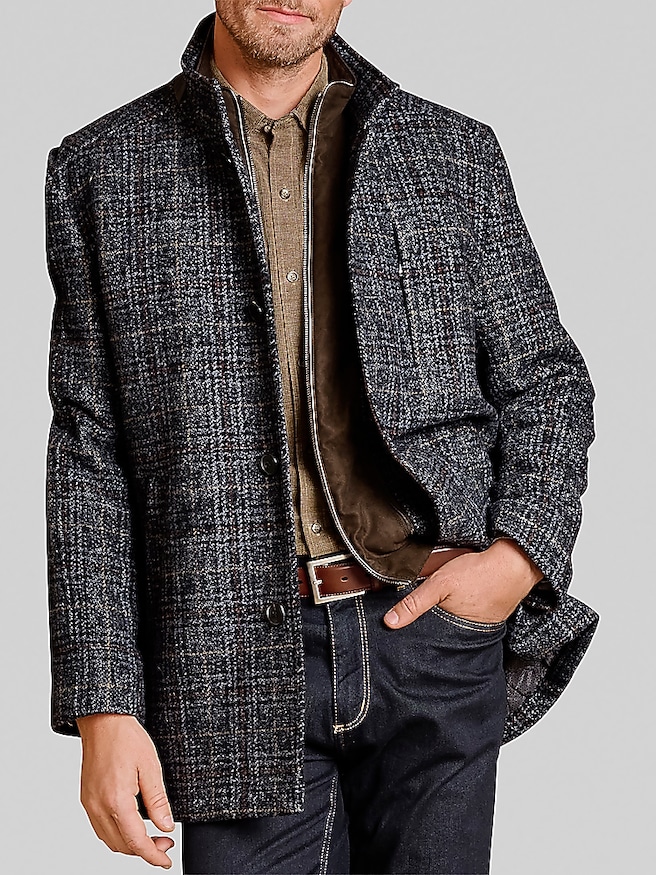
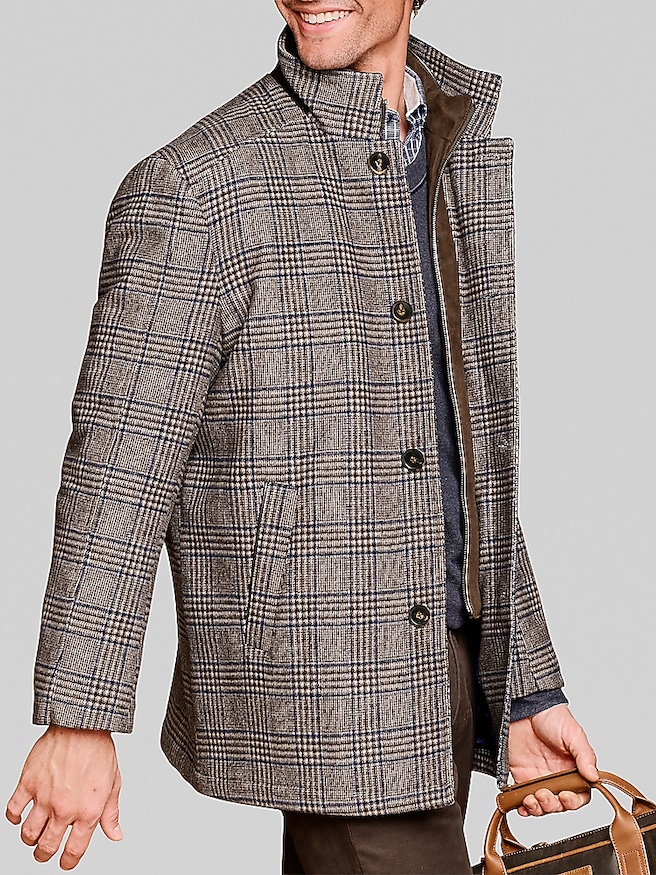
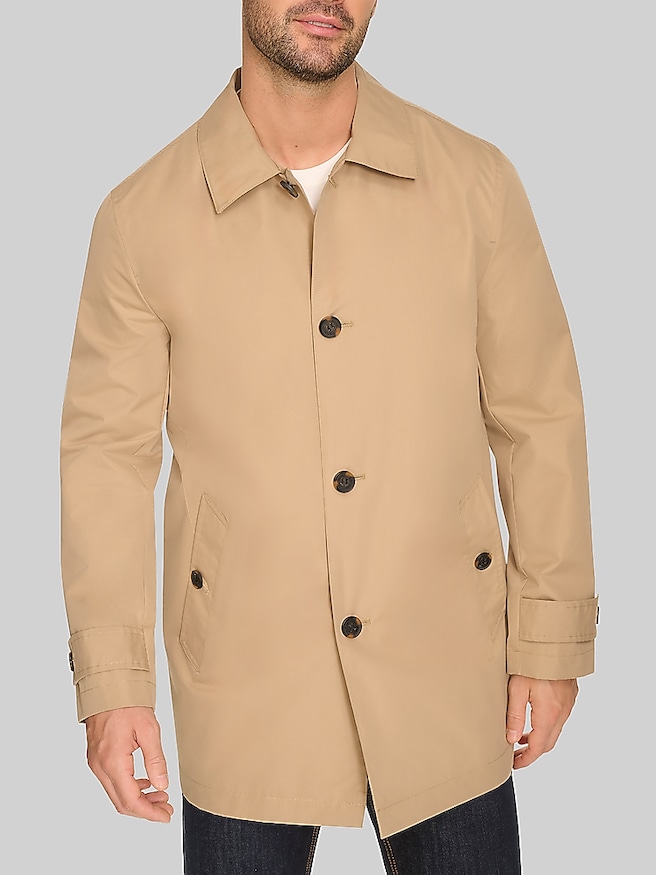
Men's coats with removable bibs combine the tailored appearance of a dress coat or car coat with an extra layer of coverage across the chest and, in many designs, around the neck. The bib is a detachable front insert that typically fastens inside the coat with zippers, buttons, or another attachment system. It creates a layered look without necessarily adding a full vest beneath the sleeves and back. With the bib attached and zipped, the coat can provide additional insulation at the front opening and help reduce drafts; with it removed, the same coat takes on a cleaner, more traditional profile. The exact coverage depends on the design, and a removable bib should not be confused with a full removable lining. Some versions include a stand collar, while others have a hooded insert or a quilted front panel. These details influence both the appearance and the way the coat feels when fastened. A raised inner collar can sit neatly inside an open outer collar, creating depth around the neckline without requiring a separate scarf for the look. A hooded bib gives a structured coat a more relaxed character, especially with a crewneck sweater, dark jeans, and leather sneakers. Without the insert, a simple coat front works naturally over a button-down shirt, tailored trousers, or a suit. That adaptability makes this category useful for days that include several settings: a walk from the parking garage, a train commute, an office meeting, and dinner afterward. The detachable construction changes the coat's styling and the coverage around the chest, but it does not automatically make the garment waterproof or suitable for severe cold. Fabric weight, lining, coat length, and the way the front closes all contribute to comfort. The result is a familiar outerwear shape with an additional detail that can feel substantial outdoors yet still look composed over dress clothing.
Materials give removable-bib coats much of their character. Wool and wool-blend shells can have a smooth, compact finish or a softer, brushed surface, with each texture bringing a slightly different feel to tailored clothing and casual layers. Wool contributes insulation, while other fibers in a blend may affect weight, strength, softness, and care requirements. A woven synthetic shell can offer a lighter feel or a more streamlined surface, although resistance to wind and moisture depends on its construction and any stated finish rather than fiber content alone. The bib may use a contrasting knit, quilted fabric, or insulated panel, adding texture where the coat opens. A smooth sleeve lining can make a noticeable difference when the coat goes over a jacket or sweater, helping layers slide into place instead of bunching around the elbows. Fit matters with both the insert attached and removed. The shoulders should sit comfortably, the front should close without pulling, and there should be enough space through the chest for the clothing normally worn underneath. A coat that feels comfortable over a T-shirt may feel restrictive over a suit jacket, particularly when the bib is fully zipped. Everyday movements reveal those differences: reaching for a train handrail, carrying a briefcase, or settling into the driver's seat should not create strong tension across the upper back. Sleeve length also needs to account for the layers beneath it without leaving excess fabric gathered at the wrists. Shorter car-coat proportions can feel convenient for driving, while longer silhouettes provide more coverage over a tailored jacket and the upper legs. Durability comes from the whole construction, including secure seams, well-supported attachment points, and closures that move smoothly without catching the lining. Because the bib is handled each time it is attached or removed, the alignment and finish of those connections matter as much as the outer fabric. A clean front, balanced collar, and comfortable range of motion keep the layered design from feeling bulky or complicated.
Within the broader category of Men's Outerwear Coats, removable-bib styles suit people who move between dressed-up and relaxed settings but prefer a consistent outer layer. An office commuter might wear the insert over a fine-gauge sweater for the trip in, then remove it when a simpler neckline works better with a suit. For a weekend lunch or an evening performance, the bib can add a casual accent without changing the coat's overall shape. Dark neutrals tend to sit easily alongside business clothing, while textured fabrics can soften the formality of polished shoes and pressed trousers. The best pairing also depends on what happens at the neck: a thick hoodie under a high bib collar can create more bulk than a lightweight knit, and a scarf needs enough room to rest comfortably rather than crowd the zipper. These coats can also make thoughtful gifts for a partner, father, brother, or another recipient who regularly wears outerwear over both work clothes and weekend layers. Familiarity with the recipient's coat size, usual layering habits, and preferred length is more useful than relying on shirt size alone. Ongoing care helps preserve both the silhouette and the detachable features. The shell and bib may have different cleaning requirements, so the care label on each component takes priority; a washable insert does not mean the entire coat can go into a washing machine. When professional cleaning is specified, identifying the removable section helps ensure both pieces receive appropriate treatment. A sturdy, shaped hanger supports the shoulders between wears, and allowing a damp coat to dry naturally away from direct heat helps protect its finish. The bib also needs to be fully dry before storage or reattachment. Keeping the insert with the coat, with fasteners protected from snagging delicate fabric, makes the detachable design easier to use. With suitable care and a fit that accommodates everyday layers, the coat's appeal remains straightforward: a tailored outline, useful chest coverage, and two distinct ways to wear the same outer layer.