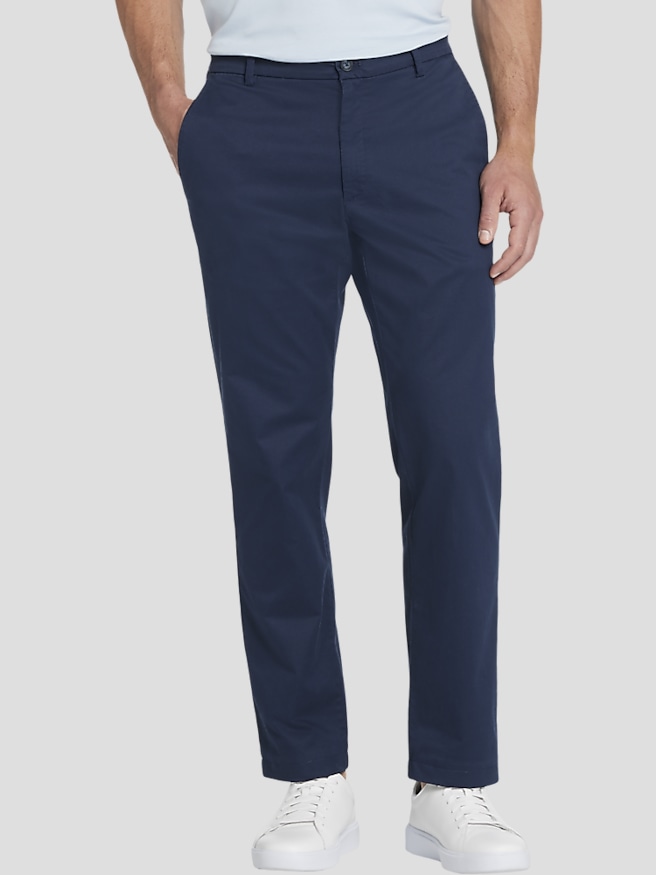
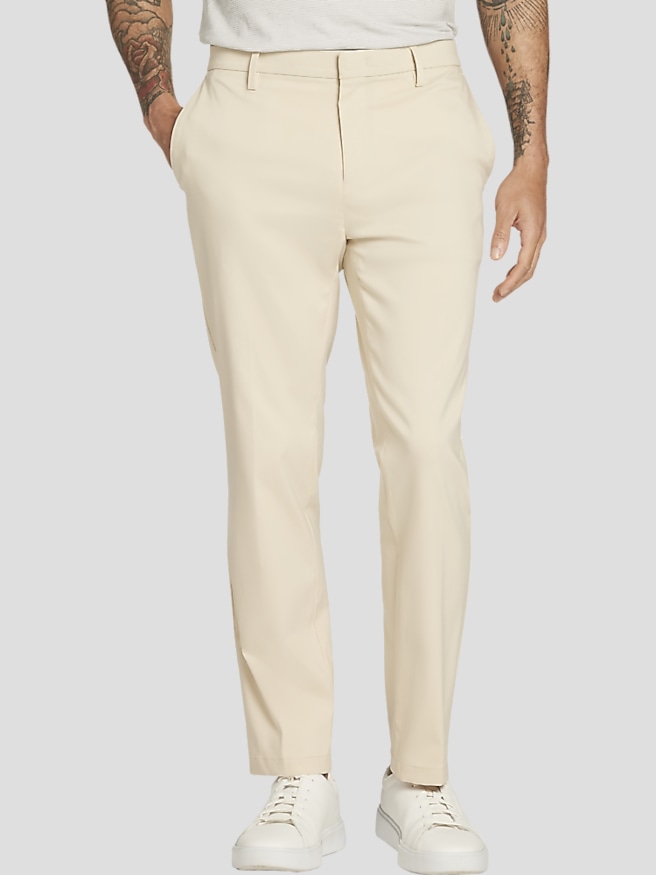
Men's chinos are cotton or cotton-blend trousers with a clean, tailored appearance that sits between casual jeans and traditional dress pants. Their defining fabric is generally a woven twill, recognizable by its subtle diagonal texture, which gives the pants structure without the rugged look of denim. That balance makes chinos a practical choice for business-casual offices, dinner reservations, campus visits, and everyday plans that call for something more polished than jeans. Chinos describe a type of pant, while khaki describes a color, so a chino wardrobe can include tan, navy, olive, gray, and black rather than just the familiar beige shade. Cotton provides a soft feel and breathability, while blends containing elastane or spandex add stretch for sitting at a desk, climbing stairs, or moving through a busy commute. Some fabrics also include synthetic fibers that can help with shape retention or wrinkle resistance, although performance depends on the particular weave and construction. A lighter fabric usually drapes more softly, while a more substantial twill can hold a defined silhouette and stand up to repeated wear. Neither fabric weight alone nor stretch content tells the whole story; the feel of the cloth, the quality of the stitching, and a comfortable fit all contribute to everyday usefulness. Common details include belt loops, slanted front pockets, and understated back pockets that keep the overall appearance neat. Flat-front styles offer a simple foundation for tucked shirts and knit tops, while pleated chinos can provide additional room and a more relaxed tailored shape. For someone building a first work wardrobe, chinos make it easy to dress appropriately without wearing a full suit. They also suit experienced professionals whose schedules move from desk work to informal meetings and dinner afterward. As a gift for a father, partner, brother, or recent graduate, chinos have practical appeal when the recipient's waist size, usual inseam, and preferred fit are known. They are useful everyday trousers, though events with a formal dress code generally call for dress pants, a suit, or other attire specified by the host.
Fit determines whether men's chino pants feel easy to wear and look balanced with the rest of an outfit. Slim-fit chinos follow the shape of the hips, thighs, and legs more closely, creating a streamlined outline without needing to feel tight. Straight-fit chinos have a more consistent leg shape, with less narrowing below the knee, and often work well for someone who prefers a classic silhouette. Athletic-taper styles typically allow additional space through the seat and thighs before narrowing toward the ankle, accommodating a fuller upper leg without leaving excess fabric at the hem. These names describe general shapes rather than standardized measurements, so the actual cut matters more than the label alone. A well-fitting waistband rests securely without needing a tightly cinched belt, and the front closure lies flat rather than pulling into horizontal wrinkles. Enough room through the seat and thigh allows comfortable sitting and walking; pockets that flare open or seams that strain can indicate that the cut is too narrow. Conversely, heavy folds beneath the seat or bunching along the legs may suggest more fabric than the wearer needs. Rise also affects comfort and proportion. A mid-rise often works naturally with tucked button-down shirts, while a higher rise can provide more coverage when seated and create a longer-looking leg line. Inseam length shapes the finished appearance just as much as waist size. A slight break, where the hem makes a small fold over the shoe, gives chinos a familiar, polished finish. A no-break hem looks cleaner at the ankle and can complement loafers or low-profile sneakers. Excess length tends to collect around the shoes and obscure the intended leg shape. Trying chinos with the footwear normally worn helps clarify where the hem should fall. For a day that includes a drive, several hours at a desk, and an evening out, a comfortable cut with a little stretch can be more useful than an extremely close fit. The best silhouette follows the body without restricting movement or relying on stretch to compensate for insufficient room.
Color and styling give chinos much of their versatility. Tan and beige create an easy contrast with navy shirts, blue oxford cloth, and brown leather footwear. Navy chinos offer a darker foundation for white button-downs, textured polos, and fine-gauge sweaters, while olive brings subtle color to outfits built around cream, gray, or blue. Charcoal has a restrained appearance that works especially well with crisp shirts and simple knitwear. The clean look of Men's Black Chinos suits tonal outfits, contrasting white shirts, and understated leather shoes without requiring elaborate styling. A knit polo tucked into chinos with loafers can look appropriate for a relaxed office, while an untucked casual shirt and minimal sneakers shift the same type of trousers toward weekend wear. A sport coat adds structure for a client lunch or restaurant outing, provided the setting does not require formal attire. Fabric texture helps these combinations feel intentional: smooth chinos provide a quiet backdrop for an oxford shirt, a textured jacket, or a softly knitted sweater. Shoes and hems should work together, with enough clearance to show the footwear rather than letting fabric pile over it. A simple belt can finish a tucked outfit, especially when its color relates to the shoes. Care is another consideration for pants worn frequently. The sewn-in care label is the most reliable source for washing, drying, and pressing instructions because cotton content, stretch fibers, dyes, and finishes vary. When machine washing is permitted, turning chinos inside out and washing with similar colors can help protect their appearance. Excessive heat may cause shrinkage or affect stretch fibers, so drying temperatures deserve attention. Promptly removing pants from the dryer, smoothing the legs, and hanging or folding them neatly can reduce stubborn creases. Pressing, when permitted, restores a tidy finish around the waistband, pockets, and hems. Rotating between pairs, addressing stains promptly, and repairing loose buttons or small seam issues can help extend useful wear. With suitable fabric, a comfortable cut, and consistent care, chinos earn their place as dependable trousers for work and everyday plans.