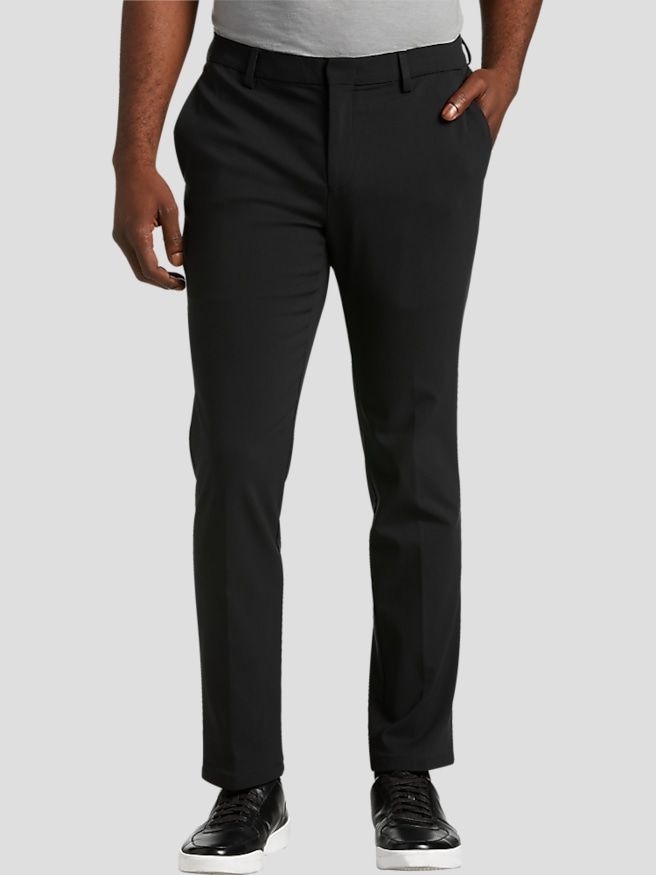
Men’s black chinos bring together the clean appearance of tailored pants and the ease of everyday cotton trousers. Typically made from twill, a fabric recognized by its subtle diagonal weave, chinos have a smoother, more understated surface than denim and a less formal character than traditional suit pants. Black gives that familiar shape a crisp finish, making it useful for office days, dinner plans, family gatherings, and occasions that call for something more polished than jeans. A pair can sit comfortably between a button-down shirt and leather loafers for a business-casual setting, then take on a more relaxed feel with a heavyweight T-shirt and simple sneakers. The appeal comes from that flexibility: the same dark foundation can support a pale blue Oxford shirt, an ivory knit polo, or a patterned shirt without competing for attention. Black also creates a continuous line with dark footwear, while lighter shoes introduce contrast and make the outfit feel more casual. For a workplace with a relaxed dress code, a tucked shirt and belt give chinos enough structure to look considered without requiring a full suit. For a restaurant reservation or an evening performance, a textured sport coat can add depth against the dark fabric. Chinos still have their own place on the dress-code spectrum; events that specifically require a suit or formal attire generally call for those garments rather than a casual substitute. Within everyday dressing, however, black makes it easy to repeat a favorite combination while changing its character through texture, proportion, and accessories. Matte cotton beside a softly textured jacket looks distinct from the same pants worn with a smooth knit shirt. For anyone building a wardrobe around Men's Chinos, black provides a practical starting point that works with both understated basics and stronger colors. Its usefulness extends across personal styles, from a straightforward shirt-and-pants uniform to outfits built around a distinctive jacket or pair of shoes.
Fabric and fit shape how men’s black chinos look and feel throughout a full day. Cotton twill offers a familiar hand and enough structure to give the leg a defined outline. Fabric weight matters: a lighter cloth may drape more softly, while a more substantial twill can hold its shape and create a firmer silhouette. Blends containing a small amount of elastane can add stretch for sitting, walking, and bending, though stretch alone does not guarantee a comfortable fit. Other fibers may influence drying time, wrinkle resistance, or the smoothness of the surface, so the fabric label gives a clearer picture than appearance alone. A dense weave, secure seams, and neatly finished pockets are useful signs of construction intended for regular wear. Areas such as the seat, inner thighs, pocket openings, and hem naturally receive repeated friction, making both fabric quality and a comfortable fit important to long-term performance. At the waist, chinos should stay in place without relying on a tightly cinched belt. Through the seat and thighs, enough room to sit comfortably helps prevent pulling across the pockets or strain along the seams. A slim fit follows the leg closely, a straight fit keeps a more consistent line, and a tapered shape narrows toward the ankle; the best match depends on body proportions and the silhouette someone prefers. A person with fuller thighs may appreciate more room above the knee even when the desired finish is narrow at the hem. Rise also changes the feel of the pants, affecting where the waistband sits and how easily a tucked shirt stays in place. Length completes the picture. A hem that lightly meets the shoe creates a neat finish, while excess fabric pooling at the ankle can obscure the shape of the leg. Footwear matters here, since a low-profile loafer and a substantial lace-up shoe meet the hem differently. Together, these details determine whether black chinos feel like an easy everyday choice or a pair that needs constant adjustment.
The deep color is part of the appeal of black chinos, and thoughtful care helps preserve it. Repeated washing, abrasion, and excessive heat can gradually change the surface and soften the shade, particularly along seams and other high-contact areas. The care label remains the starting point because fiber blends and finishes may require distinct treatment. When machine washing is permitted, turning the pants inside out, washing with similar dark colors, and using a gentle cycle with cool water can help limit unnecessary wear. Detergent intended for dark fabrics may also help maintain the appearance, while bleach can alter the color. Drying should follow the label as well; avoiding more heat than necessary helps protect both the cloth and any stretch fibers. Prompt removal from the dryer, when tumble drying is allowed, can reduce the deep creases that form when pants sit in a heap. Hanging chinos neatly after wear gives them time to air out and helps maintain their shape between cleanings. A lint brush is especially useful with black fabric, where pale fibers and pet hair tend to stand out. Before a meeting or dinner, attention to lint, a clean hem, and a smooth waistband often makes a greater visual difference than adding another accessory. These practical qualities also make men’s black chinos a thoughtful gift for someone starting a new job, refining an everyday wardrobe, or looking for a comfortable alternative to denim. Familiar waist and inseam measurements, along with a sense of the recipient’s preferred fit, make that choice more personal. For regular wear, their strength lies in being easy to combine without looking anonymous: a rolled shirt sleeve, a textured belt, or a well-kept pair of loafers can give a simple outfit individual character. With suitable fabric, balanced proportions, and consistent care, black chinos can become a dependable part of dressing for work, social plans, and the ordinary moments in between.