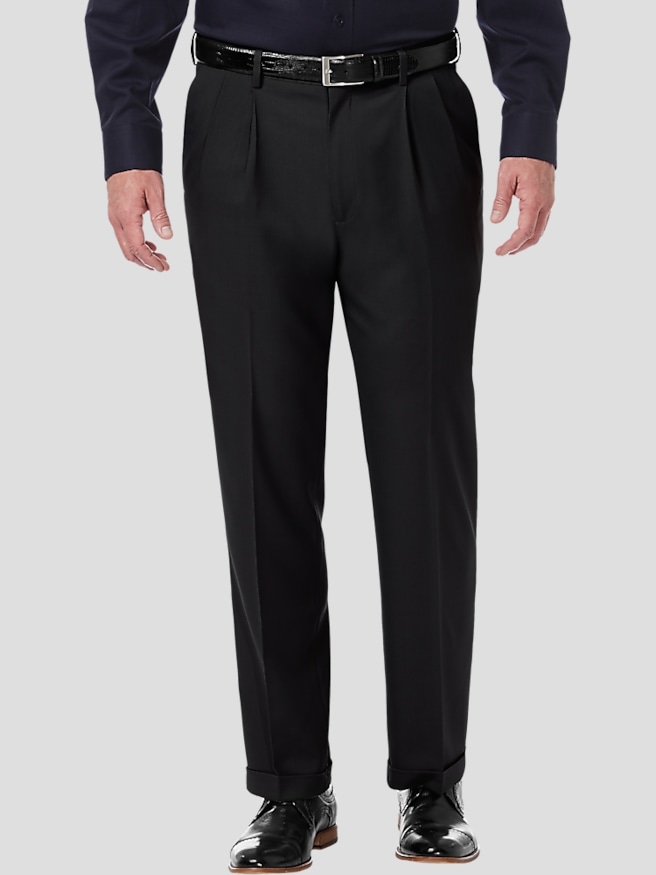
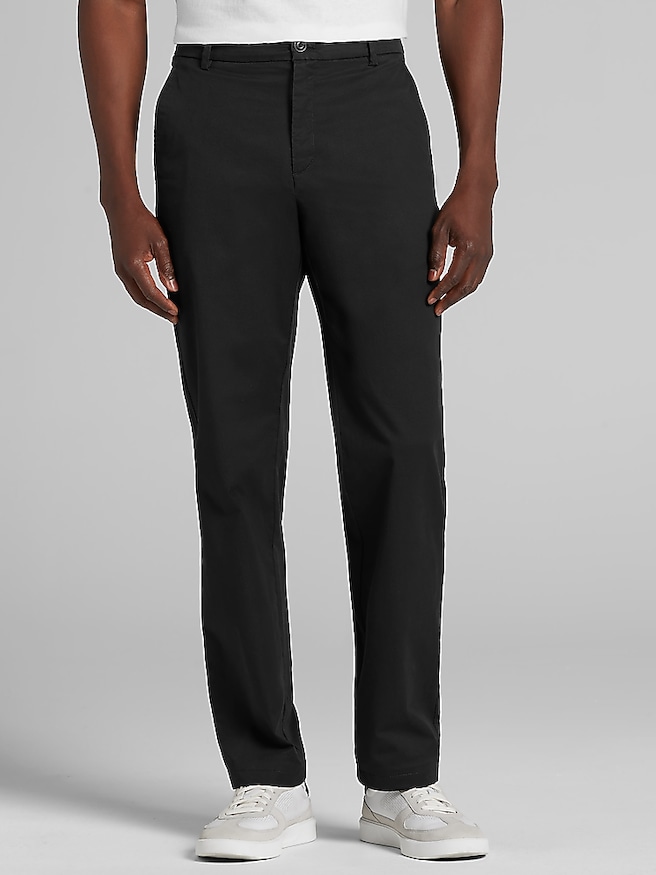
Black chinos are cotton-twill pants, often made with a blended fabric, that bridge the gap between casual jeans and dress trousers. Their dark color and clean silhouette make them useful for everyday outfits that need a little polish without the formality of a suit. Compared with denim, chino fabric typically has a finer surface and a less rugged appearance; compared with tailored dress pants, chinos generally feel more casual and are easier to pair with sneakers, polos, and untucked shirts. Black also provides a simple foundation for a range of colors, from a crisp white button-down to a gray knit polo or an olive overshirt. For a business-casual workplace, black chinos with a tucked-in shirt, leather belt, and loafers create a composed look that still feels approachable. A navy blazer can add structure without requiring a matching pair of trousers, while a textured sweater softens the contrast of an otherwise dark outfit. Outside the office, a plain T-shirt and clean sneakers keep the same pants relaxed enough for lunch, errands, or a casual gathering. The distinction comes from the details: a neat hem, a shirt that fits through the shoulders, and footwear suited to the occasion. Black chinos can also work well for dinner reservations, informal celebrations, and dates where jeans might feel too laid-back. They are not a substitute for a suit or tuxedo when an invitation calls for formal attire, but they offer considerable flexibility within casual and smart-casual dress codes. An all-black combination creates a streamlined appearance, especially when the shirt and pants have slightly contrasting textures. Lighter shirts introduce a clearer visual break, and burgundy, charcoal, or deep blue can add color without overwhelming the outfit. Black footwear gives the combination a continuous line, while brown leather shoes introduce contrast. Matching the belt to the footwear helps the finished look feel intentional rather than assembled from unrelated pieces.
Fabric and fit shape how black chinos feel throughout a full day. Traditional cotton twill has a recognizable diagonal weave and enough structure to hold a clean line, though its weight and softness vary. A lighter fabric may drape more loosely, while a more substantial twill can give the legs a defined shape. Cotton blends may include fibers that change the fabric’s resilience, wrinkle behavior, or feel, so the composition is worth considering alongside the cut. For anyone who prefers extra give when sitting, walking, or bending, black stretch chinos combine the familiar chino appearance with a fabric designed to accommodate movement. Stretch can make a commute or a long stretch at a desk more comfortable, but it should complement a suitable fit rather than compensate for pants that are too tight. A well-fitting waistband stays in place without digging in, and the front pockets lie reasonably flat instead of pulling open. Through the seat and thighs, enough room to sit comfortably matters more than achieving the narrowest possible silhouette. Slim fits generally follow the leg closely, straight fits maintain a more consistent width, and tapered cuts narrow toward the ankle. Athletic cuts often provide additional room through the seat and thighs before tapering below the knee, while relaxed shapes offer more ease throughout. These distinctions help explain why two pairs with the same waist measurement can feel quite different. The rise also changes comfort and proportion: a lower rise sits farther down the hips, while a higher rise places the waistband closer to the natural waist. Length affects the overall impression just as much as width. A slight break over the shoe reads clean and conventional, while little or no break creates a sharper outline with loafers or low-profile sneakers. Excess fabric pooling at the ankles can obscure an otherwise good fit. Pocket placement, secure buttons, tidy stitching, and smooth zipper operation are practical details that contribute to comfort and repeated use. For frequent sitting or travel, seams that do not pull across the thighs and a waistband that remains comfortable after several hours are especially valuable.
Keeping black chinos looking sharp depends on care that suits both the fabric and the depth of the color. The care label should always take priority, since cotton, stretch blends, and fabric finishes can have different requirements. When machine washing is permitted, turning the pants inside out and washing with similar dark colors can help limit visible surface wear and color transfer. Cold water and an appropriate gentle cycle are often useful for dark cotton garments, provided the label allows them. Avoiding unnecessary washing also reduces repeated agitation; a small mark may only need careful spot treatment rather than a full wash. Detergent used in the recommended amount is less likely to leave visible residue, which can be particularly noticeable on black fabric. Drying instructions deserve equal attention because high heat can affect dimensions and may shorten the useful life of stretch fibers. If air drying is appropriate, smoothing the legs and waistband before hanging can reduce creasing. If ironing is allowed, the recommended heat setting and a pressing cloth help protect the surface from unwanted shine. Storage makes a difference, too: pants hung neatly or folded along consistent lines are easier to wear without extensive pressing. Black fabric tends to show lint, so a lint brush offers a simple finishing touch before leaving home. Long-term durability depends on fabric quality, construction, fit, and treatment, not color alone. Enough room through high-movement areas helps reduce strain, and prompt attention to a loose button or opening seam can prevent a minor issue from becoming more disruptive. These practical qualities also make black chinos a thoughtful gift for someone starting an office job, refining a casual wardrobe, or seeking an alternative to everyday jeans. Waist size, inseam, preferred rise, and favorite leg shape are more useful clues than size alone. A pair that feels natural to wear can become a dependable foundation for many outfits, with the understated color leaving room for personal choices in shirts, shoes, and accessories.