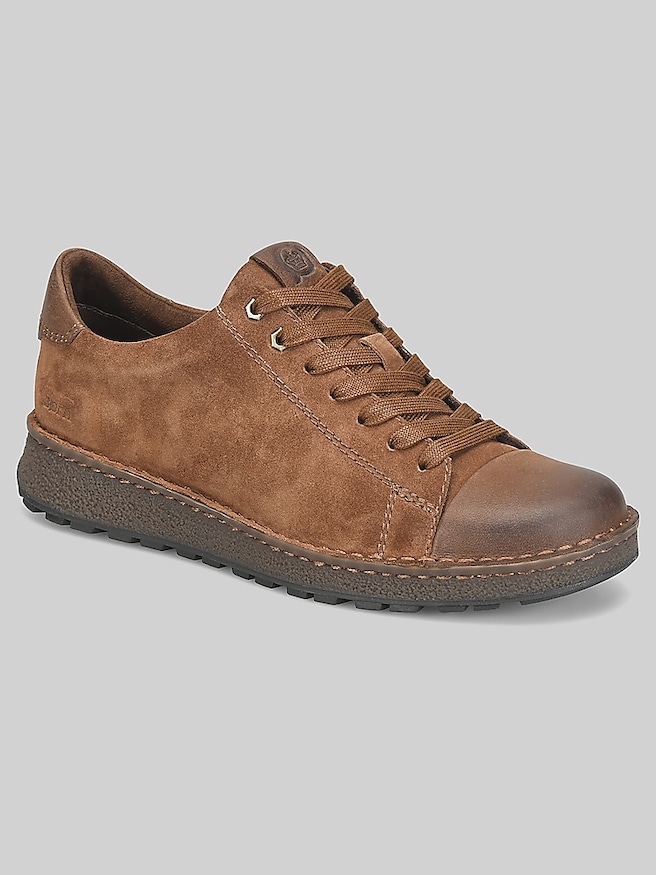
Men's brown suede shoes bring a softer finish to dressed-up clothing without losing the structure that makes an outfit feel complete. The fine nap gives the surface depth, so a rich chocolate brown can look subtly lighter along the toe or darker where the fibers change direction. That texture works especially well with fabrics that have some character of their own: the visible weave of an Oxford shirt, the twill of chinos, or the soft finish of wool trousers. Brown is a versatile choice within Men's Suede Shoes, with shades ranging from sandy tan and tobacco to deep espresso. Lighter shades create a more noticeable contrast against navy trousers or dark denim, while darker browns offer a quieter finish with charcoal, olive, cream, and medium blue. Shape matters as much as color. A slim lace-up can keep tailored trousers looking clean and deliberate, while a rounded loafer brings a more relaxed character to the same outfit. An ankle-height silhouette adds a little substance beneath straight-leg pants without requiring a heavily built shoe. For an office that favors sport coats over full suits, brown suede offers a comfortable visual middle ground between polished dress leather and casual sneakers. It also suits a dinner reservation, a graduation celebration, or a wedding where the dress code allows less formal footwear. Highly formal evening clothing generally calls for a sleeker leather finish, but many everyday tailored outfits benefit from suede's understated texture. A brown belt in a similar depth of color helps connect the look; an exact shade match is less important than keeping the overall level of formality consistent. Trouser hems deserve equal attention. A clean break or a hem that rests lightly on the shoe allows the shape and texture to remain visible instead of disappearing beneath excess fabric. The result feels considered without looking overly coordinated, whether the outfit centers on a jacket and trousers or a tucked-in shirt and dark jeans.
The appeal of suede starts with the material, but comfort and lasting wear depend on how the entire shoe is made. Suede is leather with a buffed, fibrous surface, commonly produced from the underside of a hide or a split layer. Its soft touch does not mean every pair will feel equally flexible, light, or supportive. Thickness, lining, reinforcement, and sole construction all influence how a shoe behaves on the foot. A lined upper may provide a more structured feel, while a lightly lined or unlined design can feel more supple. Neither approach is automatically better; the useful distinction is how much structure the wearer prefers and what the day involves. For someone moving between a desk, meetings, and an evening meal, a secure heel and comfortable forefoot can matter more than an especially soft first impression. Rubber outsoles often add flexibility and practical traction, though tread design and the walking surface also affect grip. Leather soles tend to create a slimmer profile and a traditional feel underfoot. Cushioning can soften each step, but it should work alongside a stable fit rather than compensate for a shoe that is too large. The toes need room to rest naturally without pressing against the front or sides, and the broadest part of the foot should align comfortably with the broadest part of the shoe. Lace-up styles offer some adjustment across the instep; slip-ons rely more heavily on the shape of the upper to hold the foot securely. Slight movement at the heel can occur with some constructions, but persistent lifting or rubbing deserves attention. Suede may relax with wear, yet a painfully tight fit should not be treated as a necessary break-in stage. Trying shoes with the socks intended for regular use gives a more useful sense of fit, especially when comparing dress socks with thicker casual pairs. Walking a few steps, turning, and standing still can reveal pressure points that are easy to miss while seated.
Keeping brown suede looking good is largely a matter of preserving its texture and addressing marks with the right tools. The nap can flatten through contact, leaving smooth-looking patches that are not necessarily permanent damage. A suede brush, used gently on a dry surface, can lift the fibers and remove loose dust. A suede eraser may help with small, dry marks, provided it is used lightly and tested first on an inconspicuous area. Heavy scrubbing can change the surface, so repeated gentle passes are preferable to force. Any protective treatment should be labeled as suitable for suede and checked against the maker's care instructions; protection can reduce staining, but it does not make the material waterproof. Spills call for blotting with a clean cloth rather than rubbing, followed by drying naturally away from direct heat. Oil-based stains and stubborn discoloration are better assessed by a professional familiar with suede than treated with improvised household cleaners. Regular leather polish and cream are not substitutes for suede care, since they can darken the material and flatten its characteristic finish. Storage also contributes to durability. Properly sized shoe trees can help maintain the shape between wears, while a breathable shoe bag protects against dust without trapping moisture. Allowing shoes to dry fully between uses helps preserve both the upper and the interior. Natural creasing and subtle shifts in shading are part of suede's character, but worn heel edges, separating soles, or persistent discomfort warrant closer attention. Brown suede footwear can also make a thoughtful gift for a partner, father, brother, or friend who enjoys tailored clothing with a relaxed edge. Matching the recipient's usual silhouette and confirming size and width are more useful than choosing solely by color. For someone who wears navy trousers to work or reaches for dark denim at dinner, a well-fitting brown suede shoe can become a familiar part of getting dressed, adding texture and polish without demanding an entirely new wardrobe.