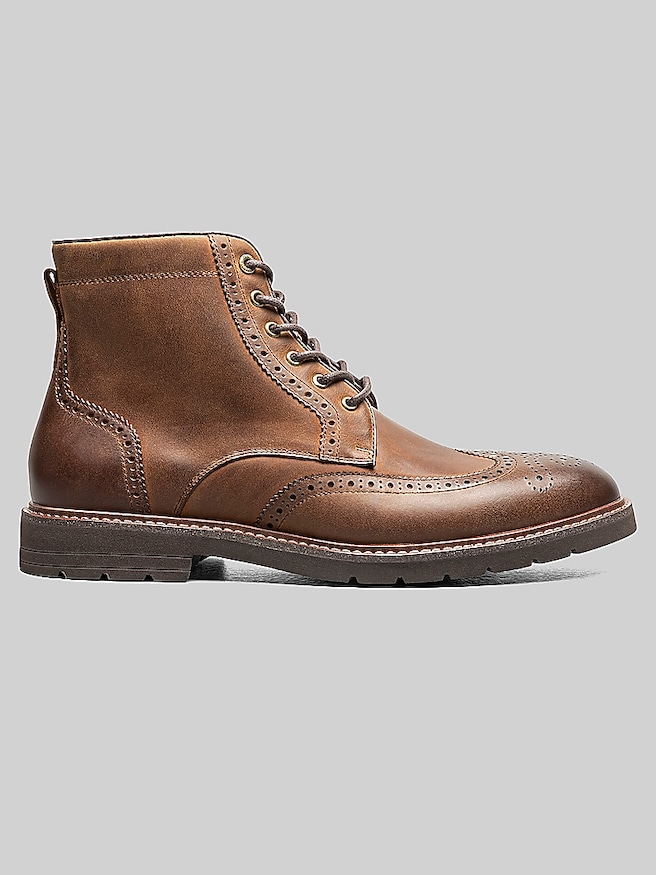
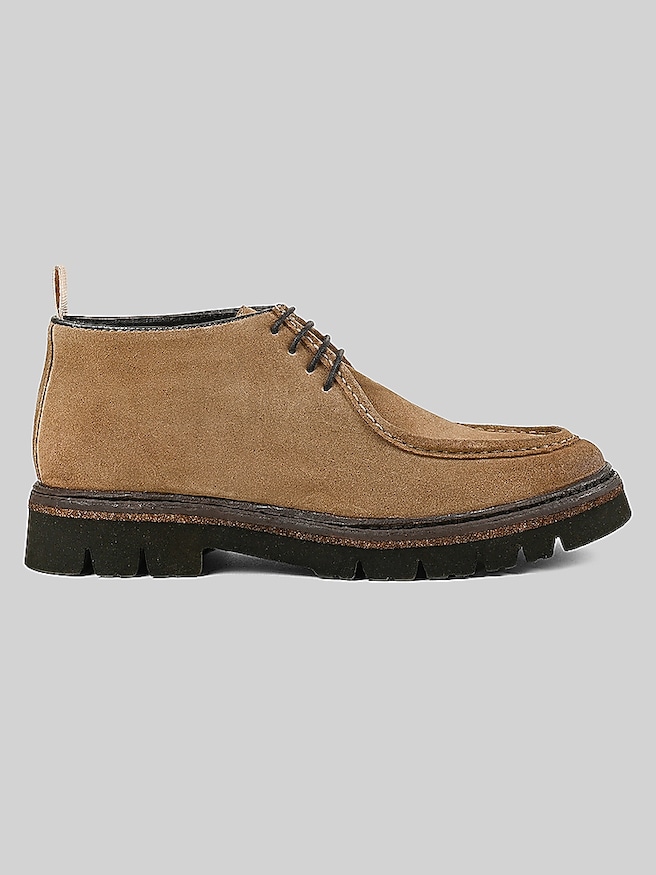
Men's brown dress boots combine the polished appearance of dress shoes with an ankle-high silhouette, making them a versatile option for tailored outfits and smart-casual dressing. Their appeal comes from that balance: a clean leather upper can look appropriate beneath suit trousers, while the same boot feels natural with chinos and a textured sport coat. Brown also offers considerable range, from lighter tan and cognac tones to deep chocolate shades that create a quieter contrast with dark clothing. Dark brown dress boots pair particularly well with navy, charcoal, and medium-gray trousers; lighter shades can give beige, olive, and blue outfits a more relaxed character. The shape and detailing matter as much as the color. A streamlined toe, restrained stitching, and a relatively slim sole generally create a dressier impression, while pronounced broguing, a rounded profile, or a substantial outsole introduce a more casual feel. Lace-up boots allow adjustment across the instep and lend structure to tailored looks. Chelsea-style boots offer a cleaner, uninterrupted profile, with elastic side panels replacing laces. Both can work well for office days, dinner reservations, client meetings, and celebrations where polished clothing is appropriate without the strict requirements of black tie. For a wedding guest wearing a navy suit, a dark brown pair with subtle detailing can complement the outfit without drawing attention away from it. With dark denim and an unstructured jacket, a slightly more textured finish feels equally considered. Trouser length helps complete the effect: a clean hem with a slight break allows the fabric to meet the boot without bunching around the ankle. Matching the general tone of a leather belt to the boots can create cohesion, though an exact color match is not necessary. The overall impression should feel coordinated rather than overly deliberate, with the boots supporting the outfit instead of competing with it.
Materials and construction shape how brown dress boots look, feel, and develop with wear. Smooth leather offers a defined surface that can be conditioned and polished, making it a practical choice for someone who favors a crisp finish with dress trousers. Full-grain leather retains the hide's natural surface and may show subtle variations in texture; its long-term appearance depends on the leather quality, finish, and care it receives. A rich brown patina can add depth over time, but heavy creasing, cracking, and dried-out surfaces are not the same as attractive character. Suede has a softer, matte appearance that brings texture to tailored separates and makes the transition to chinos or dark denim feel effortless. For outfits that benefit from that understated texture, Mens Brown Suede Boots offer a related direction with a less reflective finish. Details such as tonal stitching, a plain toe, or a discreet cap toe can keep either material looking refined. Leather linings may contribute to a comfortable interior feel, while the design of the footbed and the shape of the last influence support and fit. Underfoot, leather soles tend to create a traditional, streamlined profile; rubber soles can provide additional grip and cushioning, depending on their compound and tread. A low-profile rubber outsole can preserve a dressy appearance without the visual weight of a deeply lugged sole. Construction also affects maintenance possibilities. Many welted designs can be resoled by a skilled cobbler, while other methods may offer fewer repair options. No single construction guarantees longevity: leather quality, stitching, heel wear, and regular upkeep all matter. Even small details, such as reinforced eyelets, neatly finished seams, and a firmly attached heel, contribute to how a boot handles repeated use. For someone moving between a desk, meeting rooms, and an evening event, a balanced design can offer the desired polish without unnecessary bulk.
A good fit is essential because dress boots need to accommodate the foot while sitting comfortably around the ankle. The heel should feel secure without painful rubbing, the toes should have room to lie naturally, and the widest part of the foot should align with the widest part of the boot. A small amount of heel movement can occur in some new boots, particularly pull-on styles, but obvious slipping or forward sliding may indicate a poor fit. Leather can soften and conform with use; it should not be expected to correct pinched toes, pressure across the instep, or an unsuitable width. Trying boots with the socks intended for everyday wear gives a more useful sense of fit than relying on size alone, since sizing can vary across shapes and constructions. Lace-up styles provide more control over pressure across the top of the foot, while pull-on styles depend more heavily on a close match between the boot's shape and the wearer's foot. Comfort also depends on the occasion: a pair that feels fine during a brief fitting may feel different after several hours standing at a reception or walking between appointments. Care helps preserve both comfort and appearance. Smooth leather benefits from regular removal of surface dust, occasional conditioning with a suitable product, and polish when a more finished look is desired. Any treatment should be tested on a discreet area first, particularly on lighter brown leather, where color changes are easier to notice. Suede needs its own approach, usually involving a suede brush and material-appropriate cleaning products rather than conventional shoe cream. Allowing boots to rest between wears, storing them away from direct heat, and using properly sized shoe trees can help manage interior moisture and maintain their shape. Attention to worn heel edges and loose stitching can also prevent minor issues from becoming larger repairs. For a graduation gift, a career milestone, or a personal wardrobe update, brown dress boots are most useful when their fit, finish, and level of formality suit the wearer's actual routine.