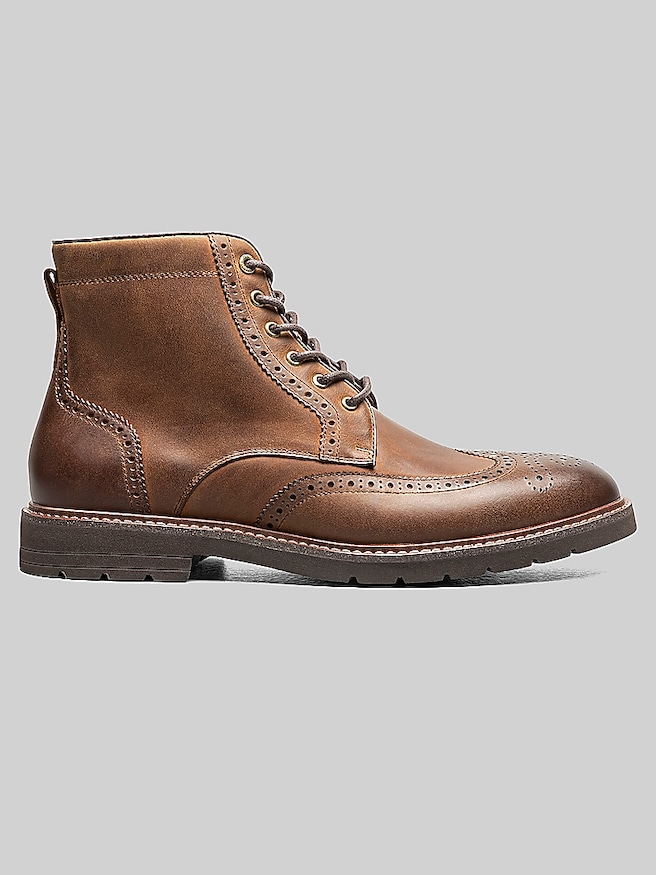
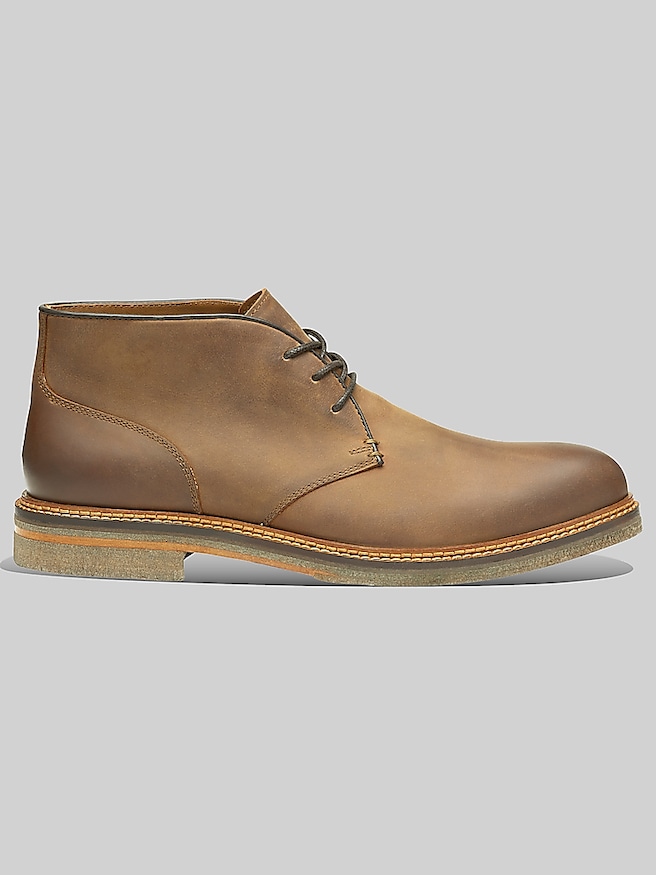
Brown dress boots for men combine the clean lines of dress footwear with an ankle-height profile, making them a versatile choice for business attire, tailored separates, and smart-casual outfits. Their character comes from a combination of color, shape, texture, and construction: a dark chocolate leather boot with a slim sole reads differently from a light tan suede pair with a rounded toe. Deeper browns create a restrained foundation for navy suits, charcoal trousers, and darker denim, while medium brown and cognac tones bring more contrast to gray flannel, olive chinos, and textured jackets. Smooth leather, subtle stitching, and a streamlined toe generally give a boot a dressier appearance. Brogue detailing, heavier soles, and visibly grained leather tend to make the same basic silhouette feel more relaxed. Lace-up boots offer an adjustable fit and a structured look beneath tailored trousers, while Chelsea styles keep the upper visually simple with elastic side panels rather than laces. For a shorter profile with an understated lace-up design, Brown Chukka Boots for Men offer another way to connect dress trousers and casual clothing. The most natural pairing leaves enough room at the trouser opening for the fabric to fall over the boot shaft without catching or bunching. A narrow opening can work with a slim boot, but a bulky shaft beneath closely tapered pants may interrupt the line of the outfit. A brown leather belt in a similar depth of color helps tie everything together without requiring an exact match. These boots suit office days, dinner reservations, presentations, and wedding-guest outfits when the dress code allows them. They are less suited to strict black-tie dress codes, where traditional formal shoes remain the clearer choice. For someone who moves between a meeting room and an informal evening out, the appeal is footwear that looks intentional in both settings without making either outfit feel overdone.
Materials have a noticeable effect on how brown dress boots look, feel, and develop with wear. Full-grain leather retains its natural surface and can gain depth and patina over time, although its performance still depends on the leather quality, finish, and construction. Top-grain leather has been refined at the surface and can offer a smoother, more uniform appearance. Neither label alone tells the entire story; supple uppers, secure stitching, comfortable linings, and a well-finished interior all contribute to the experience of wearing the boot. Suede brings a softer, matte texture that works particularly well with brushed fabrics, knitwear, and less structured tailoring. Its nap gives brown shades dimension, but it requires a suede-specific brush and treatment rather than the creams used on smooth leather. Leather linings can help manage moisture from everyday wear, while padding around the footbed or ankle may soften contact points. The amount and placement of cushioning matter more than a thick appearance alone, especially when a boot needs to remain sleek enough for dress trousers. Underfoot, leather soles offer a traditional profile and a close connection to the ground, while rubber soles can provide added grip and cushioning, depending on their design. Low-profile rubber is often a useful middle ground for someone who wants a tailored appearance but spends part of the day walking between appointments. Subtle tread usually looks more formal than a deep lug pattern. Construction matters for long-term use as well: some stitched or welted boots can be resoled by a qualified cobbler, whereas repair options for cemented construction may be more limited. Resoling suitability depends on the individual boot, not simply its appearance. Clean seams, a firmly attached heel, and an upper that flexes naturally at the forefoot are practical details that support everyday wear. Brown coloring also reveals character gradually, with creases and tonal variation becoming part of the finish rather than something every pair must hide.
Fit is what turns an appealing dress boot into a pair that earns regular use. The heel should feel secure without being painfully tight, the ball of the foot should sit near the boot’s natural flex point, and the toes should have room to move without sliding forward. A slightly elongated toe shape can create a sleek appearance, but extra space beyond the toes does not necessarily mean the boot is too large if the widest part of the foot is properly positioned. Width and instep volume deserve as much attention as length. Tightness across the forefoot or pressure over the top of the foot is not something to dismiss as a guaranteed break-in issue; leather may soften, but an unsuitable shape is unlikely to become comfortable through wear alone. Trying boots with the type of socks intended for regular use gives a more useful sense of fit than switching between very thin and heavily cushioned pairs. Lace-up styles allow adjustment across the instep, while pull-on designs depend more heavily on the relationship between the foot, heel, and shaft. Everyday care helps preserve both appearance and durability. Dust and surface dirt can be removed with a soft brush or cloth before they settle into creases. Smooth leather benefits from occasional conditioning with a suitable product, followed by cream or polish when the finish needs attention; testing on an inconspicuous area helps avoid unwanted color changes. Suede needs its own tools, and soaking either material is best avoided. Allowing boots to dry naturally away from direct heat, rotating between pairs, and using properly sized shoe trees can help maintain their shape. For gifting, brown dress boots make sense for someone building a professional wardrobe or refining an established one, especially when their size, preferred width, and usual clothing style are known. A clean silhouette and a brown shade that complements the recipient’s existing trousers make the gift easier to incorporate into daily dressing.