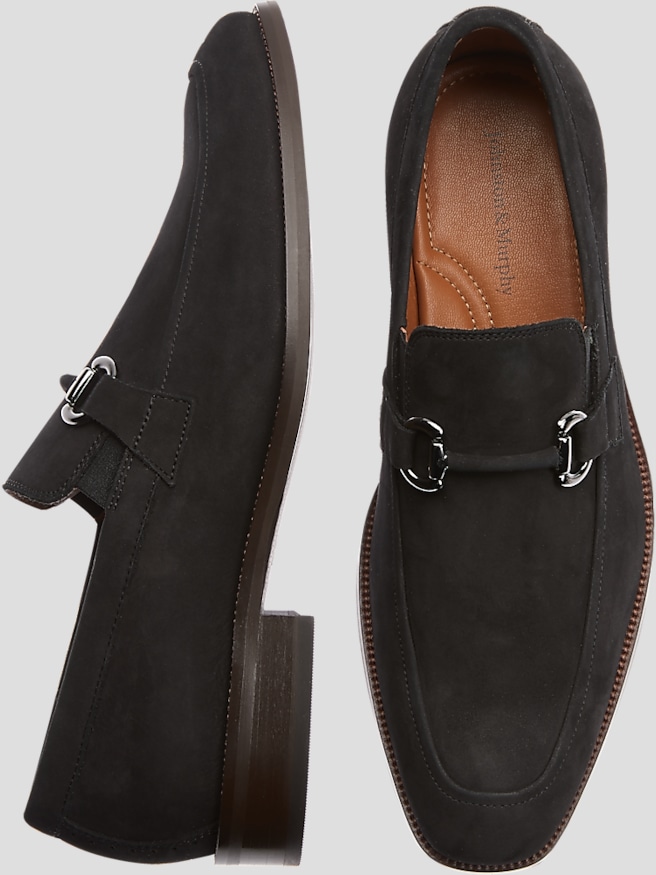
Men's blue suede loafers are slip-on shoes that combine a soft, matte leather surface with shades ranging from light blue to deep navy. Their appeal sits between a dress shoe and a casual slip-on: shaped enough to complement tailored trousers, but relaxed enough to wear with chinos or clean, dark denim. Suede has a fine, raised nap that catches light differently as the fibers move, giving blue more depth than a flat fabric or polished finish. A navy pair can feel understated beside charcoal trousers and a light blue shirt, while a brighter blue brings more contrast to stone chinos and a simple knit polo. The shade matters, but so does the silhouette. A slim toe and low-profile sole generally create a dressier impression; a rounded toe, visible stitching, or a thicker sole can make the same color feel more casual. Penny-style details add a familiar strap across the upper, tassels introduce movement, and an unadorned vamp keeps the emphasis on the suede itself. These design differences help explain why blue suede loafers can work for a relaxed office, a dinner reservation, or a daytime celebration without looking identical in every setting. For an outfit with a navy jacket, gray or tan trousers create enough separation to keep the shoes from blending into the rest of the look. Blue does not need to match every accessory exactly; brown leather accents, muted patterns, and neutral layers can sit comfortably alongside it. Compared with smooth leather styles in the broader Men's Blue Loafers category, suede usually reads as less formal because its surface absorbs rather than reflects much of the light. That distinction makes it especially useful when a polished outfit needs a softer finish, though traditional black-tie dress codes generally call for more formal footwear.
Fit is particularly important with loafers because there are no laces to adjust the hold across the foot. A well-fitting pair should feel secure through the heel and instep without squeezing the toes or pressing sharply across the top of the foot. There should be room for the toes to lie naturally, with no need to curl them to keep the shoe in place. Suede can soften with wear, but that does not make an overly tight shoe the right size; the sole will not become longer, and pressure at the toes is not a reliable sign of a useful break-in period. Likewise, a heel that repeatedly lifts far out of the shoe can create rubbing rather than comfort. Foot shape matters as much as the marked size, especially for someone with a high instep, a narrow heel, or a wider forefoot. The upper, lining, footbed, and sole all contribute to how a loafer feels over several hours. Leather linings may soften and conform with wear, while textile linings and cushioning vary in feel according to their construction. A flexible forefoot can make movement feel natural, but the shoe should still feel stable under the heel. Sole materials also affect intended use: leather soles have a traditional appearance, while many rubber soles provide added traction, depending on their tread and compound. Neither appearance nor softness alone establishes all-day walking comfort. For a commute followed by hours at a desk, secure fit and support matter more than how plush a shoe feels for the first minute. Socks should be part of the fit assessment, too. Fine dress socks can carry blue suede loafers into a tailored outfit, while low-cut, no-show socks keep a visible ankle line without leaving the foot directly against the lining. A clean trouser break allows the shape of the loafer to remain visible rather than disappearing beneath excess fabric.
The texture that gives blue suede loafers their character also calls for care that differs from polishing smooth leather. Suede should not be treated with ordinary shoe cream or wax unless the manufacturer's instructions specifically allow it, since those products can flatten the nap and alter the color. Routine care usually centers on a suede brush used gently on dry shoes to lift the fibers and remove loose surface dirt. Heavy scrubbing can leave an uneven appearance, so a light touch is more useful than force. A suede eraser may help with certain dry marks, but any treatment should be tested in an inconspicuous area first. Protective sprays must be suitable for suede and compatible with the shoe's color; they can help reduce absorption, not make the material waterproof or stainproof. If the surface becomes damp, blotting with a clean cloth and allowing the shoes to dry naturally is preferable to rubbing or placing them near direct heat. Deep stains, oil marks, and noticeable color changes are better assessed by a cleaner experienced with suede. Between wears, time to air out helps moisture escape from the lining, and properly sized shoe trees can support the shape without stretching the upper. Storage away from direct sunlight helps limit fading, while breathable protection keeps dust from settling into the nap. Durability depends on the quality of the leather, stitching, sole, and overall construction as well as how the shoes are worn and maintained. Someone who spends much of the day on abrasive surfaces may place different demands on the outsole than someone wearing loafers mainly indoors for meetings and dinners. As a gift, blue suede loafers can suit a recipient who already enjoys tailored casual clothing and wants an alternative to brown footwear. Knowing that person's usual size, foot width, preferred sock thickness, and taste in toe shape makes the choice more personal. The strongest match is a pair that fits comfortably and belongs naturally with the trousers, shirts, and jackets already worn most often.