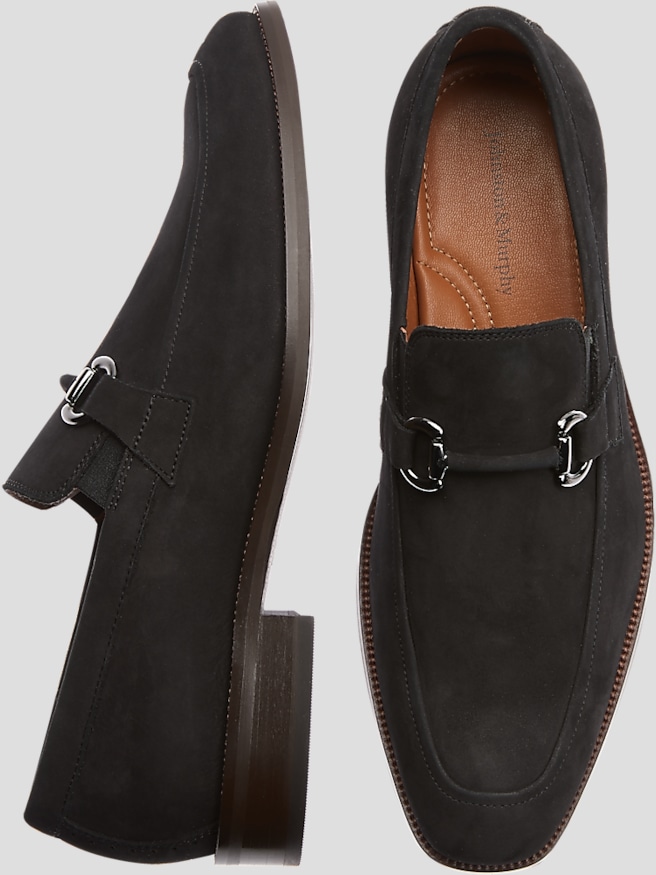
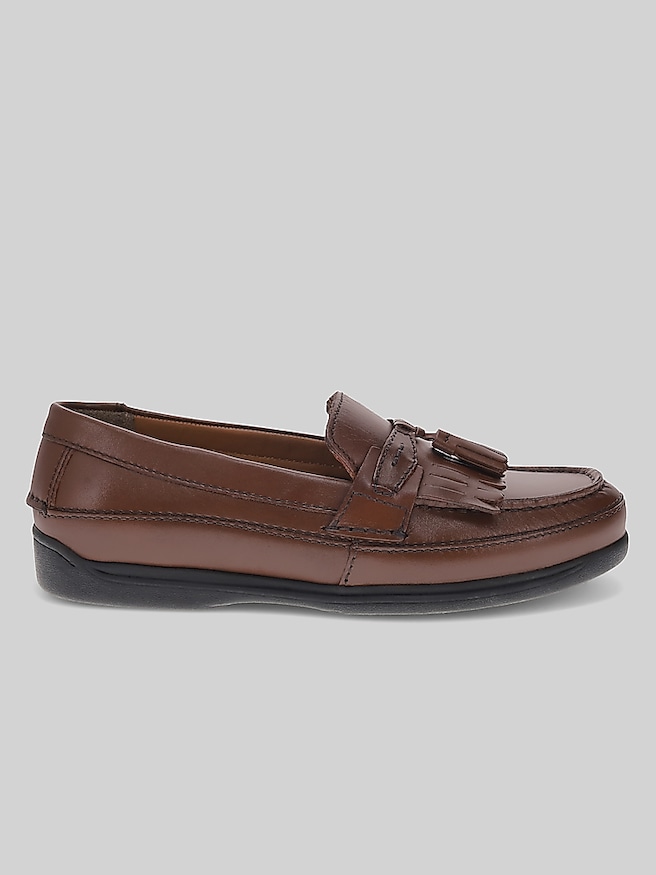
Men's brown suede loafers bring soft texture and a relaxed sense of polish to everyday dressing. The brushed surface gives brown a depth that smooth leather does not quite replicate: a chocolate shade can look rich and understated, while tobacco and lighter tan tones show more of the suede's natural shading. That character makes these slip-on shoes particularly useful with clothing that falls between tailored and casual. Navy trousers, a pale blue button-down, and brown suede loafers create an easy combination for an office with a business-casual dress code. With straight-leg dark denim and a knit polo, the same footwear feels comfortable at a dinner reservation or a family gathering without looking overly dressed. The loafer's shape influences that balance as much as its color. A streamlined profile with a neat apron seam tends to sit comfortably alongside tailored trousers, while a rounder toe and a more substantial sole lend themselves to chinos and denim. Penny straps, tassels, and metal accents each add their own character, though a simple upper can be just as distinctive when the suede has an even, velvety finish. Brown also works well across a broad range of clothing colors, including cream, olive, gray, and muted blue. A belt in a related brown tone helps an outfit feel connected without requiring an exact match between two materials with very different surfaces. Trouser length deserves some attention, too: a clean hem with little excess fabric keeps the loafer visible and prevents a low-profile shoe from getting lost beneath a heavy break. For dinners, engagement celebrations, and other occasions that allow a less formal approach, suede loafers can complement a softly tailored jacket. For strict business-formal or black-tie settings, the expected footwear may be more structured or more traditional. Their appeal lies in making considered outfits feel natural, with enough texture to add interest even when the rest of the clothing is simple.
Material, construction, and fit determine how brown suede loafers feel long after the first impression. Suede is leather with a raised nap, and those fine surface fibers are responsible for its soft hand and subtle changes in tone when brushed in opposite directions. Hide type, thickness, lining, and finishing all affect the result, so suede shoes can vary in flexibility and structure. An unlined upper may feel especially pliable, while a lined design can provide more shape and a smoother interior. Neither approach guarantees comfort on its own; the shape of the shoe needs to suit the foot. Since loafers do not have laces to adjust the fit, a secure fit across the instep and around the heel matters. The forefoot should have room without sliding from side to side, and the toes should not press into the front when standing or walking. A small amount of heel movement can occur in a new loafer, but repeated slipping or the need to grip with the toes suggests a poor match. Suede can soften with wear, yet a shoe that pinches should not be treated as a future perfect fit. Trying loafers with the socks intended for regular use gives a more realistic sense of their feel. Fine dress socks work naturally with tailored trousers, while low-cut liners can create an exposed-ankle look without putting bare skin directly against the shoe's interior. Underfoot, cushioning and arch shape deserve as much attention as the upper. A flexible sole may make a shoe comfortable for movement, but flexibility is not a substitute for support that suits the wearer. Leather soles offer a traditional appearance, while rubber soles can add traction and cushioning, depending on their design. For someone moving between a desk, meetings, and a walk to lunch, those practical details often matter more than decorative trim. Neat stitching, well-finished edges, and a sole that feels stable underfoot help distinguish a loafer that simply looks appealing from one that earns regular wear.
The distinctive finish of suede calls for a care routine that preserves its texture rather than covering it with shine. A suede brush can lift the nap and loosen dry surface dust, especially around the toe and along the sides where marks tend to collect. Gentle brushing is preferable to aggressive scrubbing, and a suede eraser can help with some small, dry scuffs. Ordinary shoe polish and leather cream are not suitable substitutes for suede-specific care because they can flatten or discolor the fibers. Any protective treatment should be labeled for suede and tested first in an inconspicuous area, since even a compatible product can affect the shade. If the material becomes damp, allowing it to dry naturally away from direct heat helps protect both the leather and the shape of the shoe. Cedar shoe trees can support the upper between wears and help absorb interior moisture; alternating footwear also gives the lining time to dry. For persistent oil marks or deeper staining, a professional experienced with suede is often the more sensible choice than repeated home treatments. Over time, regular brushing and thoughtful storage help maintain the finish, although suede will develop its own variations with use. Shoppers comparing textures may also consider Men's Brown Leather Loafers for the more uniform surface of smooth leather, while suede offers a softer, lower-luster effect. Brown suede loafers can also make a thoughtful gift for someone who enjoys tailored casual clothing, especially when the recipient's size, width, and preferred silhouette are already known. A person who wears mostly chinos may appreciate a versatile, understated shape, while someone drawn to expressive details may favor tassels or a distinctive strap. Because slip-on fit is personal, a familiar size alone may not tell the whole story. The most useful pair is one that suits both the wearer's foot and the way they dress, bringing comfort, texture, and quiet character to outfits they already enjoy.