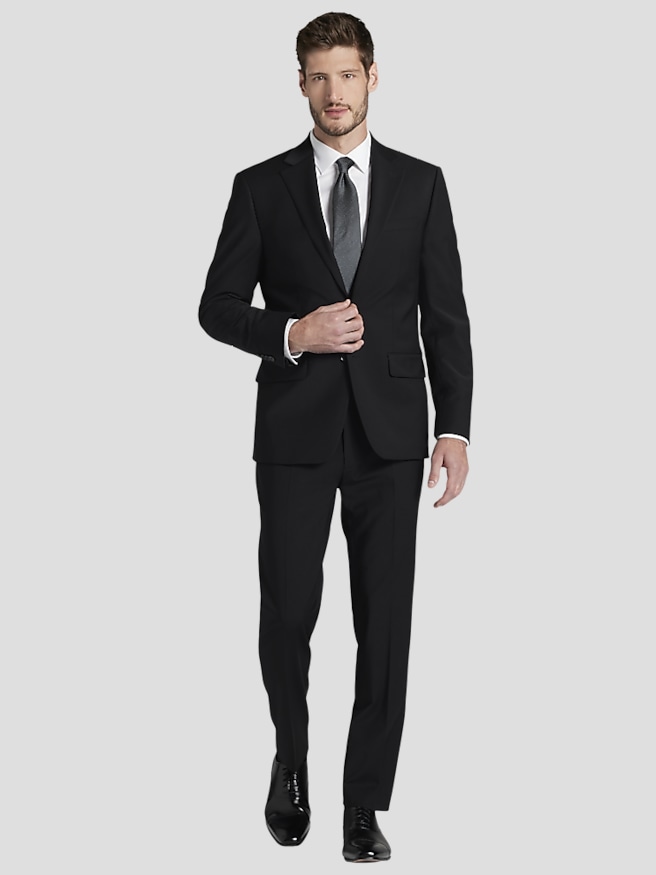
Men’s black suit accessories bring definition to a dark, understated foundation, adding contrast, texture, and a sense of occasion without competing with the suit itself. Classic choices include a white pocket square, a silk necktie, a restrained metal tie bar, and polished black leather dress shoes. Each contributes something distinct: a pocket square brightens the chest, a tie creates a focal point beneath the face, and well-kept shoes give the entire outfit a finished appearance. Against black fabric, small details are especially noticeable, from the weave of a charcoal tie to the edge of a neatly folded linen square. White and silver create a crisp, controlled look, while burgundy, navy, and deep green introduce color with a quieter effect than bright, highly saturated shades. For a wedding guest, a subtly patterned tie and a pocket square that picks up one of its secondary colors can feel celebratory without looking overly coordinated. At a business presentation or an evening reception, a solid tie with a little surface texture keeps the emphasis on clean lines. A black suit also provides a useful setting for meaningful accessories, such as inherited cufflinks or a watch received to mark a graduation. The occasion still matters: an understated combination suits a solemn gathering, while a more expressive pocket square may feel appropriate at an anniversary dinner. Although a black business suit and formal evening attire share a dark palette, they are not interchangeable under every dress code. For an invitation specifying black tie, a men’s black tie suit is a related consideration, with traditional black-tie dress generally calling for a tuxedo and its accompanying formal accessories. Within everyday black suiting, the strongest combinations usually give one element prominence and let the others support it. That might mean a richly textured tie balanced by a plain white square, or distinctive cufflinks paired with a simple tie and an unobtrusive watch.
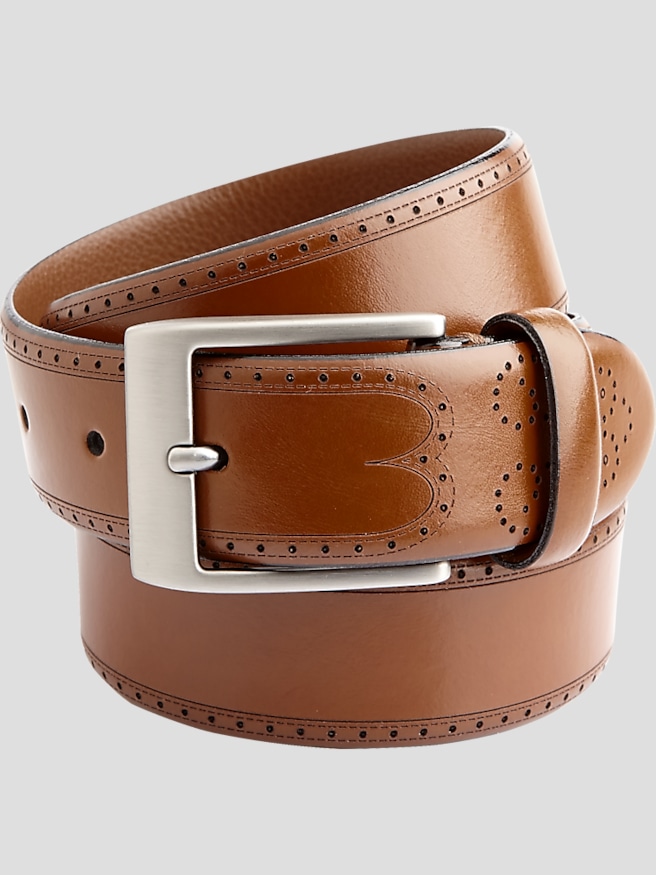
Materials influence both the appearance of black suit accessories and how they perform through repeated wear. Silk ties offer depth of color and a smooth drape, though their finish can range from softly matte to noticeably lustrous. A woven silk pattern adds dimension without requiring a bold print, while wool ties create a drier, more textured contrast against smooth suiting. Knit ties have a less formal character and work best when the setting allows a relaxed interpretation of tailored clothing. For pocket squares, linen and cotton tend to hold a crisp fold, while silk falls into softer curves and fuller shapes. A white linen square showing a narrow, even edge gives a particularly tidy effect; a silk square with a loosely arranged fold looks more fluid. Fabric weight matters as much as fiber. A thick square can crowd a shallow breast pocket, and a substantial tie may form a bulky knot beneath a narrow collar. Proportion helps these accessories sit comfortably within the outfit: tie width should generally relate to lapel width, the knot should fit the collar opening, and the tie tip should reach approximately the belt buckle or waistband. A tie bar should be shorter than the tie’s width and fasten the tie to the shirt placket rather than simply clip its layers together. Cufflinks require compatible shirt cuffs, making cuff construction an important detail when choosing them for personal use or as a gift. Metal finishes need not match perfectly, but a consistent silver-tone or gold-tone direction across cufflinks, a watch, and a belt buckle keeps the small details from feeling disconnected. Belts should sit securely without requiring an awkwardly tight fastening, and their width should suit the trouser loops. Suspenders offer another way to support tailored trousers, with button-on styles requiring the appropriate interior buttons. They are generally worn instead of a belt. These practical relationships make the difference between accessories that merely look good laid out together and accessories that remain comfortable through a ceremony, a seated dinner, and time on the dance floor.
Footwear anchors a black suit, and black leather dress shoes provide a straightforward, cohesive finish for many professional and celebratory settings. Closed-lacing oxfords have a particularly clean profile, while other dress-shoe constructions can adjust the level of formality according to their shape and detailing. Smooth leather emphasizes polish; pronounced texture, heavy soles, and conspicuous hardware create a stronger visual presence. Fit deserves as much attention as appearance, especially for events that involve standing for photographs or walking between venues. Shoes should hold the heel securely while leaving room for the toes, without pinching across the forefoot. Dress socks should feel smooth inside the shoes and extend high enough to keep the leg covered when seated. Black socks maintain an uninterrupted line with black trousers, while a restrained pattern can connect with a tie or pocket square when the occasion permits. Care habits help preserve these finishing pieces over time. Leather shoes benefit from having surface dirt removed, receiving suitable conditioning and polish, and drying naturally away from direct heat if damp. Shoe trees can help maintain their shape between wears. Ties last better when knots are fully untied after use rather than pulled loose and left in place, and delicate fabrics should be cleaned according to their care labels. Pocket squares also need fabric-appropriate care; a sharp linen fold and a soft silk drape call for different handling. Cufflinks and tie bars are best kept dry and stored so their surfaces do not rub against other metal pieces. Durability often shows in modest construction details: even stitching, neatly finished edges, smooth fastenings, and hardware that closes securely without catching fabric. These qualities are especially useful for someone who wears a suit regularly, but they matter just as much for an accessory kept for important occasions. As gifts for graduates, partners, fathers, or members of a wedding party, ties, pocket squares, and cufflinks can carry personal significance without demanding an exact clothing size. The most thoughtful choice reflects the recipient’s usual colors, shirt preferences, and dress requirements, giving a black suit a finishing touch that feels personal rather than prescribed.