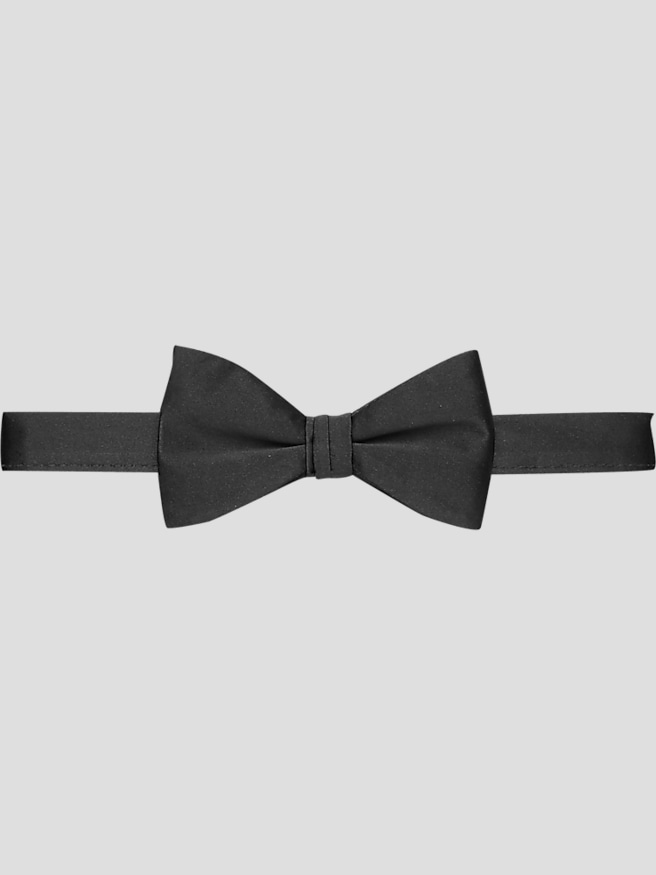
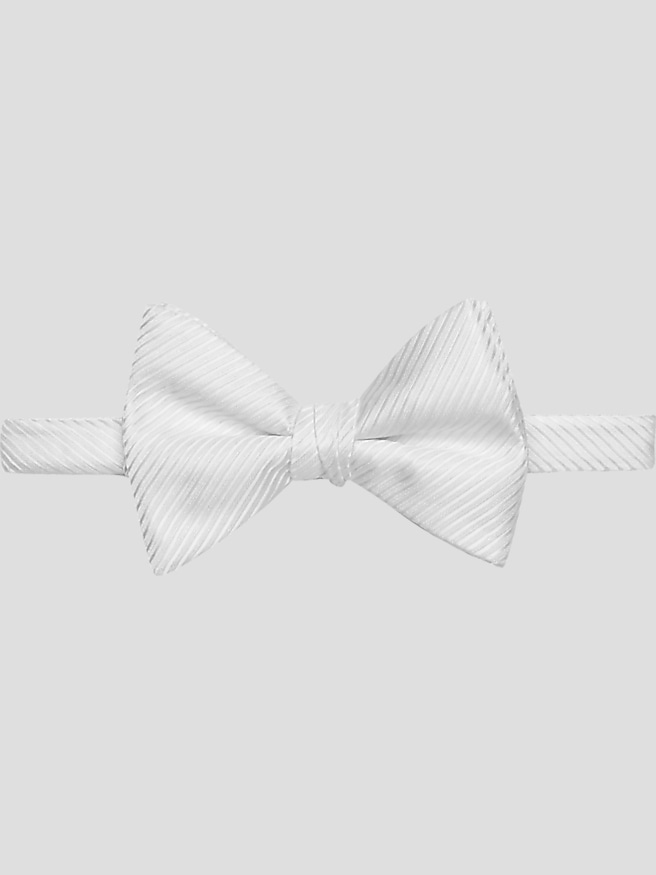
Men’s black formal bow ties give evening attire a clear focal point: a dark, balanced shape at the collar that connects a crisp shirt to the lapels of a tuxedo. Their place in traditional black tie dressing makes them a natural choice for wedding guests, grooms, prom attendees, and anyone dressing for a gala, awards ceremony, or formal dinner. Black is restrained, but the fabric can make the accessory look quite distinct. Silk satin has a smooth surface that catches the light, creating a polished finish alongside satin-faced lapels. Grosgrain has visible ribbing and a quieter sheen, while barathea offers a finely textured, comparatively matte appearance. Faille also brings a ribbed texture, and velvet adds depth through its soft pile rather than a glossy surface. These fabric terms are not interchangeable: silk and polyester describe fibers, while satin and grosgrain describe fabric structures. A satin bow tie, for example, may be made from silk or polyester, with its feel, drape, and care needs depending on the actual composition and construction. Silk is valued for its supple hand and ability to form a knot with character. Polyester can provide a consistent finish and practical resilience, though the care label remains the best source for cleaning instructions. The most cohesive combinations usually echo the tuxedo’s lapel finish without making every accessory look identical. A smooth black bow against satin lapels feels classic; a subtly ribbed bow can complement grosgrain facings. Under the lights of a ballroom or in a close-up wedding photograph, those small surface details become more noticeable. With a midnight blue tuxedo, a black bow tie still provides the familiar contrast associated with black tie attire. The invitation matters, too: traditional black tie calls for a black bow tie with a tuxedo, whereas white tie has its own distinct requirements, including a white bow tie. That distinction gives this small accessory a specific purpose beyond simply dressing up a shirt.
Construction and proportions influence how a black formal bow tie sits and how comfortable it feels over several hours. Self-tie styles form their shape when tied, producing slight variations between the two sides that are part of their traditional appeal. The result need not be perfectly symmetrical; a gently irregular knot can look composed without appearing rigid. Pre-tied styles hold an established shape and typically fasten with an adjustable neckband, making them useful for someone who wants a consistent finish before a ceremony or group photograph. For a wedding party, a shared fabric and silhouette can create visual continuity even when neckband adjustments vary from person to person. Neither construction removes the need for proper sizing. The stated neck-size range should accommodate the shirt collar comfortably, and the band should sit securely without pulling the collar inward or pressing against the neck. A bow that twists, droops, or rides away from the collar may need an adjustment rather than a tighter knot. Shape is another meaningful distinction. Butterfly bows have flared ends and a familiar formal outline, with moderate versions offering a balanced starting point for many faces and collars. Batwing styles have straighter, narrower ends for a leaner silhouette, while diamond-point bows introduce angled tips and a less uniform outline. A broad bow makes a stronger visual statement, but it should not overwhelm the wearer’s face or crowd the shirt collar. Its width and height work best when considered alongside facial proportions, collar spread, and lapel width rather than as isolated measurements. A turndown collar generally conceals the neckband; a wing collar leaves more of it exposed, making the band and fastening arrangement more visible. The collar and front details found in Men's Black Tie Shirts help establish the setting for the bow. A well-balanced combination leaves the knot centered, the bow ends clear of distracting bunching, and enough room at the neckline to turn the head comfortably during dinner and conversation.
A black formal bow tie earns its place in a wardrobe through repeated use, so the details behind its appearance matter as much as the first impression. Neat stitching, cleanly finished edges, and a neckband that adjusts smoothly are useful signs to assess. On a pre-tied style, the fastening should hold securely without feeling rough against the collar, and the bow should retain its intended shape without looking crushed at the center. On a self-tie style, the fabric should fold into a manageable knot rather than needing excessive force to stay in place. Durability depends on both construction and handling; no single fiber guarantees that a tie will resist every snag, stain, or crease. Friction against jewelry, rough hook-and-loop closures, and overfilled luggage can damage delicate surfaces. After an event, gently untying a self-tie bow instead of pulling it apart helps limit stress on the fabric and seams. A pre-tied bow benefits from being unfastened at the closure rather than tugged over the head. Storage should preserve the shape without trapping the accessory beneath heavier clothing. For travel to a wedding or formal celebration, a small protective compartment can keep the bow away from shoe hardware and toiletry spills. Cleaning should follow the sewn-in label: some fabrics require professional attention, and rubbing a spill or applying water without checking can leave a mark or alter the finish. Direct pressure and heat can also flatten texture, particularly velvet pile, so pressing methods should never be assumed from appearance alone. These practical considerations make a black bow tie a thoughtful gift for someone preparing for a first formal event, building an evening wardrobe, or taking part in milestone celebrations. The recipient’s collar size, comfort with tying a bow, and preferred silhouette are more useful details than a guess based only on the occasion. For the wearer who attends several formal events, a familiar bow tie becomes one less detail to resolve before leaving home: its neckband is already adjusted, its proportions suit the shirt, and its finish works with the tuxedo. The effect is understated but unmistakable, bringing the neckline into focus without distracting from the person wearing it.