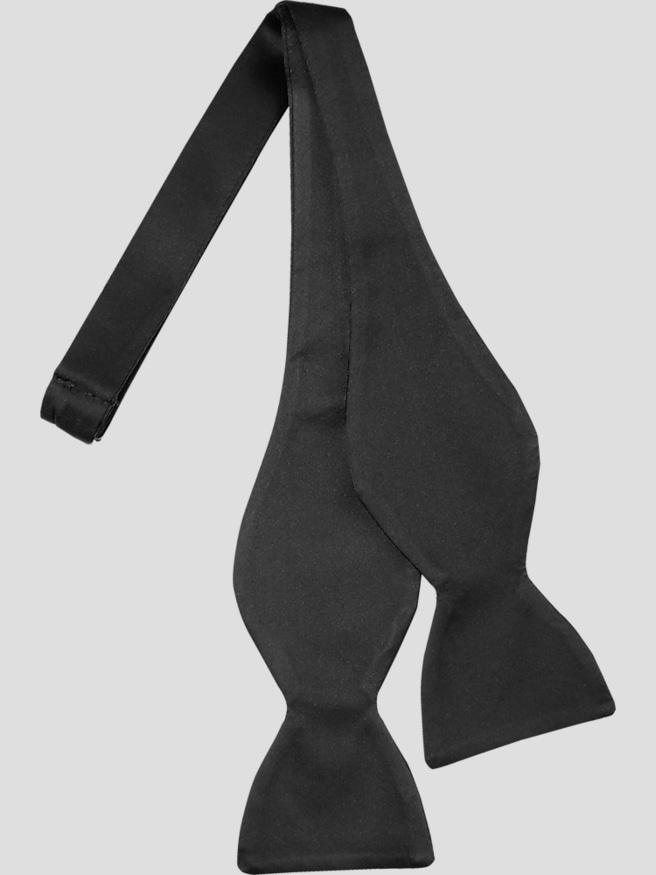
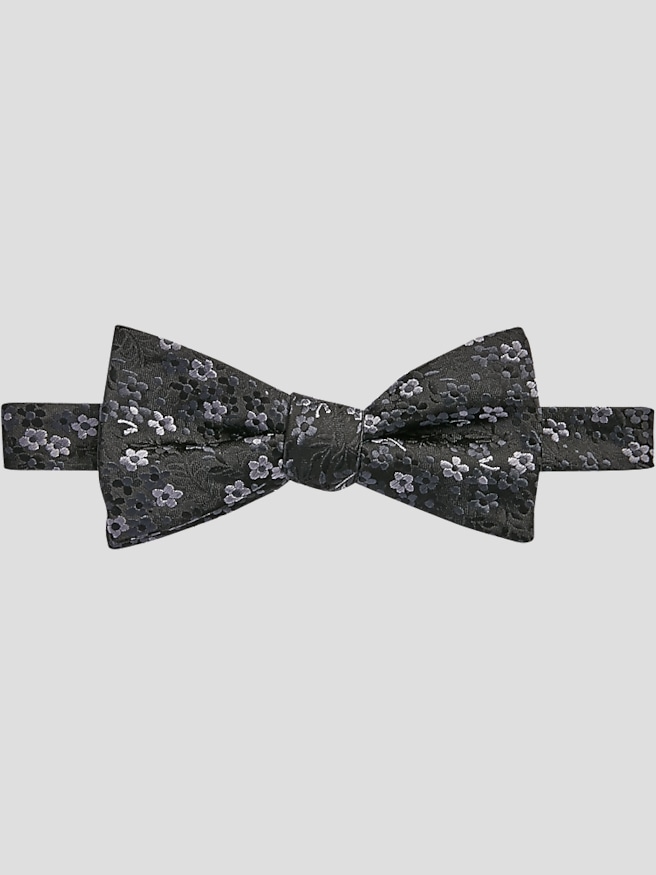
Black pre-tied bow ties are ready-to-wear accessories with a bow that is already shaped and secured, giving formal outfits a finished look without the need to tie a knot by hand. Typically fastened with an adjustable neckband and a hook or clasp, they offer a straightforward option for weddings, proms, charity galas, award ceremonies, and other occasions that call for polished evening attire. The appeal is both visual and practical: a defined silhouette sits neatly at the collar, while the prepared knot makes getting dressed simpler before an important entrance or a round of photographs. With a tuxedo, a black bow tie creates the familiar contrast of dark neckwear against a crisp white dress shirt. Its restrained color also leaves room for details such as shirt studs, cuff links, and a neatly folded pocket square without making the outfit feel crowded. The finish of the bow can relate to the jacket’s lapels: a smooth satin surface complements satin lapels, while a ribbed texture can echo grosgrain trim. These details do not need to match perfectly, but a similar level of sheen helps the ensemble feel considered. Shape matters, too. A fuller butterfly bow makes a more noticeable statement, while a narrower shape has a quieter profile. Balanced proportions are more useful than choosing the largest or smallest bow: the width should work with the wearer’s face, shirt collar, and jacket lapels rather than dominate them. A bow that looks restrained against a broad shawl collar may feel more prominent beneath a narrow collar. Beyond tuxedo dressing, a matte or textured black bow tie can complement a tailored suit when the invitation allows a less traditional interpretation. The result remains distinctly dressed up, whether the wearer is a groom standing at the ceremony, a guest seated at an evening reception, or a musician stepping onto a concert stage.
Fabric gives black neckwear much of its character, even when the color stays the same. Silk can offer a soft luster and a supple surface, with the weave determining whether the effect is smooth, ribbed, or subtly textured. For dressier ensembles, Black Silk Bow Ties can provide a refined sheen that complements polished accessories without introducing another color. Polyester is another common material for pre-tied styles and can provide a consistent shape with relatively straightforward care, although the exact finish and cleaning requirements depend on the construction. Satin describes a weave rather than a fiber, so a satin bow tie may be made from silk or a synthetic material; that distinction affects its feel and care needs. Velvet has a plush surface that absorbs and reflects light unevenly, creating depth rather than the crisp shine of satin. More matte woven fabrics produce a quieter effect and can feel especially natural with textured tailoring. Because black surfaces reveal lint and pale fibers, keeping the fabric clean is part of maintaining a sharp appearance. A gentle lint brush suited to the material can help, while rough brushing or adhesive rollers may be inappropriate for delicate surfaces. The care label should determine whether spot treatment or professional cleaning is suitable. Rubbing a mark aggressively can disturb the weave, spread residue, or flatten a raised texture. Storage also makes a difference to a pre-shaped accessory: a clean, dry compartment with enough room for the bow helps prevent crushed folds and keeps the neckband from catching on other accessories. The fixed knot should retain its shape rather than be pulled apart for cleaning or storage. Durability depends on more than the fabric alone. Secure stitching around the center wrap, neatly finished edges, and dependable fastening hardware all contribute to an accessory that holds up to repeated dressing and careful handling. A well-maintained bow tie can remain a familiar finishing touch for many formal occasions.
Fit is especially important with pre-tied construction because the bow is already formed; most of the adjustment happens at the neckband rather than in the knot itself. The band’s adjustment range should accommodate the wearer’s neck comfortably over a fully buttoned shirt collar, with enough security to keep the bow centered but no pinching at the throat. Shirt collar size provides a useful starting point, though fastening design and band construction can affect how the finished fit feels. A turndown collar generally conceals the band beneath the collar fabric, while a wing collar exposes more of it, making the appearance of the band and closure more noticeable. The bow should sit at the closed collar rather than hang below it, and its center should line up with the shirt placket. Comfort becomes particularly noticeable over a long event: a wedding can mean a ceremony, dinner, photographs, and hours on the dance floor, all in the same outfit. Smooth edges and a secure closure help keep attention on the occasion instead of on repeated adjustments. The ready-shaped design is also useful for coordinated wedding-party attire, where similar proportions and finishes create a cohesive appearance in group photographs. For performers, hosts, and hospitality professionals whose dress requirements include a black bow tie, consistent presentation can be just as important as ease of fastening. As a gift, this category suits a graduate preparing for formal events, someone attending a first black-tie celebration, or a recipient who prefers an accessory that is ready to fasten. Knowing the recipient’s collar size and usual dress style makes that choice more personal and practical. A compact shape with a subtle finish may suit someone who favors understated tailoring, while a fuller silhouette or richer texture can appeal to someone comfortable with a stronger accent. Across these settings, black pre-tied bow ties offer a recognizable formal detail with less preparation, bringing definition to the collar without requiring elaborate coordination throughout the rest of the outfit.