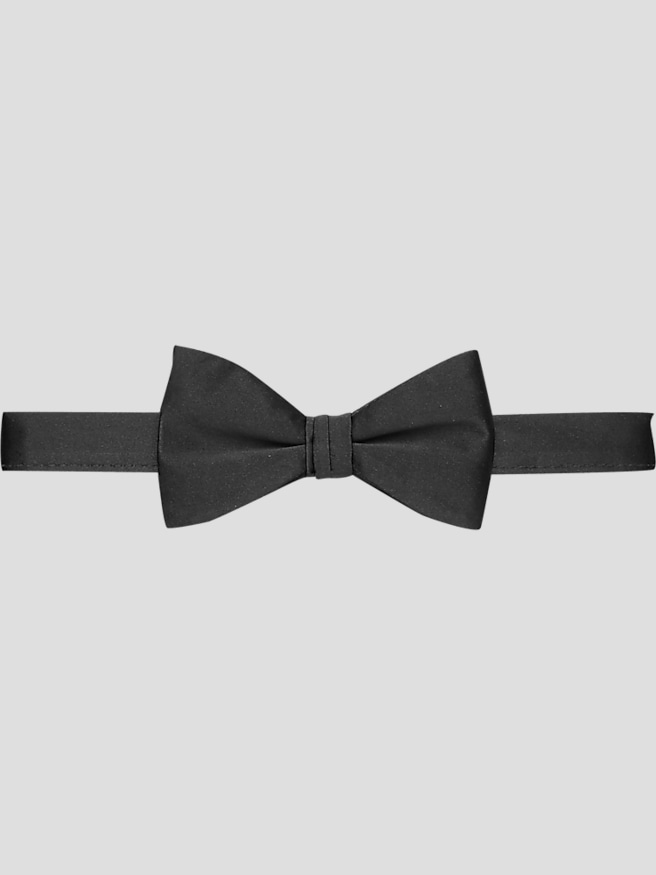
Black silk bow ties are classic formal accessories, distinguished by their dark color, elegant fabric, and compact shape at the shirt collar. The main considerations are the silk’s finish, the bow’s shape and proportions, and whether the design is self-tie or pre-tied. Silk satin has a smooth surface with a noticeable sheen, while silk grosgrain has fine crosswise ribs and a more restrained luster. Both can complement a tuxedo, but they create slightly different effects: satin catches the light across the folds of the bow, while grosgrain adds definition through texture. Silk describes the fiber, not a single finish, so two black silk bow ties can look quite distinct even when their color and dimensions are similar. Coordinating the bow tie with the tuxedo’s lapel facing gives the outfit a cohesive appearance. A satin bow echoes satin lapels, while a grosgrain bow relates naturally to ribbed lapel trim. An exact texture match is not always necessary, but a deliberate relationship between the fabrics helps the details feel considered. Against a crisp white formal shirt, black silk creates the clear contrast associated with traditional black-tie dressing. It also keeps attention on the lines of the jacket rather than introducing another color at the neckline. For a wedding, an awards dinner, an evening reception, or a performance with a formal dress requirement, that simplicity can be especially useful. The bow tie contributes polish without competing with a boutonniere, shirt studs, or an expressive jacket fabric. A solid black surface also makes subtle details more visible: the curve of a butterfly bow, the narrow outline of a batwing, and the small folds around a hand-tied knot all become part of the overall impression. These distinctions give black silk bow ties character without relying on a print or contrasting trim, making them a lasting part of a formal wardrobe rather than an accessory tied to one particular event.
The difference between self-tie and pre-tied black silk bow ties is as much about the wearing experience as the finished appearance. A self-tie bow is formed by hand, giving the knot and loops a little natural variation. That slight asymmetry is part of its appeal; the two sides need not look mechanically identical to look well dressed. It suits someone who enjoys the ritual of formalwear and wants control over the fullness of the loops and the tightness of the center knot. A pre-tied bow maintains an established shape and fastens around the neck, offering a consistent appearance with less preparation. That convenience can be valuable for a wedding party dressing on a schedule or someone who wears a tuxedo only occasionally. Neither format removes the importance of fit. The neckband should accommodate the shirt collar comfortably, holding the bow centered without pulling tightly against the neck. Adjustable designs still have size limits, so the stated neck range matters, particularly for a gift. The bow’s width and height also affect its balance with the face, collar, and jacket. A fuller butterfly shape creates a rounded, traditional silhouette, while a slimmer batwing has straighter lines and a quieter presence. Pointed ends introduce a more angular detail without changing the understated black palette. A broad bow can complement substantial lapels, while a smaller bow may sit more naturally with narrower proportions. The collar points should frame the bow rather than crowd it, and the finished knot should sit neatly at the closed top button. With a turndown collar, the neckband is generally concealed beneath the collar fabric, leaving the bow itself as the focal point. For an event with a stated black-tie dress code, a black bow tie worn with a tuxedo remains the conventional choice. Keeping that distinction in mind helps separate true evening formalwear from a dark business suit dressed up for a special dinner.
Silk rewards thoughtful handling, especially in an accessory that is folded, tightened, and worn close to the face. The fabric’s appearance depends partly on preserving its surface: rough jewelry, exposed hook-and-loop fasteners, and sharp edges can catch delicate threads, while repeated hard creasing can leave a bow looking tired. A self-tie bow benefits from being gently untied after wear rather than pulled loose by one end or left tightly knotted between occasions. A pre-tied design should be stored without crushing its loops or placing weight on the center. Clean, dry storage away from direct sunlight helps protect the black color and keeps the fabric ready for its next outing. For travel, a protective accessory case or an uncrowded compartment can help prevent the bow from being flattened beneath shoes or heavier clothing. Care should follow the label, since construction details and internal materials can affect which treatments are appropriate. Water, aggressive rubbing, and direct heat may leave marks or alter the silk’s finish, making improvised stain removal a risk. A cleaner experienced with silk accessories can assess a spill without subjecting the fabric to unnecessary handling. Good construction matters alongside care: secure stitching, neatly finished edges, and reliable neckband hardware help an accessory withstand repeated dressing and storage. For someone building a formal wardrobe, a black silk bow tie is useful across occasions because its purpose is clear and its styling is enduring. It can also make a thoughtful gift for a groom, a frequent gala guest, or someone preparing for a first tuxedo occasion, particularly when the recipient’s preferred shape and fastening style are known. For dress settings that call for a long necktie rather than a bow, Black Silk Ties offer a related option with a different silhouette. The bow tie remains distinctive for the space it leaves across the shirtfront and the way it frames the collar, bringing a small but unmistakable finishing detail to formal dress.