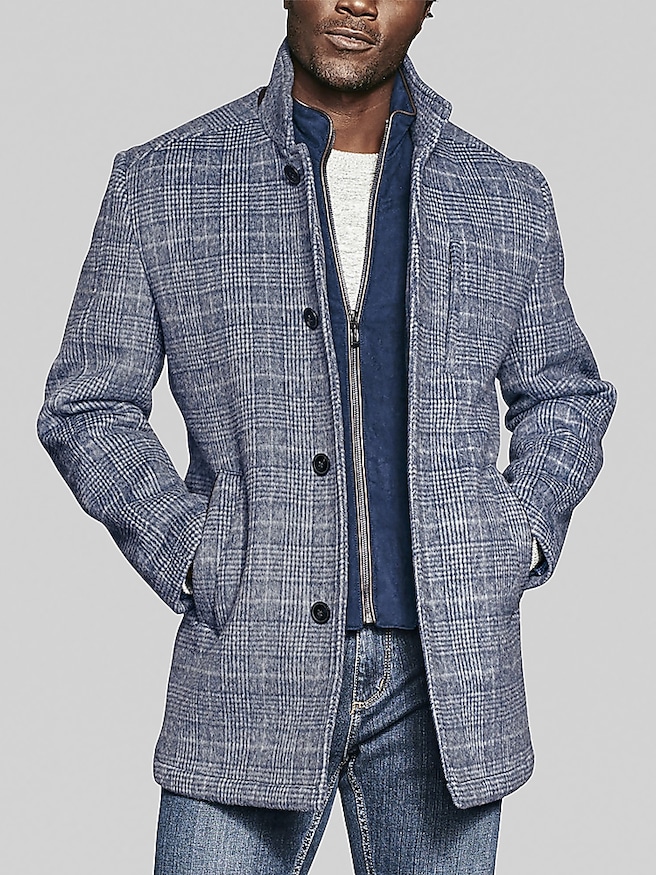
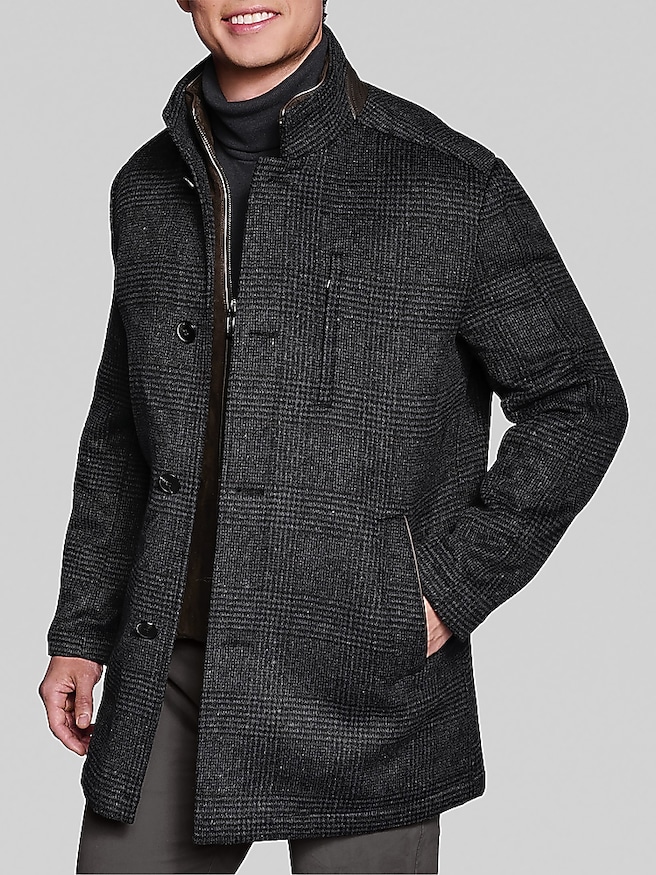
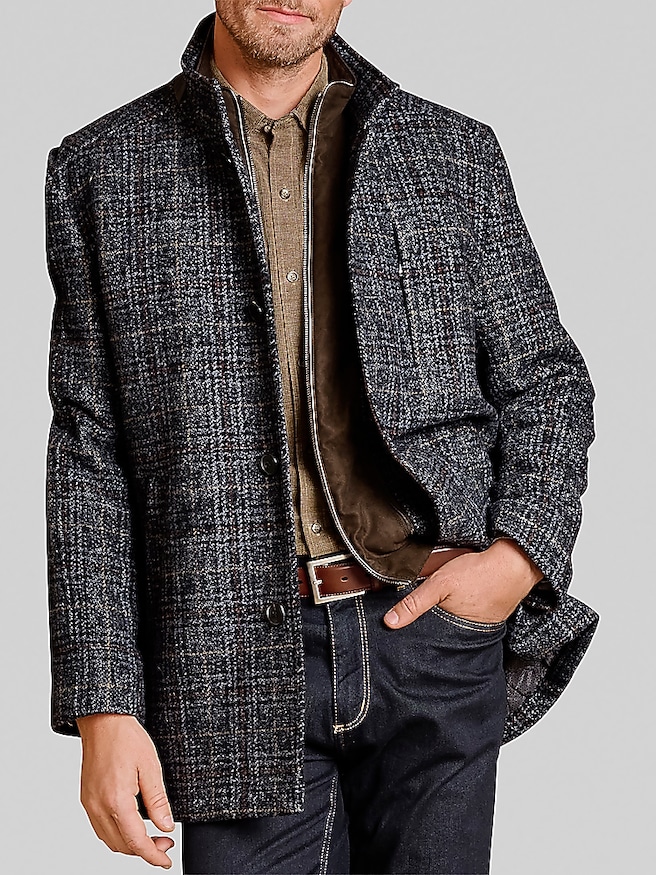
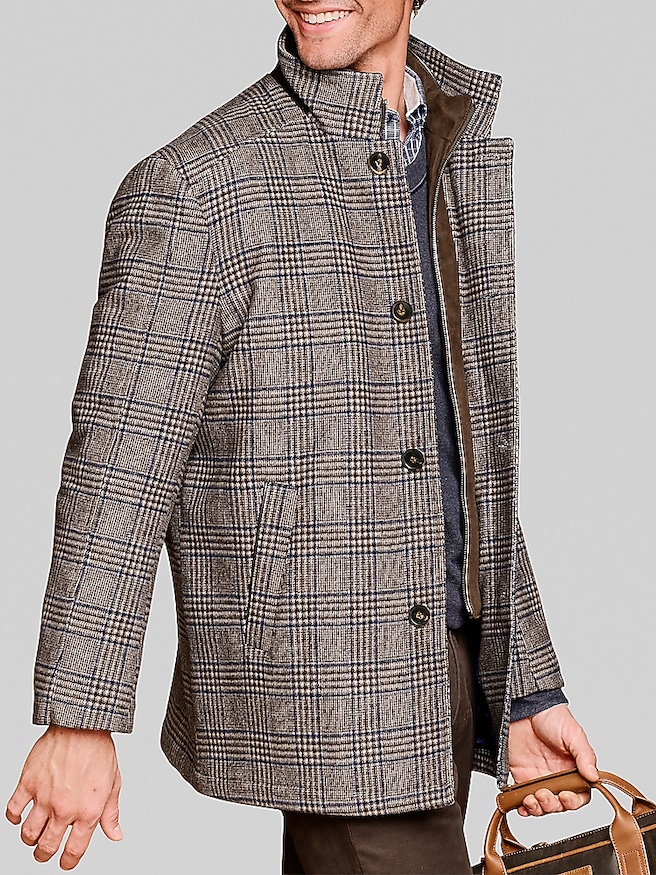
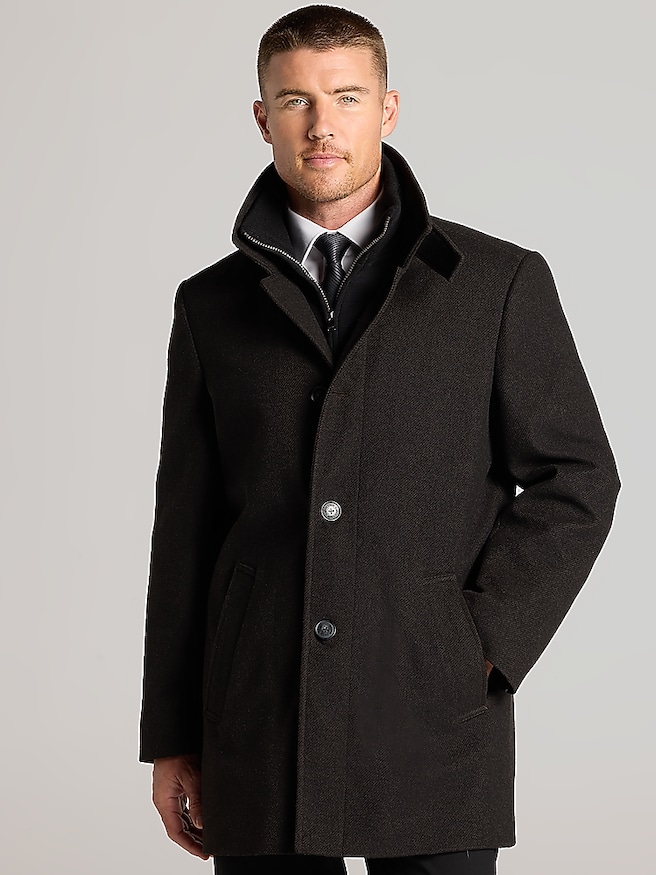
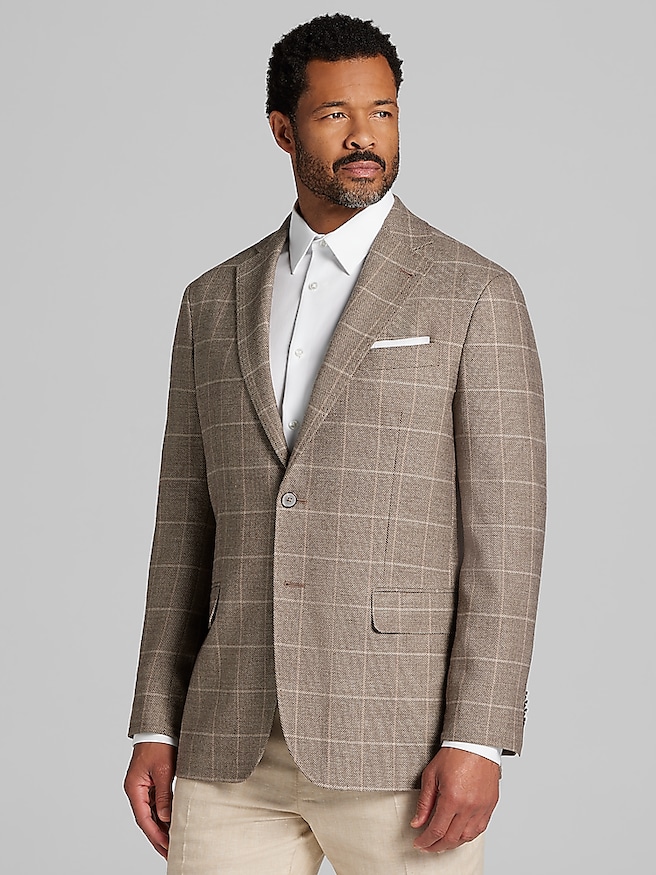
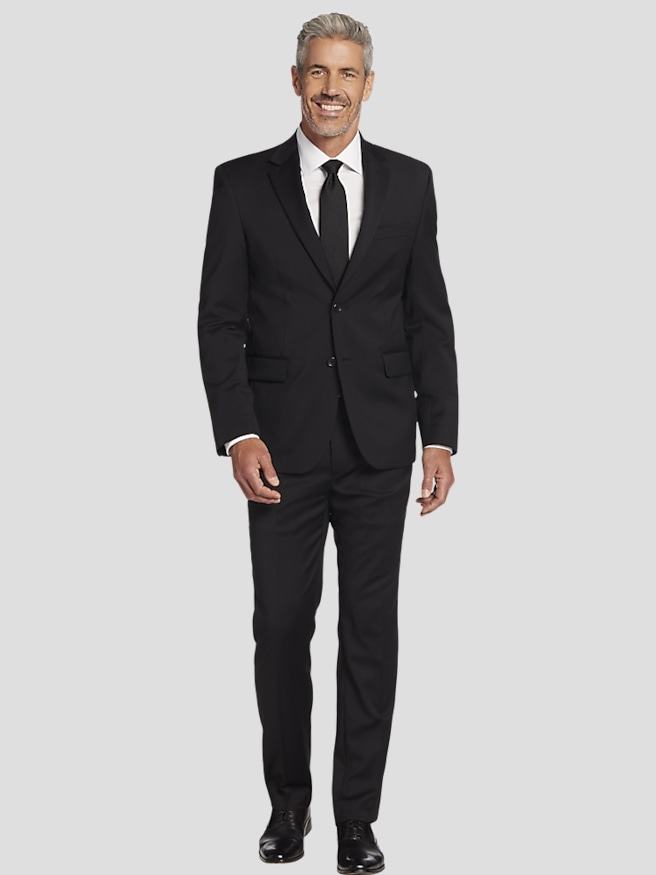
Men's beige coats bring a softer neutral to outerwear, with shades ranging from pale sand and oatmeal to deeper tan and warm stone. The color works naturally with navy, charcoal, brown, olive, and denim, making it useful for wardrobes built around both tailored clothing and relaxed separates. A beige overcoat layered over a dark suit creates a clear contrast that lets the suit's shape remain visible, while a shorter coat over a knit sweater and jeans feels less formal without looking unfinished. The category includes several familiar silhouettes, from structured overcoats and double-breasted designs to belted trench coats and more relaxed casual shapes. Each has its own character: a notched lapel echoes traditional tailoring, a stand collar creates a cleaner neckline, and a belt adds definition through the waist. Fabric is just as important as shape. Wool and wool-blend coats can provide warmth, texture, and a substantial drape, although the weight, weave, and lining all influence how a coat feels in use. Cotton twill and tightly woven blends often have a crisper appearance suited to trench-inspired styles, while brushed fabrics create a softer surface. Synthetic fibers may contribute strength, shape retention, or easier care, depending on the blend and construction. A smooth lining helps a coat slide over a jacket or sweater without catching, and a partial lining can make a lighter design feel less bulky. Water resistance should come from the fabric treatment or stated construction, not from the coat's appearance alone; a beige trench silhouette does not automatically mean waterproof protection. Across these variations, beige offers a balance of polish and ease. It can look appropriate on the walk into an office, over tailoring at a wedding, or with dark trousers for dinner, giving the same neutral color a distinct role in several parts of a wardrobe.
The fit of a men's beige coat depends partly on what sits underneath it. A coat worn over a suit jacket needs room through the shoulders, chest, and upper arms so that the layers lie smoothly rather than pulling against one another. Shoulder seams generally look cleanest near the natural shoulder, though a deliberately relaxed or raglan design follows a different shape. The front should close comfortably without pronounced horizontal tension, and the sleeves should allow the arms to reach forward without making the entire coat lift sharply. A little space is useful; excessive fabric can hide the intended silhouette and feel cumbersome when sitting or carrying a bag. Length also changes the balance. A longer overcoat usually provides more coverage and should extend below the hem of a suit jacket, while a shorter casual coat pairs easily with jeans, chinos, and less structured clothing. For someone who spends much of the day moving between a car, an office, and evening plans, comfortable arm movement and a manageable hem can matter as much as a sharply defined waist. Beige also rewards thoughtful color pairings without requiring a complicated outfit. A navy suit, white shirt, and dark brown shoes create a classic foundation; charcoal trousers and a fine-gauge black sweater produce a quieter, more tonal contrast. Dark denim and textured brown footwear bring out the relaxed side of a sand-colored coat. For a cooler-toned neutral comparison, Mens Grey Overcoats offer another way to coordinate with navy and charcoal tailoring. Within beige itself, undertones make a noticeable difference: golden tan tends to complement rich brown leather, while gray-beige sits comfortably beside black accessories and cool blue fabrics. Scarves, gloves, and bags can add texture without competing with the coat. A ribbed scarf against a smooth wool surface or a simple leather briefcase beside a brushed finish gives an outfit depth while keeping the overall impression restrained.
Long-term satisfaction with beige coats comes from the combination of useful construction, appropriate care, and a shape that suits everyday habits. Neat stitching, securely attached buttons, stable pocket openings, and a lining that lies flat are practical details worth noticing. Pockets should accommodate ordinary essentials without distorting the front, and a back vent can help a longer coat move comfortably while walking or sitting. Durability is not determined by fabric thickness alone: fiber quality, weave, seam construction, and friction from regular use all play a part. Shoulder bags and backpack straps can place repeated pressure on the same areas, while overfilled pockets can pull at seams and alter the silhouette. Because beige is light, surface marks may be more noticeable than on darker cloth, making routine attention especially useful. Care should always follow the sewn-in label. Some wool and structured coats require professional cleaning, while certain cotton or synthetic designs may permit washing under specified conditions. Spot treatment also needs to match the material; a cleaning method suitable for one fabric may leave a ring or change the texture of another. Gentle brushing with a fabric-appropriate brush can lift loose debris from suitable wool surfaces, and a sturdy, shaped hanger helps support the shoulders between wears. A coat should be fully dry before storage, with enough space around it to avoid crushing the fabric. Breathable storage can help protect the surface without trapping moisture. These habits matter for a coat worn repeatedly to work, but they are just as relevant to one reserved for dressier occasions. A beige coat can also make a thoughtful gift for a partner, father, brother, or recent graduate building a more versatile wardrobe. The most useful choice reflects the recipient's usual clothing, preferred length, and willingness to follow the care requirements. Someone who regularly wears suits may appreciate generous layering room and a longer hem, while someone drawn to casual clothing may feel more comfortable in a simpler, shorter silhouette. That connection between the coat and its wearer is what makes beige outerwear feel like a natural part of getting dressed.