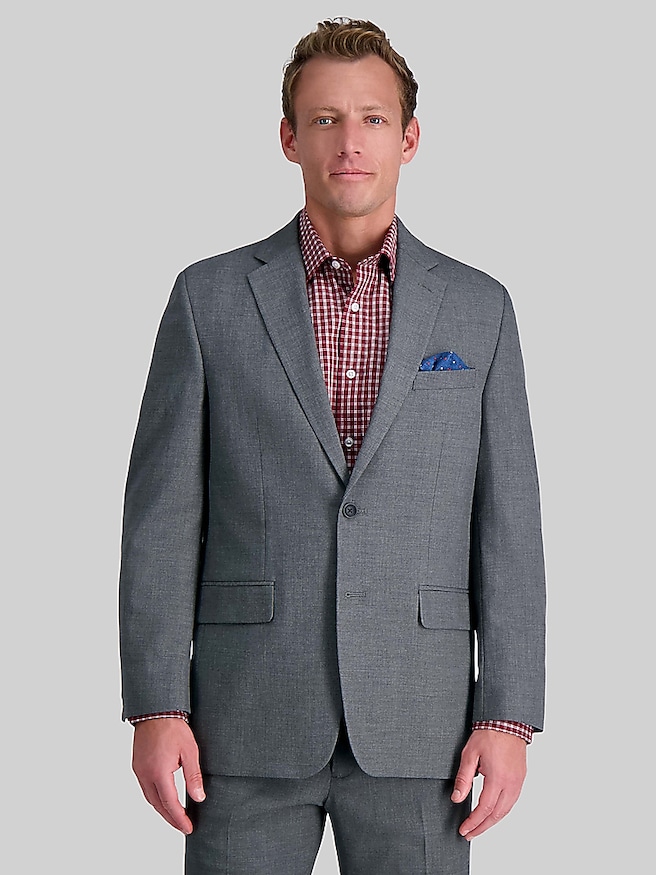
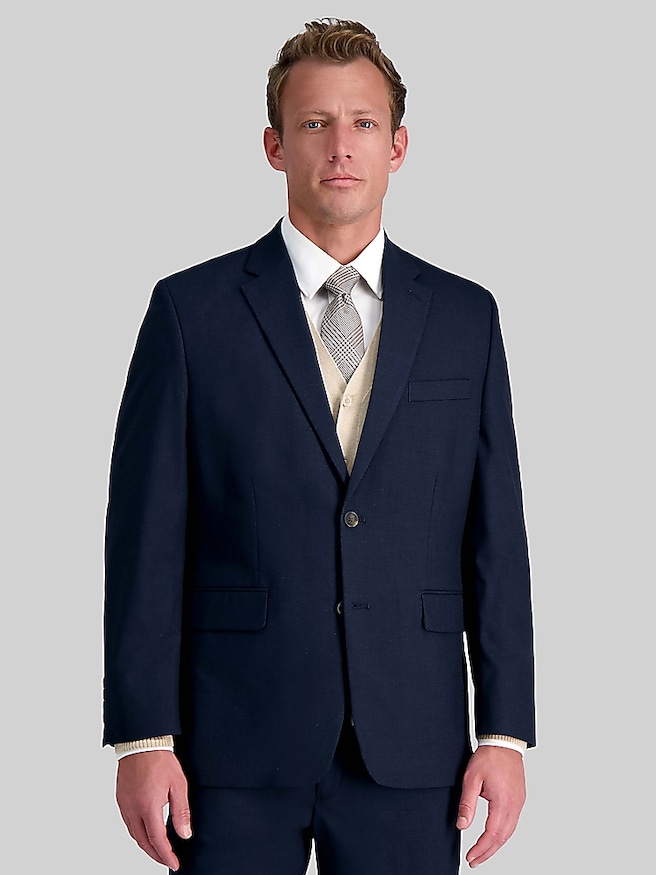
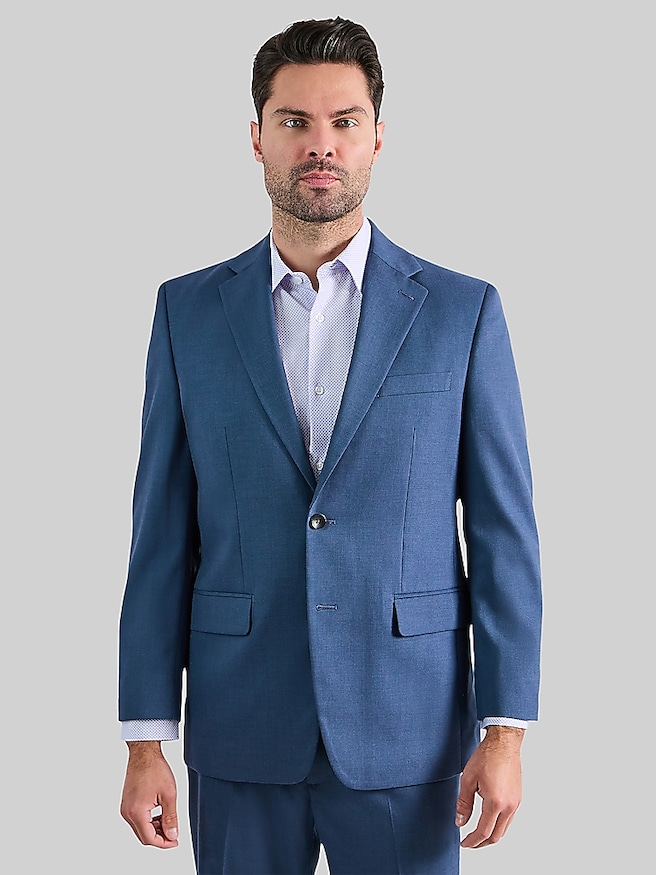
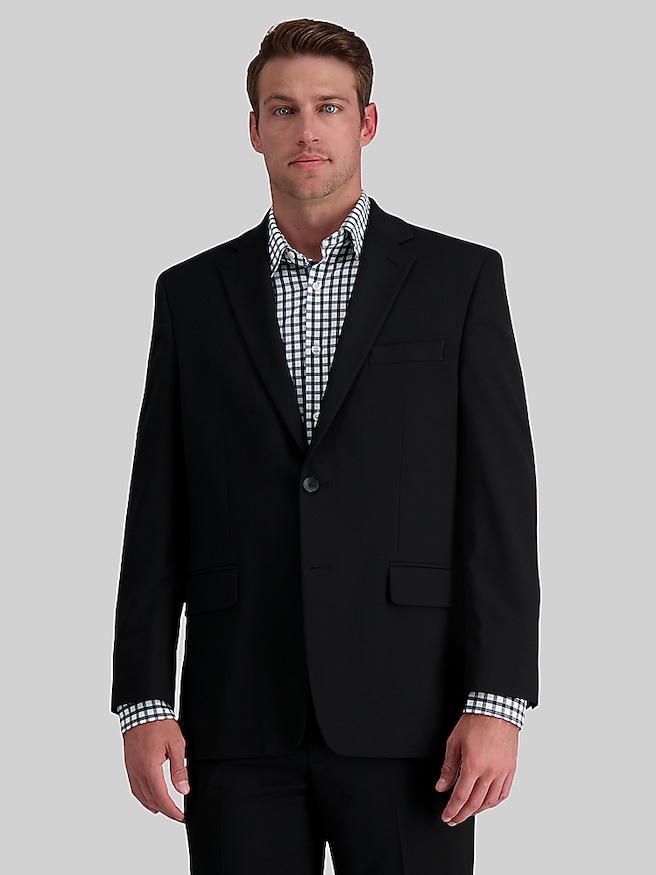
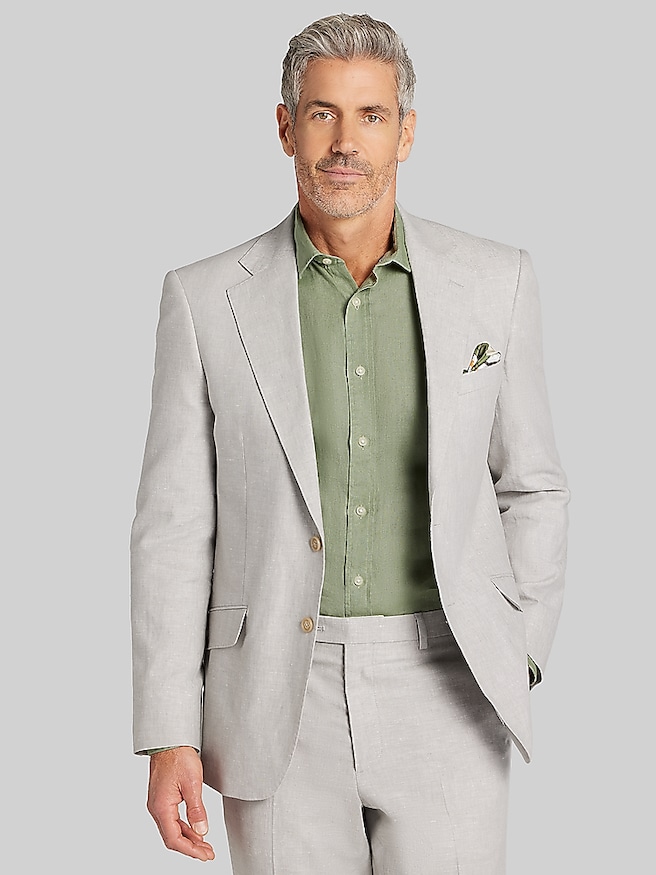
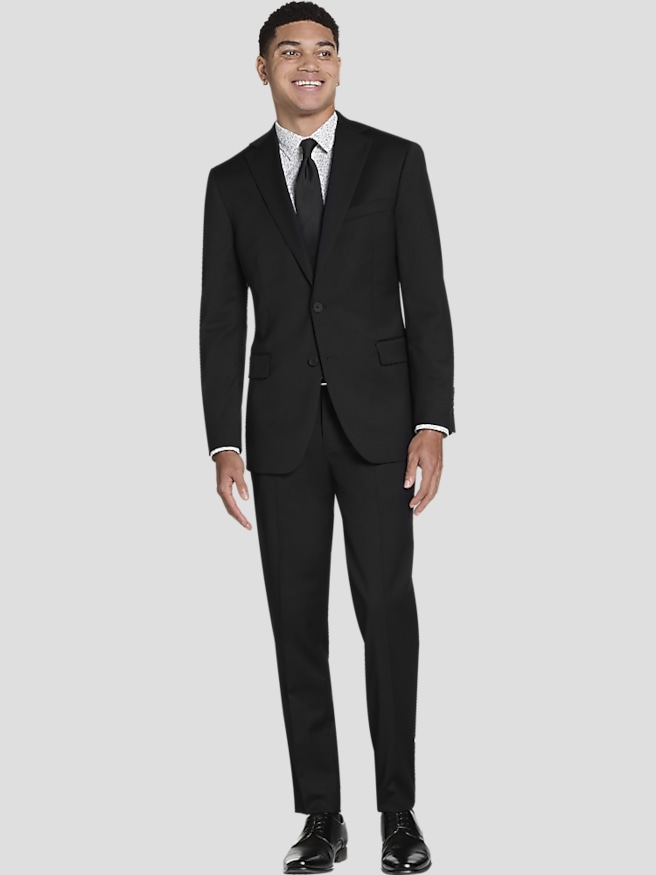
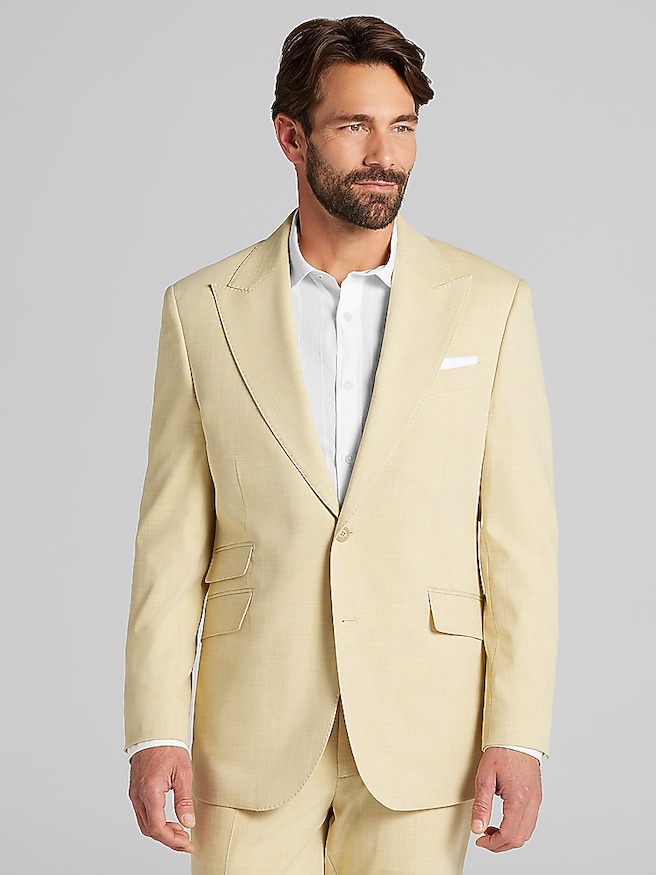
Matching suits bring a jacket and trousers together in the same fabric, color, and pattern, creating a continuous line from shoulder to hem. That consistency distinguishes a true suit from a sport coat worn with contrasting pants: two pieces that look close in color may still have noticeably distinct textures, undertones, or finishes. A navy jacket with a smooth surface, for example, will not necessarily match navy trousers with a more textured weave. Pieces designed to belong together keep those details aligned, giving the finished outfit a cohesive appearance in person and in photographs. Matching suits can also describe coordinated outfits worn by a wedding party, a pair of partners, or a group attending the same celebration. In that setting, matching might mean identical fabrics and colors across the group, with each person wearing a cut that suits their proportions. The result feels connected without requiring every wearer to have the same build or personal style. Navy, charcoal, and medium gray create familiar foundations for business settings and formal gatherings, while black has a particularly crisp presence when the occasion calls for it. Subtle stripes, checks, and textured weaves add character without necessarily changing the outfit’s overall formality. At a wedding, a shared suit color can connect the people standing together while a distinct tie or pocket square sets the person getting married apart. At a presentation or an important meeting, the uninterrupted color of a matching jacket and trousers creates a composed appearance that keeps attention on the wearer rather than competing clothing details. For professional wardrobes, Work Suits offer a related focus on tailoring for office routines and business occasions. The most useful choice reflects the setting, the expected dress code, and how often the suit will be worn. A suit intended for repeated client meetings may call for restrained detailing, while one chosen for a milestone celebration can accommodate a more expressive pattern or accessory combination.
Fabric gives matching suits much of their character, affecting how the jacket hangs, how the trousers move, and how well the outfit maintains its shape. Wool is a traditional suiting material because it can drape cleanly, manage moisture, and recover from ordinary creasing with appropriate rest and care. Its appearance varies considerably with the weave and yarn: a smooth worsted wool looks sharper and more uniform than a visibly textured cloth. Wool blends can introduce other qualities, including added resilience or stretch, depending on their composition and construction. Cotton typically gives tailoring a less formal character and develops more visible creases through wear, while linen has a distinctive texture and natural wrinkling that contribute to a relaxed appearance. Synthetic fibers can support durability and wrinkle resistance, though feel, breathability, and finish vary from fabric to fabric. A small amount of stretch may make sitting through a ceremony or moving between meetings more comfortable, but it does not replace an appropriate fit. The jacket should rest neatly across the shoulders, with lapels lying close to the chest and the front closing without pronounced pulling. Sleeves need enough room for comfortable movement without excess fabric bunching around the arms. Trousers should sit securely at the intended waist position and allow room through the seat and thighs, especially when seated. Slim, tailored, and classic fits describe broad silhouettes rather than universal measurements, so the same label may not feel identical across cuts. For a coordinated group, keeping the cloth consistent while accommodating each person’s proportions usually looks more polished than insisting on one silhouette for everyone. Trouser length also affects the impression: little or no break produces a cleaner line at the shoe, while a modest break gives a more traditional finish. Thoughtful alterations can refine sleeve length, the waist, and the hem, although they cannot correct every issue with the underlying cut. Whether the suit is worn for a graduation, an anniversary dinner, or a full day of professional commitments, comfort should hold up beyond the first few minutes in front of a mirror.
The supporting pieces determine whether matching suits feel restrained, celebratory, or more relaxed. A crisp white shirt keeps the combination clear and formal, while light blue introduces a softer contrast that remains appropriate in many professional settings. A tie can echo a color in a subtle check without repeating the entire pattern, and a pocket square can complement the outfit without matching the tie exactly. When several people are dressing together, consistent shoe colors and similar levels of formality help finish the shared look; accessories can then provide room for individual expression. Fabric finish matters here as much as color. A highly lustrous accessory stands out against matte suiting, so its prominence should feel intentional rather than accidental. Durability depends on more than fiber content: sound seams, secure buttons, suitable ease through areas of movement, and regular care all contribute to how a suit wears over time. Trousers that pull tightly across the thighs or seat put unnecessary strain on the cloth and stitching. Repeatedly carrying bulky objects in jacket pockets can distort their shape, while overfilled trouser pockets interrupt the clean line of the outfit. After wear, a broad, supportive hanger helps the jacket retain its shoulders, and hanging trousers neatly reduces avoidable creasing. Allowing the suit to air before storing it, brushing away surface dust with a suitable clothing brush, and addressing marks promptly can limit unnecessary cleaning. Care labels should govern cleaning and pressing, since heat, moisture, and treatment requirements vary by fabric and construction. Having matching pieces professionally cleaned together when needed can help preserve a consistent appearance as they age. These practical details matter for a frequently worn business suit as well as one reserved for significant occasions. A matching suit can also be a thoughtful gift for a graduate or someone beginning a professional role, provided measurements, fit preferences, and time for alterations are part of the choice. Its lasting value lies in the combination of coordinated fabric, comfortable proportions, and enough versatility to feel appropriate whenever a polished outfit is needed.