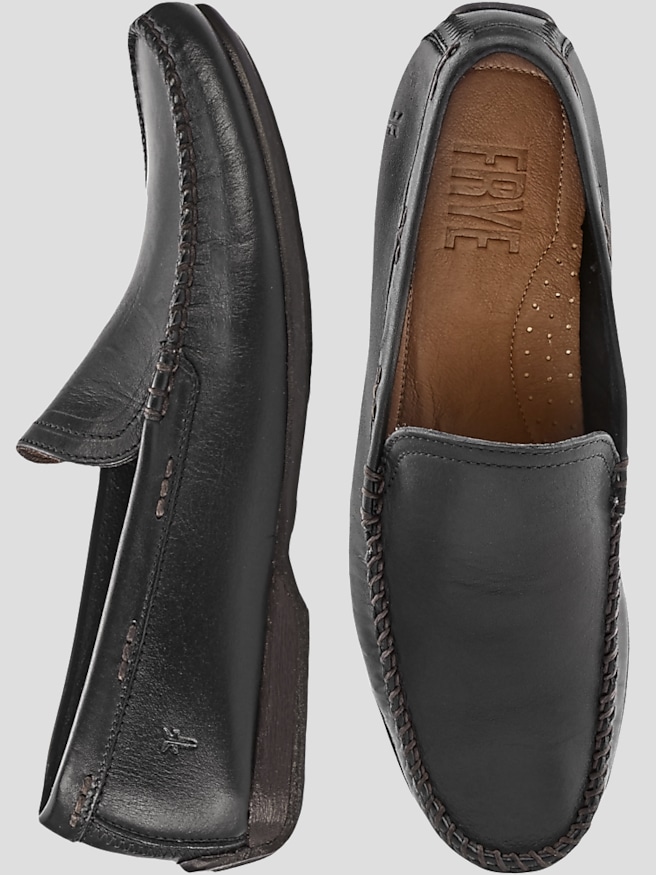
Men’s loafers combine the ease of a slip-on shoe with a silhouette that can look relaxed, refined, or somewhere between the two. Their defining feature is a low-cut upper without laces, but the details across the front of the shoe give each style its character. Penny loafers have a strap across the instep with a small opening, creating a clean, familiar shape that works with chinos, tailored trousers, and dark denim. Bit loafers add metal hardware across the vamp, bringing a more decorative finish to an otherwise streamlined design. Tassel loafers offer another interpretation, with movement and texture that complement a sport coat without requiring a matching suit. Plain-front loafers keep the emphasis on the material and shape, making them easy to work into a pared-back wardrobe. Smooth black leather generally has a dressier appearance, while brown leather can complement everything from navy trousers to gray checks. Burgundy adds depth without being difficult to coordinate, especially alongside charcoal, olive, or dark blue. Suede has a soft, textured surface that gives even a tailored outfit a less formal edge. The shape matters as much as the color: a gently tapered toe looks neat beneath narrow trousers, while a rounder toe and substantial sole create a more relaxed impression. A pronounced lug sole adds visual weight, so it tends to sit more comfortably with substantial fabrics and fuller trouser legs than with very slim dress pants. Driving loafers have a particularly flexible feel and often feature rubber nubs or segmented rubber underfoot. That construction suits driving and casual wear, though it is not necessarily designed for long walks on pavement. For office days, dinner reservations, or a wedding with a dress code that allows loafers, a structured leather silhouette offers a useful balance of comfort and polish. Loafers can accompany some suits, but their suitability depends on the setting; traditional formal dress codes may call for a more formal shoe.
Fit is especially important with loafers because there are no laces to adjust the hold across the foot. A well-fitting pair feels secure through the heel and instep without squeezing the toes or pressing sharply across the top of the foot. The toes need room to lie naturally, and the ball of the foot should align with the shoe’s widest point. A little heel movement can occur in some new leather shoes, but repeated lifting, rubbing, or the feeling that the shoe might slide off suggests the fit needs attention. Leather can soften and conform with wear, yet that does not make a painfully tight shoe the right size. Suede often feels supple from the start, while a more structured leather upper may take longer to become flexible. Trying loafers with the type of socks intended for everyday wear gives a more useful sense of fit than switching between thick athletic socks and thin dress socks. Width, instep height, and the shape of the heel all affect comfort, so the size alone does not tell the whole story. Inside the shoe, a smooth lining and neatly finished seams can help reduce friction, while cushioning can soften the feeling underfoot. Support varies by construction; a soft footbed is not automatically the same as firm arch support. Outsoles also influence how a loafer feels throughout the day. Leather soles offer a slim, traditional profile, while rubber soles can provide flexibility and grip, depending on their tread and composition. A professional who spends most of the day at a desk may favor a lighter, sleeker shoe, while someone walking between appointments may place greater emphasis on cushioning and traction. Durability comes from the combination of materials, construction, fit, and use rather than any single feature. Secure stitching, clean joins, and an upper that flexes comfortably at the forefoot are useful details to consider, especially for shoes expected to become part of a regular rotation.
The most versatile loafers feel connected to the clothes around them rather than added as an afterthought. Black leather with charcoal trousers and fine dress socks creates a restrained office combination, particularly when the trouser hem rests cleanly above the shoe instead of gathering over it. Brown penny loafers with navy chinos and an open-collar shirt strike a more relaxed note, while suede loafers can soften the appearance of dark jeans and an unstructured jacket. Fine-gauge socks preserve a clean line with dress trousers, and no-show socks can provide a bare-ankle appearance without placing the foot directly against the lining. A sock that stays in place matters: fabric slipping beneath the heel can become uncomfortable quickly. Coordinating a leather belt with the general color and level of formality of the shoes helps an outfit feel cohesive, though an exact color match is not essential. Care should reflect the upper’s finish. Smooth leather benefits from regular dust removal, appropriate conditioning when needed, and a compatible cream or polish to maintain its appearance. Suede needs a different approach, usually involving a dedicated brush to lift the nap and remove surface dirt rather than products intended for smooth leather. Any cleaner or protector should be suitable for the material and tested on an inconspicuous area first. Allowing shoes to rest between wears helps the interior dry naturally, and properly fitted shoe trees can help preserve the shape. Direct heat can damage leather and adhesives, so natural drying away from heat sources is the better choice after cleaning. These habits make a difference for loafers worn repeatedly with the same work wardrobe or packed for frequent trips. As a gift for a father, partner, graduate, or friend, loafers are most useful when the recipient’s size, preferred fit, and usual dress habits are already known. Someone who regularly wears tailored pants may appreciate a streamlined leather style, while a more casual dresser may gravitate toward a softer silhouette. For a closer look at this versatile footwear category, explore Popular Loafers.