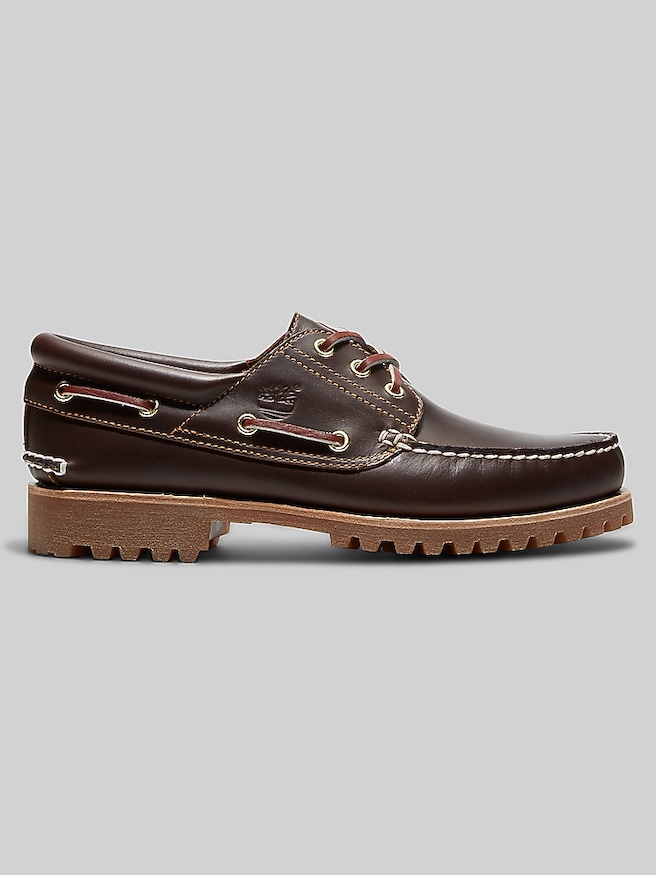
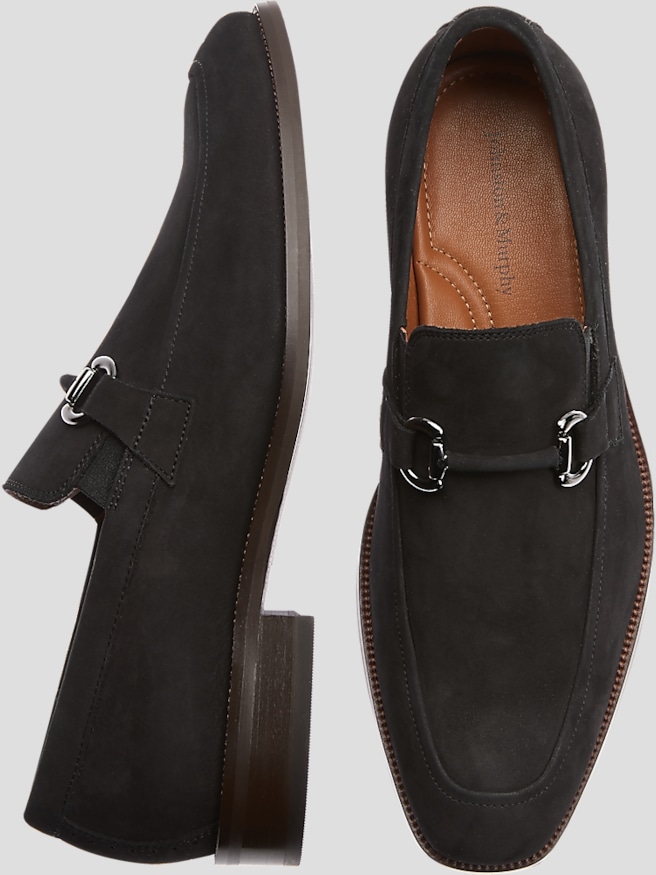
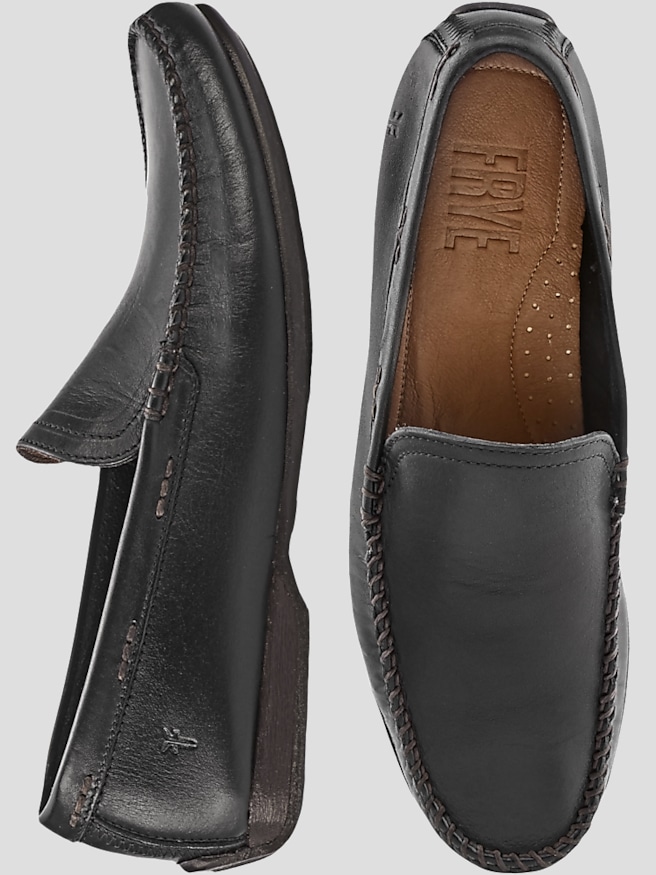
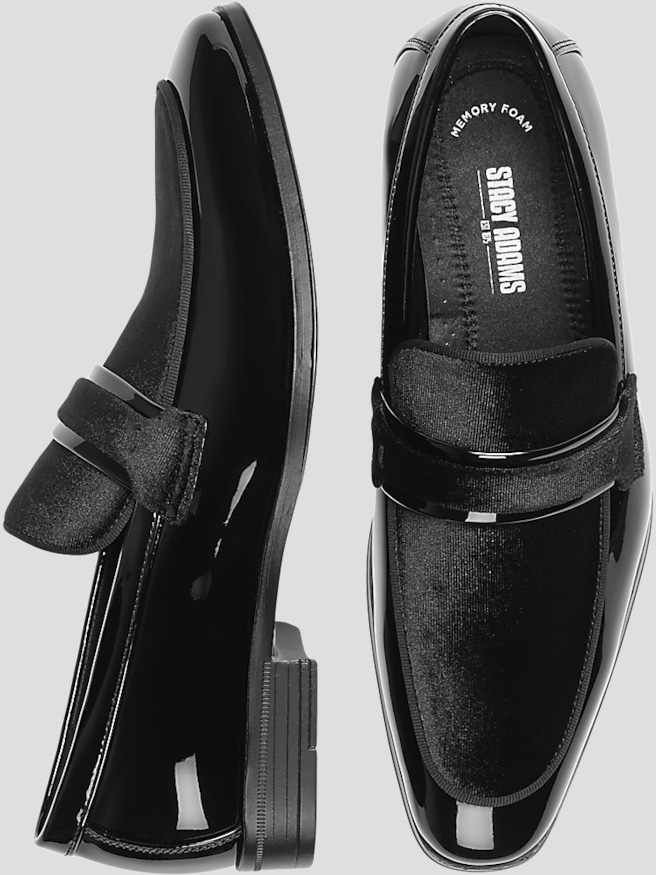
Traditional loafers bring an easy sense of polish to men’s footwear, combining the convenience of a slip-on with the tailored appearance of a classic dress shoe. Recognized by their low profile, open lacing, and often distinctive moc toe construction, loafers can move comfortably between professional settings, social occasions, and relaxed days when sneakers feel too casual. Smooth leather in black, brown, or deep burgundy offers the most formal interpretation, pairing naturally with suits, dress trousers, and pressed wool pants. Suede creates a softer, more relaxed impression that works especially well with chinos, denim, lightweight trousers, and textured fabrics. Among the most familiar designs, penny loafers feature a leather strap across the vamp with a small diamond-shaped cutout, while tassel loafers add decorative leather tassels for a touch of movement and personality. Horsebit loafers are distinguished by a metal accent across the front and can lend a refined finish to tailored clothing, while Venetian loafers keep the upper clean and minimal with little or no ornamentation. Each style has its own character, but all share the practical appeal of stepping in and heading out without the fuss of laces. A well-chosen pair may be the shoes that sit beside the door for weekday commutes, dinner reservations, family celebrations, and the occasions that arrive with little notice.
When selecting traditional loafers, start with the way they will be worn most often. A pair intended for the office should complement the colors and fabrics already hanging in the closet. Black leather has a crisp, formal quality that suits charcoal and navy tailoring, while medium and dark brown shades add warmth to blue, tan, olive, and gray trousers. A more relaxed brown or suede finish can make everyday outfits feel considered without appearing overdressed. Fit is especially important in a slip-on because the shoe should feel secure across the instep without pinching the toes or allowing the heel to lift excessively with every step. Try loafers while wearing the type of socks they will usually accompany, and allow enough room for the foot to spread naturally. A softly rounded toe often provides comfortable room for daily wear, while a sleeker toe shape creates a sharper appearance with formal trousers. Look closely at the sole as well: a leather sole can offer a streamlined, traditional profile, while rubber or textured soles may provide additional traction and durability for long walks, busy commutes, and changing conditions during the cooler months. Construction details such as neat stitching, a stable heel, a supportive insole, and a clean finish around the vamp can make a noticeable difference over time. For shoppers building a versatile wardrobe, traditional loafers are often a dependable foundation, and a simple pair of Plain Loafers can provide an understated option when the rest of an outfit includes a patterned shirt, textured jacket, or statement accessory.
Traditional loafers also make thoughtful gifts for men who appreciate clothing that is useful, adaptable, and easy to wear. They can be a fitting choice for a graduate beginning a first professional wardrobe, a member of a wedding party, a father updating his everyday dress shoes, or anyone preparing for an event that calls for a polished appearance. Consider his routine before choosing a finish: a smooth leather loafer may be most useful for an office, ceremonies, dinners, and formal gatherings, while suede may suit a man whose wardrobe leans toward knitwear, chinos, denim, and casual jackets. For someone who travels, slip-on construction is convenient at airports and in hotel rooms, and a versatile color can reduce the number of shoes needed for a weekend away. During warmer weather, loafers can be worn with lightweight trousers and breathable tailoring; as temperatures cool, they look at home with wool trousers, corduroy, layered overshirts, and heavier jackets. Socks can change the mood as well, from fine, understated dress socks for a traditional presentation to subtle patterns for a more personal touch. Leather loafers benefit from regular brushing, occasional conditioning, and storage with support to help preserve their shape, while suede should be protected from moisture and cleaned with an appropriate suede brush. Allowing shoes to rest between wears also helps them keep their structure and feel fresher. Whether chosen for a first formal wardrobe or added to an established collection, traditional loafers offer a lasting balance of comfort, character, and versatility—the kind of footwear that looks equally natural beneath a tailored suit at a reception or with chinos during a relaxed gathering.