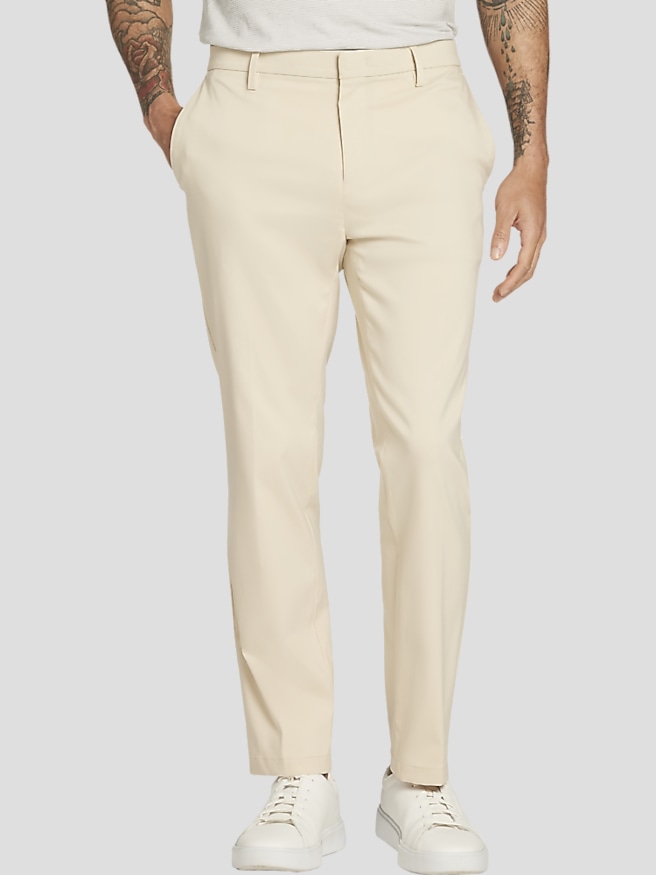
Linen straight leg trousers are pants made from linen or a linen blend, with a leg that remains relatively consistent in width from the knee to the hem rather than tapering sharply toward the ankle. The result is a clean, balanced silhouette with room for movement and a natural drape. Linen comes from the flax plant, and its distinctive texture often includes subtle variations in the yarn that give the fabric character without the need for a pattern. Breathability, moisture absorption, and a crisp initial feel are familiar qualities of the material, while repeated wear and appropriate care can gradually soften its hand. Pure linen typically has a more pronounced texture and develops visible creases as the wearer sits, walks, and moves. Those creases are part of its relaxed appearance, not necessarily a sign that the trousers fit poorly. Linen blended with cotton may feel softer or more substantial, while linen blended with rayon can have a fluid drape. Other blends may improve crease recovery or add stretch, although performance depends on the fabric composition and construction. Fabric weight also affects how trousers look and feel: a lighter weave can fall loosely, while a more substantial weave may hold a defined line through the leg. The appeal of men's straight leg linen pants lies in this combination of texture, ease, and structure. Details such as flat fronts, pleats, belt loops, waistband construction, and pocket placement help establish whether the overall look is more tailored or relaxed. A flat front creates an uninterrupted surface below the waistband, while pleats introduce additional room and a more traditional trouser shape. Lining, pocket bags, and fabric density can influence coverage, particularly with lighter colors. A closely woven fabric generally looks more opaque than an open weave, but color alone does not determine coverage. These details matter as much as the fiber content when choosing trousers for regular use.
A straight leg describes the shape of the leg, not the amount of room throughout the entire pair of trousers. Two pairs with the same leg description can fit quite differently through the waist, seat, and thighs. Rise determines where the waistband sits and influences how the trousers work with tucked shirts, belts, and jackets. A higher rise can create a longer visual line through the leg, while a mid-rise offers a familiar position for many everyday outfits. The waistband should sit securely without depending on a tightly fastened belt to gather excess fabric. Through the seat and thighs, enough room to sit comfortably helps the linen fall naturally rather than pulling into horizontal lines. Pockets that flare outward, pleats that remain stretched open, or fabric that strains across the seat may indicate a fit that is too close. Excess fabric can also interrupt the silhouette, particularly when it bunches beneath the seat or folds heavily around the ankles. Length is best judged with the shoes intended for the outfit. A hem that just meets the top of a loafer gives the trousers a neat finish, while a slight break can suit a more traditional approach. Heavy stacking at the ankle obscures the straight leg shape and can make lightweight fabric look untidy. For an office with a relaxed dress code, a tucked button-down shirt and leather loafers bring definition to linen’s texture. A knit polo offers a softer alternative that still looks considered for dinner or an informal gathering. Clean, understated sneakers shift the same silhouette toward casual use, while a tailored jacket can lend structure for a celebration or restaurant reservation. Wedding attire depends on the invitation and setting; linen trousers can suit a relaxed dress code, but they are not a substitute for prescribed formal attire. Neutral shades make coordination straightforward, and subtle tonal contrasts let the fabric’s texture remain visible without competing with the rest of the outfit.
Care plays an important role in preserving the fit, finish, and useful life of linen straight leg trousers. The care label is the starting point because fiber blends, linings, dyes, and waistband construction can require different treatment even when the outer fabric looks similar. Some trousers permit machine washing, while others call for professional cleaning. When washing is permitted, a gentle cycle, an appropriate detergent, and the recommended water temperature help limit unnecessary stress on the fabric. Excessive heat can cause shrinkage or affect the garment’s shape, so drying instructions deserve the same attention as washing instructions. Air drying may be suitable when the label allows it, with the trousers reshaped carefully and supported to avoid stretching. Pressing slightly damp linen can help smooth stubborn creases, but the iron setting should follow the garment’s instructions, especially for blended fabrics. A pressing cloth can protect the surface, and careful steaming can ease wrinkles without flattening every trace of texture. There is no need to chase a perfectly crease-free appearance throughout the day; the distinction is between linen’s natural folds and deep wrinkles caused by cramped storage. Hanging trousers neatly after wear and keeping them out of an overfilled closet helps maintain their line. Linen fibers are durable, but the finished garment still depends on sound seams, secure fastenings, and thoughtful handling. Repeated friction at pocket edges, cuffs, and the seat can eventually show wear, while overloaded pockets can distort the drape. For travel, folding along the leg line and unpacking promptly helps keep the trousers presentable for meetings, meals, or gatherings. They can also make a practical gift for a man who appreciates textured fabrics and a comfortable tailored silhouette, especially when his waist measurement, preferred rise, and usual inseam are known. A recipient who favors loafers and collared shirts may appreciate a cleaner hem and structured waistband, while someone with a more casual wardrobe may prefer greater ease through the thigh. Matching those everyday habits is more useful than relying on the size label alone.