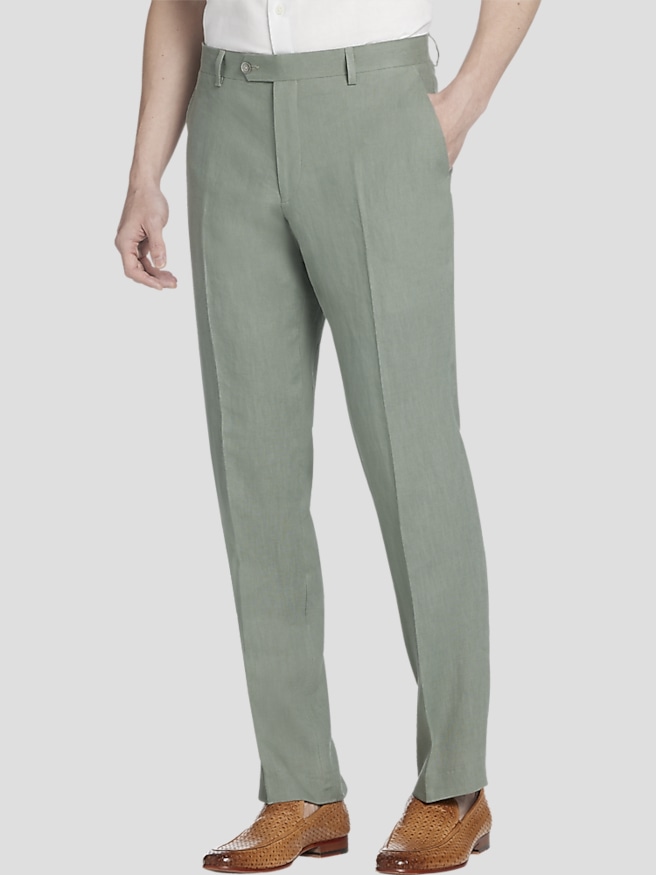
Classic linen trousers are a lightweight, breathable choice for warm-weather dressing, with a tailored shape that looks more polished than most casual pants. Linen is woven from flax fibers and often has a slightly irregular surface that gives solid colors more depth. Look closely at a pair in stone or navy and the small variations in the yarn are part of what sets the fabric apart from a smooth dress twill. The weight and weave matter as much as the fiber. A finer, lighter cloth tends to feel airy and fall softly, while a denser weave can give the leg a cleaner line and offer more coverage, especially in a pale shade. Pure linen has the crisp feel and visible creasing associated with the fabric. A linen-cotton blend can feel softer, while a blend with a small amount of stretch may give a little more at the knee and seat. Those differences are noticeable in everyday wear: a soft pair with an easy drape feels at home with a knit polo, while a more substantial cloth with a pressed crease holds its own next to a tailored jacket. Classic styling usually puts the emphasis on a defined waistband, a straight or gently tapered leg, and a hem that sits neatly at the shoe. A flat front keeps the lines simple; a modest pleat adds room through the upper leg without making the trousers look loose all the way down. That balance is why linen trousers make sense for plans that don’t call for a suit but still call for more than jeans. At a daytime wedding with a relaxed dress code, for instance, a pressed pair with a dress shirt and loafers looks considered without feeling overly formal. At dinner, the same trousers can work with an open collar and a textured sport coat.
Fit makes a noticeable difference with linen because the fabric tends to show where it pulls. A waistband should sit securely without a belt having to cinch it into place, and the pockets should lie flat rather than flare open. There should be enough room through the seat and thigh to sit comfortably without the cloth pulling tight across the lap. Pure linen has little natural stretch, so a cut that looks trim while standing may feel less comfortable through a long meeting or a meal. A straight leg gives the cloth room to fall from hip to hem, while a gentle taper keeps the opening tidy over a loafer. Length changes the impression, too. A hem that just meets the top of a lace-up looks polished without stacking over the shoe; a slightly shorter hem shows more of a low-profile loafer and reads as more relaxed. The shoes most likely to be worn with the trousers are the best reference when checking the length. For a weekday rotation built around button-downs and leather shoes, Linen Work Trousers are a natural next stop. Dark neutrals such as navy or charcoal pair readily with a pale blue shirt and a brown belt, while stone and tan give a navy blazer some contrast without the formality of a matching suit. Where the dress code is more relaxed, a knit polo and suede loafers sit comfortably alongside the texture of linen. The trousers can also be a thoughtful gift for someone who wears tailored separates regularly, provided the recipient’s preferred rise, waist, and inseam are known. The fit of a favorite pair of dress trousers is usually a better reference than the size printed on a pair of jeans.
Linen’s wrinkles are part of its character, though there’s a difference between the soft folds that form behind the knee and a deep crease left by storage. For a casual outfit, a little texture across the lap rarely looks out of place. For a ceremony or a sharper office look, a smooth waistband and a defined crease down the leg make the same fabric look tidier. Care depends on more than fiber content: a lining, waistband construction, or fabric blend can change what the garment can tolerate, so the care label is the best starting point. If the label permits washing at home, a gentle cycle and air-drying can help limit shrinkage and preserve the shape. If ironing is allowed, pressing the trousers inside out can help avoid shiny marks, especially on darker cloth. Hanging them neatly after wear helps keep new folds from setting in, and a hanger that supports the full waistband can keep tailored trousers from sagging to one side. Flax fibers are strong, but durability also comes down to cloth weight, seam construction, and how much friction the trousers encounter in regular wear. A very light weave may show abrasion sooner at the inner thigh or pocket edges than a more substantial fabric, and hems that drag against the ground tend to wear before the rest of the leg. A comfortable fit takes some strain off those areas, particularly for someone who spends much of the day sitting, walking, or getting in and out of a car. The appeal of classic linen trousers is that they don’t need to stay perfectly smooth to look put together. With a clean fit at the waist and a hem that falls neatly over the shoe, they still look at home with a collared shirt after an afternoon on the move.