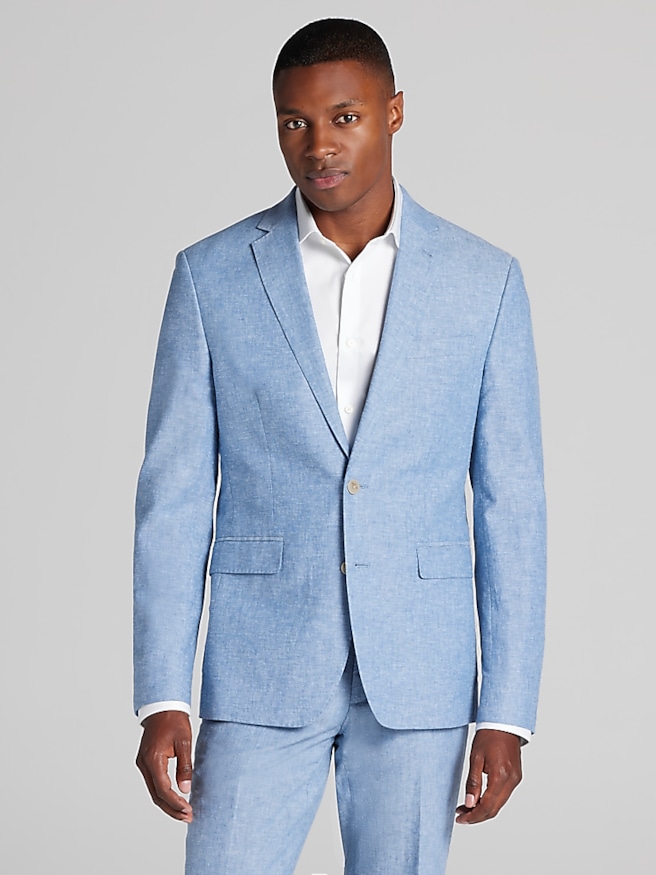
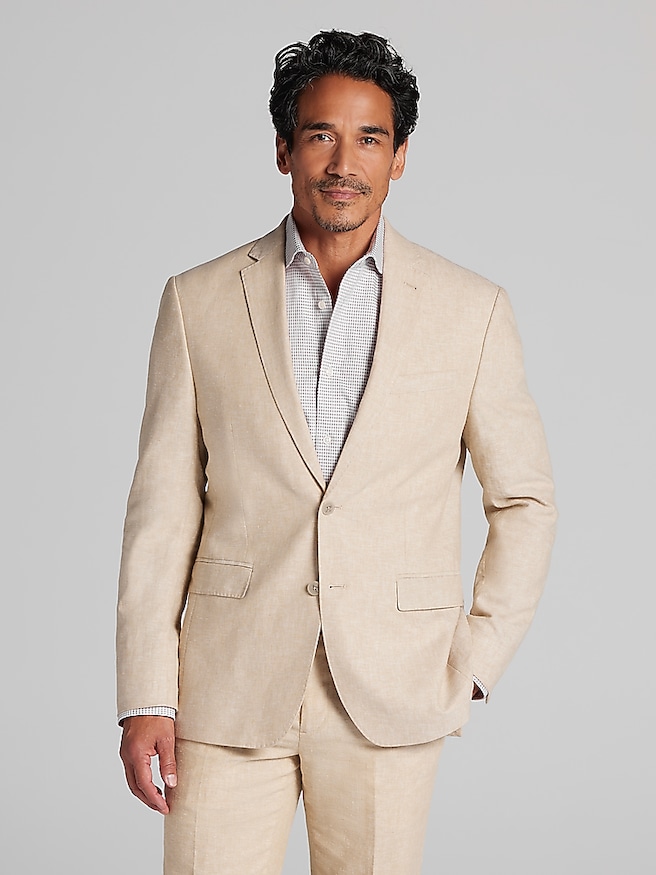
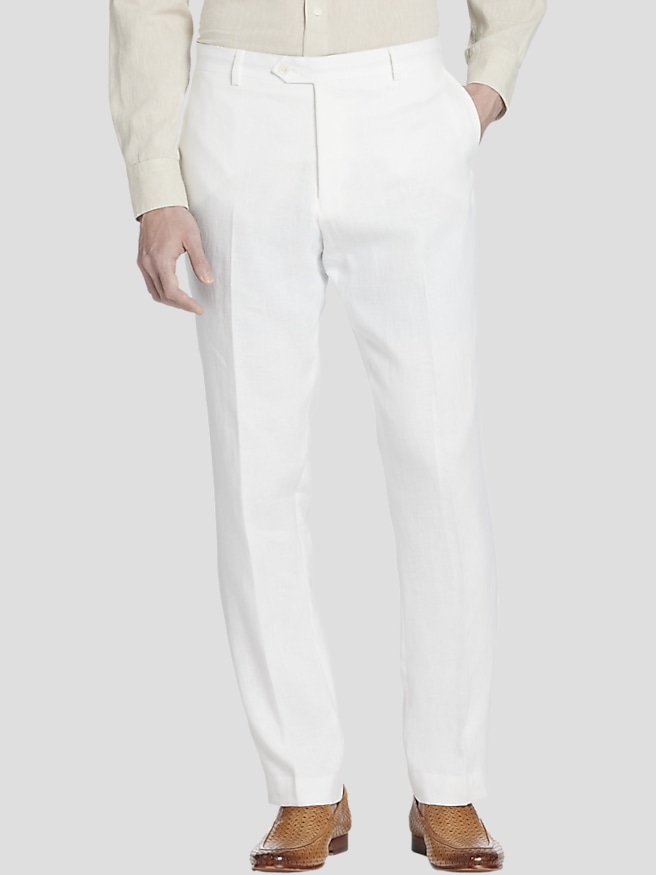
Linen attire for men brings a distinctive texture to everyday clothing and tailored looks, with character that comes from the fabric rather than bold decoration. Made from fibers of the flax plant, linen is known for its strength, moisture absorbency, and naturally crisp hand. Its surface often includes small variations in the yarn, called slubs, that give the cloth visual depth without a printed pattern. That texture works across linen shirts, trousers, jackets, and suits, allowing the same material to feel relaxed in one setting and polished in another. A woven shirt worn open at the collar has an easygoing presence, while a coordinated jacket and trousers create a more deliberate silhouette. Pure linen generally has a pronounced texture and develops visible creases with wear; those creases are part of its character, not necessarily a sign of poor quality. Linen blends offer other possibilities. Cotton can contribute softness, wool can lend body and a more tailored drape, and certain synthetic fibers can help with shape retention or wrinkle resistance, depending on the blend and construction. Fabric weight and weave matter just as much as fiber content. An open weave can feel airy and look less formal, while a denser cloth offers more coverage and a firmer outline. Jacket linings also affect how a garment feels and moves, so an unlined linen jacket and a fully lined one can provide noticeably distinct experiences even when their outer fabrics look similar. Color adds another layer of versatility: natural flax tones emphasize the material’s organic appearance, navy gives it a sharper tailored expression, and gray provides a neutral foundation for varied shirt and shoe combinations. The result is clothing with enough texture to stand on its own, whether the overall look centers on a simple shirt and trousers or a complete tailored outfit. Linen’s appeal lies in that balance of visible craftsmanship, practical comfort, and an appearance that does not depend on remaining perfectly smooth.
Fit determines whether linen’s natural ease looks intentional. A linen jacket should sit cleanly across the shoulders, with enough room through the chest to close without pulling at the button. Excess fabric can overwhelm its drape, but an overly tight cut can create sharp tension lines that are distinct from the soft creasing associated with the material. Trousers benefit from similar balance: a comfortable rise, room through the seat and thigh, and a leg shape that falls neatly rather than clinging. A lightly tapered silhouette can look contemporary without sacrificing movement, while a straighter cut emphasizes a relaxed, traditional profile. Hem length changes the finish, too. A slight break reads more conventionally tailored, while little or no break creates a cleaner line above loafers or lace-up shoes. Linen shirts offer their own range of proportions, from trim shapes that sit smoothly beneath a jacket to roomier cuts that work untucked when the hem is designed for it. These distinctions help linen attire suit a range of occasions without treating every outfit as interchangeable. An open-collar shirt with separate trousers can feel appropriate for a restaurant dinner or a casual celebration, while a coordinated suit can bring cohesion to a wedding or another event with a relaxed tailoring dress code. Linen is not a substitute for formal evening attire when an invitation specifies black tie. For ceremonies beside the water, linen beach wedding attire for men connects the fabric’s relaxed texture with the more considered proportions of occasion dressing. Footwear and accessories help establish the final level of formality: suede loafers soften a tailored outfit, smooth leather shoes add definition, and a textured tie can complement linen without competing with it. Keeping shirt patterns restrained lets the fabric remain the focal point. A pale shirt beneath a darker linen jacket, for example, creates contrast that looks finished in photographs while preserving the understated quality that makes linen appealing.
Linen’s durability depends on both the cloth and the way the finished garment is maintained. The fiber itself is strong, but seams, linings, closures, and areas of repeated friction still need ordinary care. A pair of trousers worn for long stretches at a desk may develop creasing behind the knees and across the lap, while a jacket can show folds at the elbows after an evening of dining and conversation. These are expected signs of use; restoring a neat appearance does not require removing every trace of texture. Care labels are the starting point because two garments described as linen can have very different cleaning requirements. Some shirts and trousers permit gentle machine washing, while tailored pieces may require professional cleaning because of their internal construction. Excessive heat and unsuitable washing methods can cause shrinkage or affect shape, particularly when fibers, interlinings, and linings respond differently. When washing is permitted, following the specified cycle and drying method helps preserve fit. Pressing while the fabric retains a little moisture can make wrinkles easier to release, provided the iron setting follows the garment’s instructions. A pressing cloth can help protect the surface, and careful steaming may refresh light creases without creating a sharply pressed finish. Between cleanings, hanging jackets on supportive hangers and allowing garments to air before storage helps maintain their shape. Travel brings a different set of demands: linen will usually show folds after packing, so a little settling time and label-appropriate pressing are more realistic than expecting a crease-free arrival. For gifting, linen clothing can suit someone who appreciates tactile fabrics, understated color, or tailoring with a less rigid feel. Familiarity with the recipient’s measurements, preferred trouser rise, and usual shirt fit makes the choice more personal and useful. Across repeated wear, well-cared-for linen often becomes softer while retaining its recognizable texture, giving the clothing an individual character that comes from use rather than embellishment.