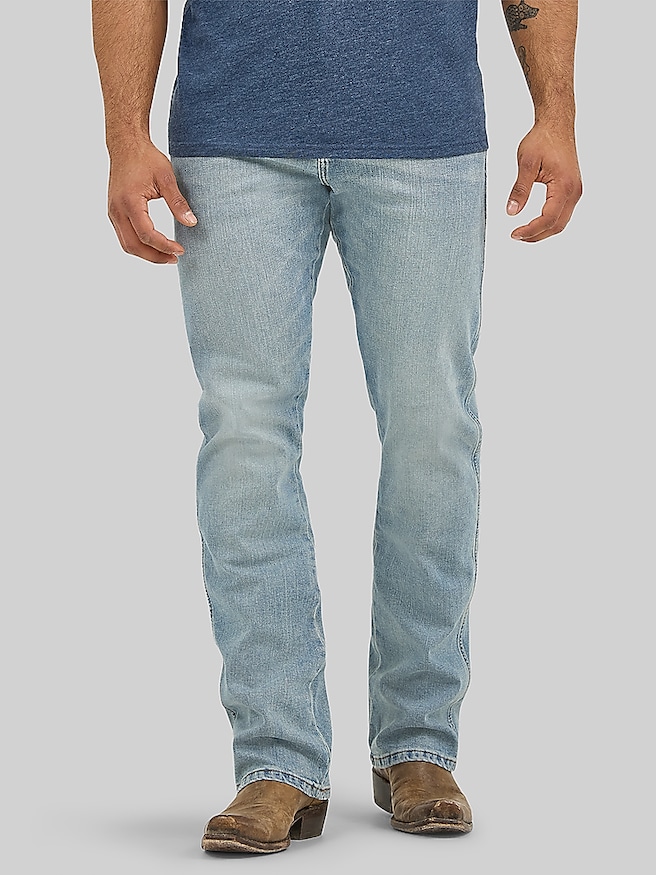
Light wash straight-leg jeans combine a faded denim finish with a leg shape that runs relatively straight from the knee to the hem. The result is an easygoing alternative to dark denim, with a balanced silhouette that feels familiar without looking dated. Pale blue washes can range from a nearly uniform faded shade to more pronounced variations around the seams, pockets, and thighs. Subtle fading creates a quieter look, while whiskering, worn edges, and distressed details give denim a more visibly broken-in character. Those differences matter when putting together an outfit: a clean finish is easier to pair with a collared shirt, while stronger distressing leans toward relaxed settings. Fabric composition also influences how jeans feel and hold their shape. All-cotton denim generally has a more structured feel at first and can soften with repeated wear. Cotton blended with a small amount of elastane or another stretch fiber can provide extra give when sitting, bending, or walking. Stretch content alone does not determine softness or comfort, since the weave, fabric weight, and finishing process also play a part. Lighter-weight denim tends to drape more easily, while a heavier fabric often gives the leg a more defined outline. Neither fabric weight nor a faded appearance tells the whole story about durability. Consistent stitching, secure belt loops, reinforced pocket corners, and neatly finished seams are useful construction details, especially for jeans worn frequently. A light wash is a color treatment, not a measure of how much life the fabric has left. Denim can have a faded appearance without being thin or heavily worn. For everyday use, the most practical combination is a fabric that feels comfortable against the skin, enough structure to maintain the intended shape, and a finish that suits the places the jeans will be worn.
The appeal of a straight leg is its middle ground between a close-fitting silhouette and an intentionally roomy one. It typically offers a more open hem than a tapered cut, but it does not automatically mean a loose fit through the seat and thighs. Two pairs with the same waist measurement can feel quite different because of their rise, thigh allowance, and overall proportions. The waistband should sit securely at its intended position without needing a belt to gather excess fabric, and the seat should allow comfortable movement without pulling tightly across the pockets. A mid-rise can offer a familiar fit for daily wear, while a higher rise places the waistband farther up the torso and changes how tucked shirts sit. Rise is especially noticeable when seated, so comfort at a desk or behind the wheel matters as much as the standing view in a mirror. Some room through the thigh helps preserve the straight silhouette instead of making the upper leg look strained. Length also affects the finished appearance. An inseam that allows the hem to meet the top of a sneaker with little bunching creates a clean line; slightly more length can produce a modest break over a sturdier shoe. Excess fabric stacked around the ankle may hide the shape that makes this cut appealing in the first place. A narrow cuff can expose the shoe and shorten the visible length, although a thick, rolled cuff adds bulk. Light denim can make folds, seams, and bunching more noticeable, making proportion particularly useful to consider. For someone moving between errands, a casual lunch, and an informal gathering, a comfortable straight fit offers flexibility without requiring an oversized shape. The right balance comes from how the waist, seat, thigh, and hem work together, rather than from the fit label alone.
Outfits built around Light Wash Casual Jeans benefit from a clear contrast in color or texture. A navy polo and simple leather sneakers give pale denim definition without making the combination feel dressed up. A white T-shirt keeps the look straightforward, while a charcoal knit or an olive overshirt adds depth against the lighter blue. With a button-down shirt, a full tuck can make the waistline look more deliberate; an untucked shirt works best when its length does not overwhelm the jeans. Brown leather footwear brings a different texture, and streamlined sneakers keep the emphasis on the denim’s clean outline. For a workplace that explicitly permits denim, an undistressed wash with a neat hem can pair with an unstructured jacket and a simple shirt. Light wash jeans remain casual clothing, however, and are not a substitute for tailored trousers when a dress code calls for them. Their everyday character also makes them a thoughtful gift for someone who regularly wears denim, particularly when the recipient’s preferred waist, inseam, rise, and stretch level are known. Measurements from a well-fitting pair are more useful than a waist size alone. Once in regular rotation, care should follow the garment label, since fiber blends and finishes can have different requirements. Turning jeans inside out before washing helps limit surface abrasion, and washing with similar colors can reduce unwanted color transfer. A gentle cycle and a suitable detergent are often useful choices when permitted by the label. High heat can contribute to shrinkage and may damage stretch fibers over time, so drying instructions deserve attention. Spot-cleaning a small mark between washes can reduce unnecessary laundering, while promptly addressing loose stitching or a thinning pocket edge may help prevent a larger repair. Light denim can show spills clearly, making early stain treatment worthwhile; harsh scrubbing can leave an uneven patch. With a comfortable fit, considered proportions, and care suited to the fabric, straight-leg jeans can become a dependable part of an everyday wardrobe.