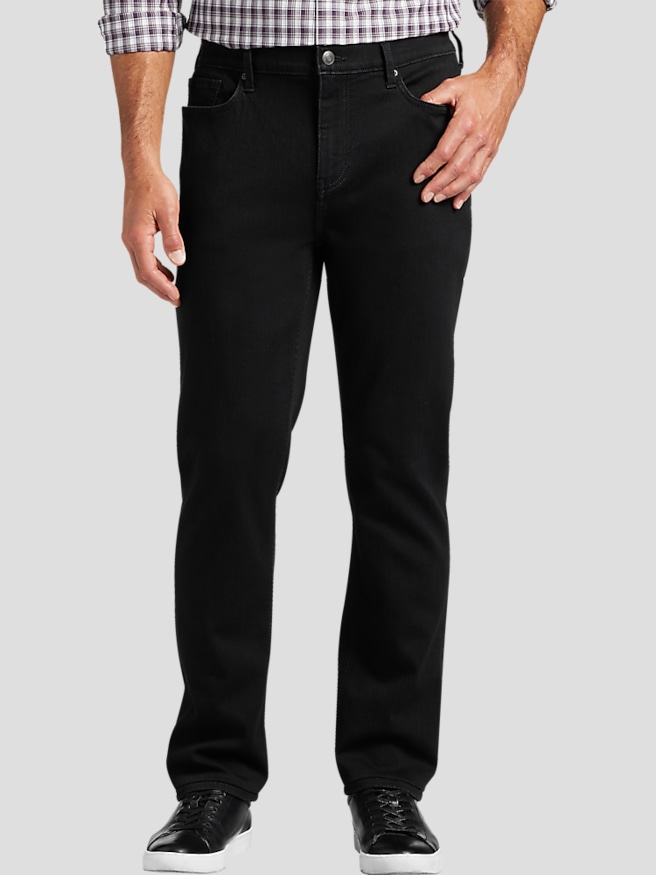
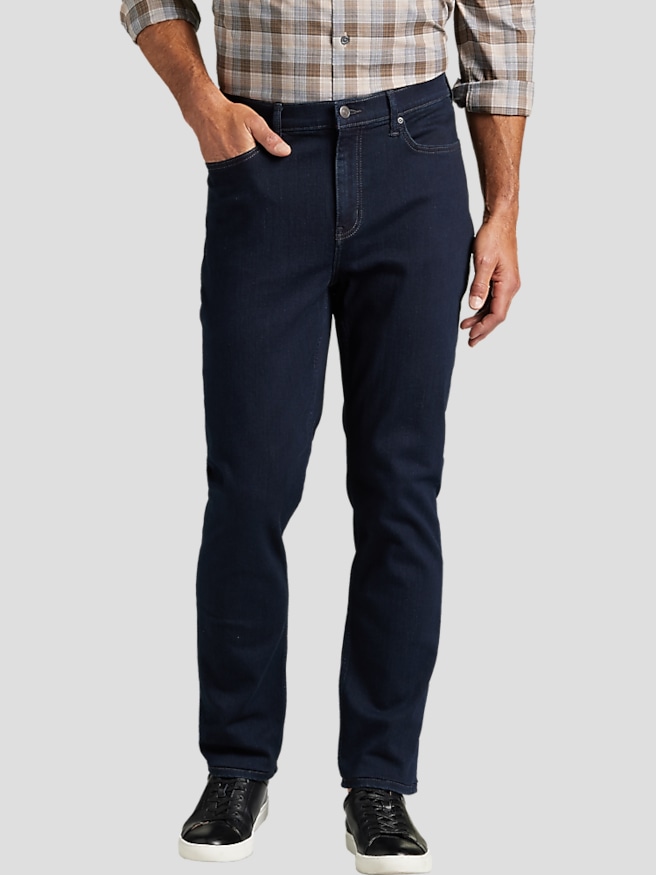
Dark wash straight-leg jeans combine a deep denim color with a leg opening that stays relatively consistent in width from the knee to the hem. That balanced shape gives them a clean profile without the close ankle of a tapered cut or the extra width of a relaxed silhouette. The dark wash adds a more uniform appearance than heavily faded denim, making these jeans a useful foundation for everyday outfits that need a little polish. Rich indigo, subtle tonal stitching, and understated pocket details can sit comfortably alongside an Oxford shirt, a knit polo, or a simple crewneck. With a tucked-in button-down, a leather belt, and loafers, the same silhouette can work in an office where denim fits the dress code. With a T-shirt and low-profile sneakers, it feels easy and casual without looking unfinished. A soft-shouldered sport coat offers another option for dinner or a gathering that calls for something more considered than everyday basics. Dark denim is still denim, though, and does not replace dress trousers when an invitation or workplace requires formal attire. Within the broader category of Dark Wash Mens Jeans, a straight leg is especially useful for someone who prefers a consistent line through the lower leg rather than a pronounced taper. The overall effect depends on the finish as much as the cut: a smooth, evenly colored wash generally looks more understated, while visible whiskering, contrast stitching, or worn-in areas create a more casual impression. Pairing deep blue denim with a white shirt makes that contrast clear; pairing it with charcoal, olive, or navy creates a quieter combination. Footwear helps set the tone, too. Clean sneakers keep the outfit relaxed, while suede loafers or leather boots give it more texture and structure. The appeal is not that these jeans suit every dress code, but that they connect comfortably with many of the shirts, shoes, and layers already in a casual wardrobe.
Fabric and fit determine how dark wash straight-leg jeans feel after several hours of sitting, walking, and moving around. Traditional all-cotton denim often has a firmer hand at first and gradually develops creases and fading where it bends and rubs. Cotton blends with a small amount of elastane or another stretch fiber can offer more give across the seat, thighs, and knees, which may appeal to someone who spends much of the day at a desk or prefers less resistance when sitting down. Stretch content alone does not establish comfort or quality; fabric construction, weight, and recovery also affect whether the jeans hold their shape between wears. Lighter denim tends to drape more softly, while heavier denim often creates a more structured outline. Neither guarantees a better fit. A straight-leg label describes the lower-leg shape, not necessarily the amount of room at the waist, seat, or thigh. Someone with fuller thighs may need more space above the knee even when the hem width looks right, while someone with a leaner build may prefer a closer upper fit to avoid excess fabric beneath the seat. The waistband should feel secure without digging in, and the front pockets should lie reasonably flat rather than pulling open. A rise that sits comfortably when seated can make more difference than a small change in leg width. Length matters as well: a hem that rests lightly on the shoe usually looks cleaner than several folds of denim collecting at the ankle. Trying jeans with the footwear they will accompany gives a more useful sense of proportion, especially before any hemming. Construction details deserve attention, including even seams, secure belt loops, and reinforced stress points around pockets. These features support everyday durability, although no denim is immune to friction or repeated wear. Comfortable movement and a balanced silhouette are better indicators of a useful fit than choosing a smaller size for the sake of a number.
Keeping the deep color looking intentional takes a little care, particularly with indigo denim that may release dye during its first washes or transfer color through rubbing. The care label is the starting point because fiber blends and finishes can require different treatment. When machine washing is permitted, turning jeans inside out, using cold water, and choosing a mild detergent can help limit surface abrasion and color loss. Washing with similar dark colors reduces the risk of staining lighter laundry. Bleach and aggressive stain treatments can leave uneven patches, so any spot treatment should follow the label and be tested discreetly when appropriate. Washing only when the jeans need cleaning, rather than automatically after every brief wear, can also reduce unnecessary wear on the fabric. Air-drying away from direct sunlight is often a practical option when the label allows it; excessive dryer heat can affect shrinkage and the performance of stretch fibers. Deep indigo deserves particular caution around pale upholstery, light-colored shoes, and light leather accessories until any tendency toward color transfer is understood. Over time, lighter creases at the knees and pockets are a normal part of denim’s character, not necessarily a sign of poor construction. For someone who values a consistently polished appearance, a relatively even wash and careful laundering help preserve that effect. For someone who enjoys a more personal, broken-in look, gradual fading gives the fabric its own pattern of wear. That combination of familiarity and versatility also makes dark wash straight-leg jeans a thoughtful gift for a father, brother, partner, or friend whose size and fit preferences are known. Matching a favorite pair’s waist, rise, and inseam is more dependable than guessing from appearance alone. Whether intended for casual office days, restaurant dinners, travel, or time with friends, the most useful pair is one that feels comfortable in motion, works with familiar footwear, and looks natural with the way the wearer already dresses.