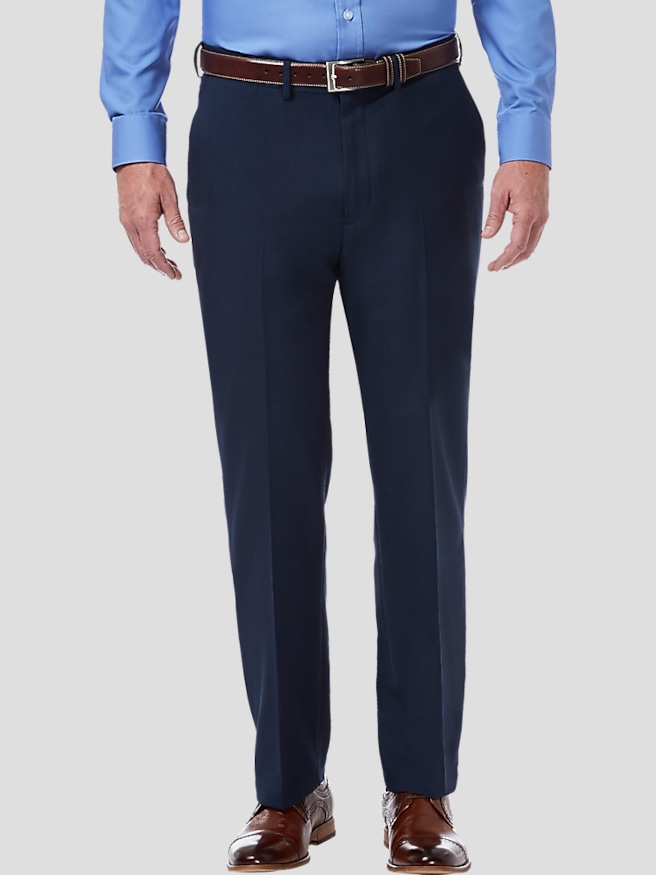
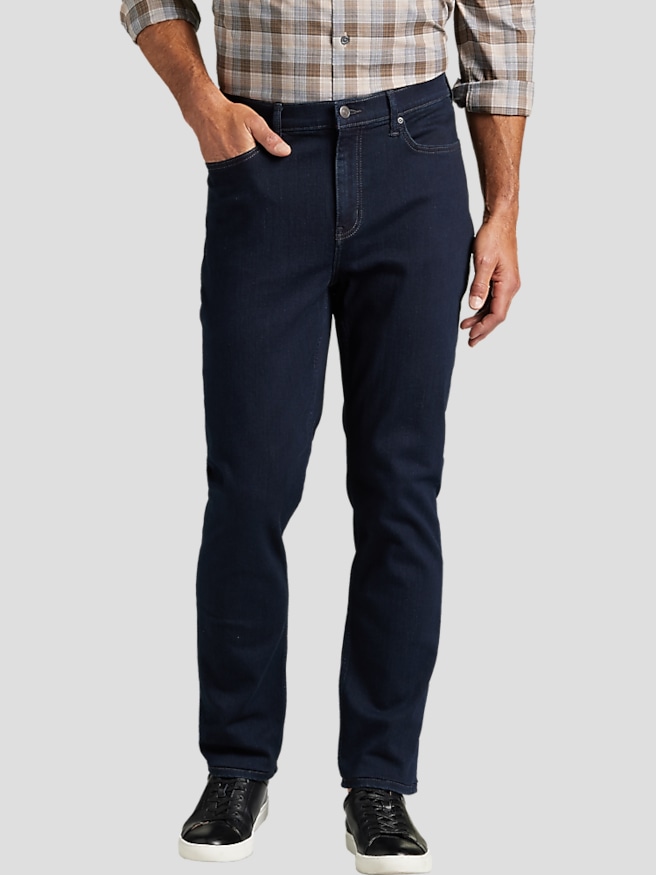
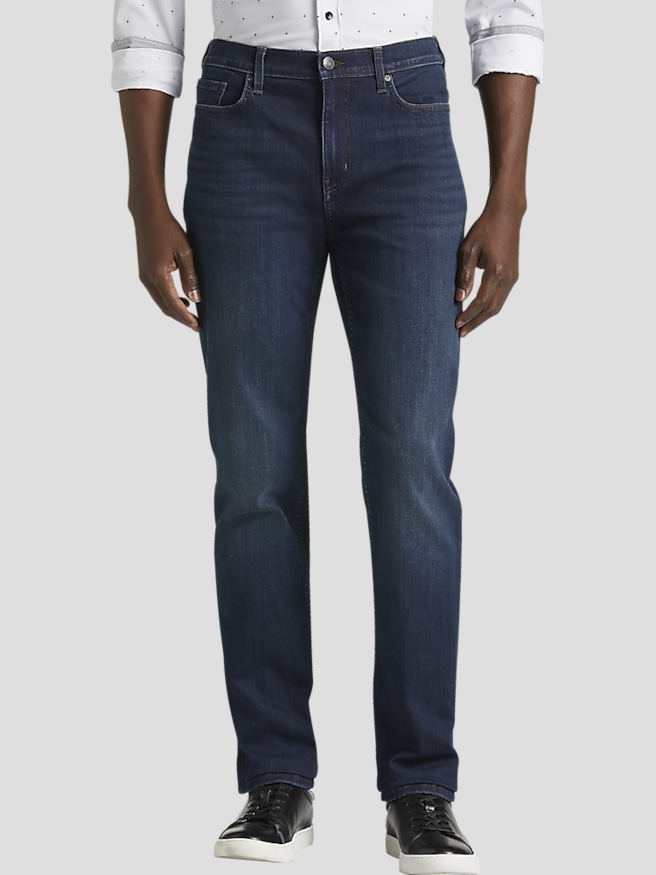
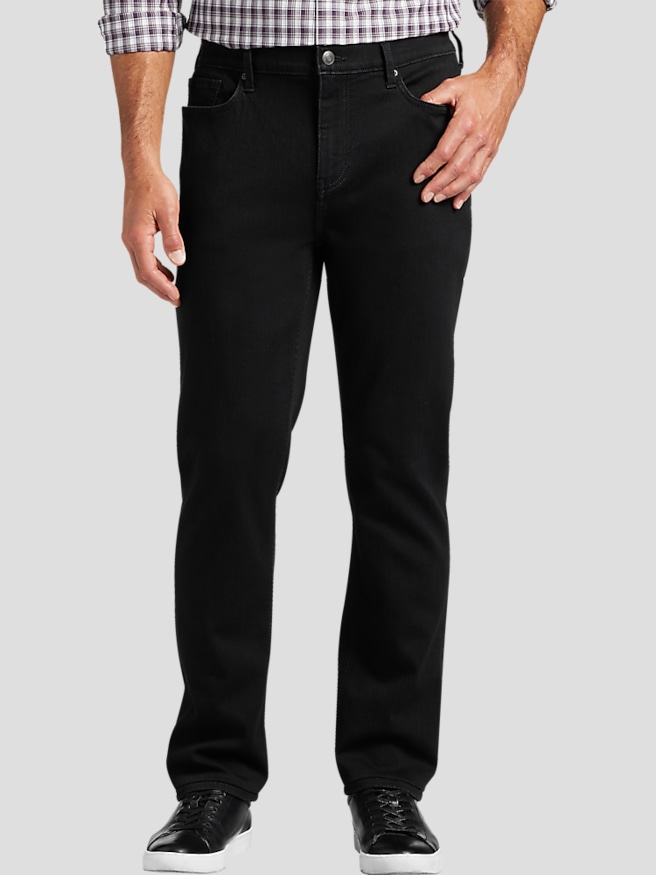
Dark wash denim is denim with a deep, saturated color, usually rich indigo or near-black, and relatively little visible fading. Its even tone gives jeans a cleaner, more polished appearance than heavily faded or distressed denim while preserving the familiar texture and everyday practicality of the fabric. That balance makes dark denim useful for a wide range of settings, from a casual office that permits jeans to dinner with friends, a concert, or a relaxed date night. A dark wash does not make jeans formal clothing, but it can make an otherwise casual outfit feel more considered. Paired with a tucked-in button-down and leather loafers, the same clean-lined silhouette takes on a sharper character than it does with a cotton T-shirt and sneakers. An unstructured sport coat works particularly well when its fabric has enough texture to complement denim rather than resemble part of a business suit. For a simple combination, deep blue jeans, a white Oxford shirt, and brown leather shoes provide contrast without relying on bold patterns. A knit polo offers another option when a collared shirt feels appropriate but a crisp woven shirt feels too structured. Within this category, Dark Wash Mens Jeans bring that versatile color palette to familiar everyday silhouettes. Subtle details influence the overall effect: tonal stitching keeps the look understated, while contrasting thread emphasizes the pockets and seams. Minimal whiskering across the upper thighs generally reads as neater than pronounced fading, and an uninterrupted dark leg creates a consistent line from hip to hem. Deep indigo also has a softer visual character than black, with blue undertones that become more apparent in natural light. The result is a practical foundation for outfits built around neutral shirts, textured knits, casual jackets, and well-kept footwear. For someone who prefers a compact wardrobe, dark wash denim can bridge several everyday dress codes without requiring an entirely separate set of shirts and shoes for each occasion.
Fabric composition and fit determine how dark wash denim feels once it becomes part of a regular routine. Traditional all-cotton denim usually has a more structured hand, especially at first, and can soften with wear while developing creases that reflect how the wearer moves. Denim blended with a small amount of elastane or another stretch fiber can provide extra give through the seat, thighs, and knees. That flexibility may be particularly welcome during a commute, a long stretch at a desk, or an evening that includes plenty of walking. Stretch content alone does not establish comfort or quality; fabric weight, weave, cut, and the ability to recover after movement matter as well. A substantial fabric may hold its shape with a more pronounced drape, while a lighter fabric can feel less bulky. Neither is automatically more durable, since construction and care also influence longevity. Dark wash and raw denim are not interchangeable terms: dark wash describes the color and finish, while raw denim generally refers to denim that has not been washed after dyeing. A dark pair may already be softened or treated, so its color does not establish how stiff it will feel or how much it might shrink. Fit should leave enough room to sit comfortably without the waistband digging in or the front pockets pulling open. Straight-leg jeans offer a relatively consistent line below the thigh, while tapered shapes narrow toward the ankle. Slim cuts sit closer to the body, and relaxed cuts allow more room, particularly through the seat and upper leg. An athletic build may benefit from extra thigh room paired with a narrower lower leg, rather than a tight cut that restricts movement throughout. Rise affects where the waistband rests and how comfortably a shirt stays tucked. Length matters, too: a slight break over loafers can look tidy, while excess fabric piled above the shoe can make even a rich, uniform wash appear less polished. Trying jeans with the footwear most often worn helps reveal whether the hem and leg opening work together.
Care plays an important role in maintaining the depth of dark denim and preserving its shape. Always follow the garment’s care label, since fiber blends and finishes can call for specific treatment. For many washable jeans, turning them inside out, using cold water, and choosing a detergent suitable for dark colors can help limit visible fading. Washing with similar dark colors also reduces the risk of dye transferring to lighter clothing in the load. Freshly dyed indigo fabric may transfer color through rubbing as well as washing, so take extra care around pale upholstery, light suede shoes, and light-colored bags, particularly when the denim is damp. Dark color does not guarantee colorfastness. Wash when needed based on wear, odor, and soil rather than relying on a fixed schedule, and address spills promptly according to the care instructions. Avoid aggressive scrubbing in one small area, which can leave a lighter patch against the surrounding fabric. Air-drying away from direct sunlight, when the label permits, helps avoid the heat and friction associated with machine drying. If machine drying is recommended, follow the specified setting and avoid unnecessary heat, especially with stretch blends. Shape the legs gently before drying and let the fabric dry completely before putting the jeans away. Some fading is a natural part of denim’s character; softer lines at the knees, pocket edges, and seams can develop through ordinary use. Strong stitching, secure pocket attachments, and neatly finished seams are useful construction details to consider, though no single feature guarantees a particular lifespan. Rotating between pairs and repairing small seam problems before they spread can help extend useful wear. For gifting, dark wash denim makes the most sense when the recipient’s preferred waist size, inseam, rise, and fit are known. Someone who consistently wears straight-leg jeans may appreciate that familiar shape more than a noticeably slimmer alternative. Whether chosen for daily wear or as a thoughtful wardrobe addition, the strongest match is a pair that feels comfortable in motion, works with familiar outfits, and has care requirements that suit the wearer’s routine.