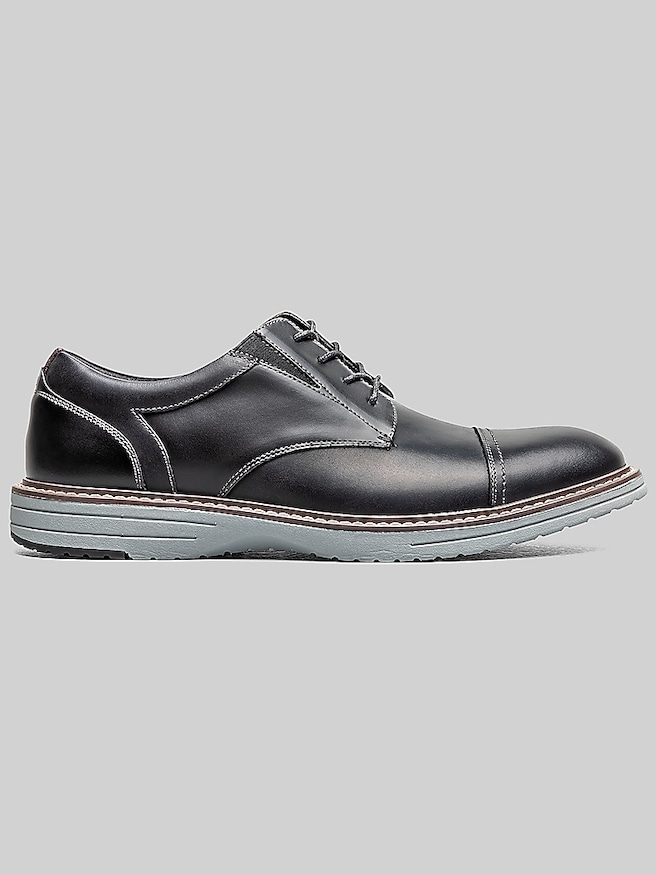
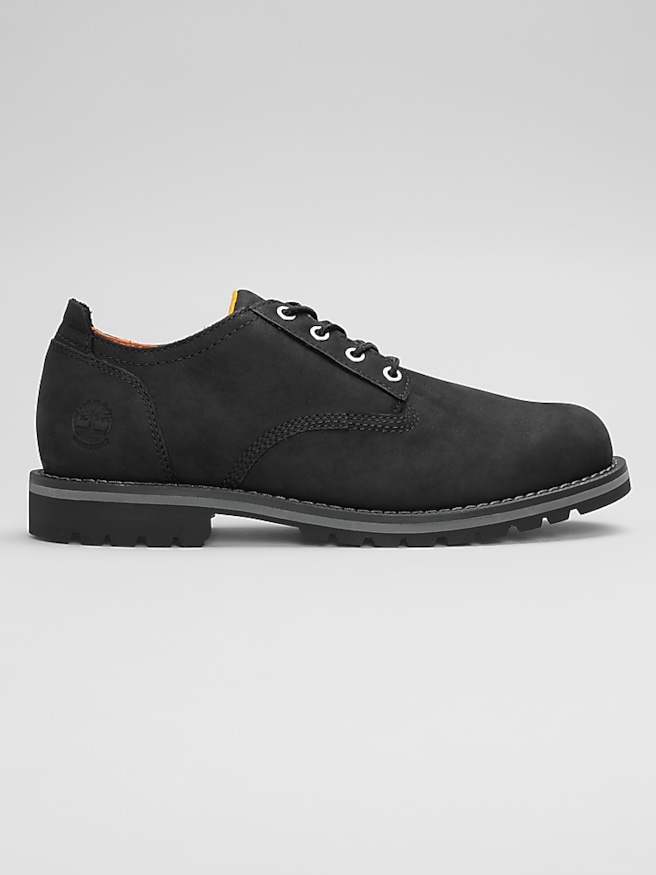
Leather oxfords are lace-up dress shoes defined by a closed-lacing system: the sections that hold the eyelets are sewn beneath the vamp, the part of the upper that covers the top of the foot. This construction creates a neat, close-fitting profile, distinguishing an oxford from a derby, whose eyelet sections sit on top of the vamp. That clean shape makes leather oxford shoes a natural companion to tailored trousers and suits, though the finish, toe design, and sole influence how formal a pair looks. A plain toe has an uninterrupted front, while a cap toe adds a seam across the toe box for a restrained, traditional appearance. Brogue detailing introduces decorative perforations along seams or across the toe; more extensive decoration generally gives the shoe a less formal character. A wholecut upper, made from a single principal piece of leather, emphasizes smooth lines and an especially minimal look. The leather itself contributes as much to the shoe’s character as the silhouette. Full-grain leather retains its natural grain surface and can develop a distinctive patina with wear and proper care. Top-grain leather has been sanded or otherwise refined at the surface for a more consistent appearance. Neither label alone tells the entire story: tanning, finishing, lining, and construction also affect flexibility, feel, and longevity. Smooth leather creates a crisp impression beneath a trouser hem, while pebbled textures add visual depth and tend to feel less formal. Some uppers have a uniform color; others show subtle burnishing around the toe and heel. Leather soles offer a traditional appearance and can feel sleek underfoot, while rubber soles may provide more grip and cushioning, depending on their design. Welted or certain stitched constructions can make future resoling possible, although repairability depends on the complete shoe, not simply the presence of visible stitching.
The appeal of leather oxfords becomes clear when an outfit needs to look considered without drawing attention away from the person wearing it. For a job interview, a smooth cap-toe pair beneath well-fitted suit trousers creates a composed finish. For a wedding guest or a member of the wedding party, a restrained shape keeps the footwear in step with tailored clothing and the event’s dress code. Black leather is the most traditional choice for formal business dressing and pairs naturally with charcoal, gray, and navy suits. Men's Black Oxfords offer that clean, understated foundation, especially when minimal detailing and a polished finish are the priority. Brown leather brings a softer contrast to navy, medium gray, olive, and tan tailoring, with darker shades generally reading as dressier than lighter ones. Burgundy and oxblood tones provide another option for adding depth without relying on bold decoration. Color is only part of the equation: a slim sole and modest toe shape usually look more formal than a thick sole or heavily perforated wingtip. Plain-toe or cap-toe oxfords work well for presentations, client meetings, graduations, and dinners where a suit or tailored jacket feels appropriate. More textured or decorated versions can complement a sport coat and trousers, and some suit dark, neatly finished denim in a relaxed setting. Black-tie occasions call for closer attention to the dress code, since patent leather or another specifically formal shoe may be more appropriate than an everyday leather oxford. A belt in a similar color and level of finish helps connect the outfit without requiring an exact match. Trouser length matters, too: a hem that rests lightly over the shoe keeps the closed lacing and toe shape visible rather than burying them beneath excess fabric.
Fit is especially important with leather oxfords because their closed lacing allows less adjustment over the instep than an open-laced design. A comfortable pair should hold the heel securely, support the foot through the middle, and leave enough room for the toes to lie naturally without pressing against the front or sides. A small, balanced opening between the eyelet sections can be normal; pronounced spreading, pressure across the top of the foot, or painful pinching suggests that a different width, size, or last shape may be needed. The last is the form used to shape the shoe, so two pairs marked with the same size can feel noticeably different. Trying shoes with the dress socks intended for regular wear gives a more useful sense of fit than trying them with thick athletic socks. Leather can soften and conform with use, but breaking in should not mean enduring numbness or expecting a narrow toe box to become substantially wider. For long workdays or events with extended standing, lining softness, underfoot cushioning, arch feel, and sole flexibility deserve as much attention as appearance. Consistent care helps preserve both comfort and finish. A soft brush or cloth removes surface dust before it settles into creases, and a lightly damp cloth can lift ordinary dirt from smooth leather. Shoes should dry naturally away from direct heat. Conditioner formulated for the leather helps maintain suppleness when needed, while a suitable cream or wax polish restores color and develops shine; testing any treatment in an inconspicuous spot helps avoid unwanted changes. Cedar shoe trees can help absorb moisture and maintain the toe shape between wears, and rotating pairs gives the interiors time to dry. Worn heel edges, thinning soles, loose stitching, or damaged lining are reasons to consult a shoe repair professional before small problems spread. As a gift for a graduate, a new professional, or someone who regularly dresses for formal occasions, leather oxfords combine everyday usefulness with lasting personal style. Knowing the recipient’s usual size, width, and preferred toe shape makes that choice more thoughtful than relying on size alone.