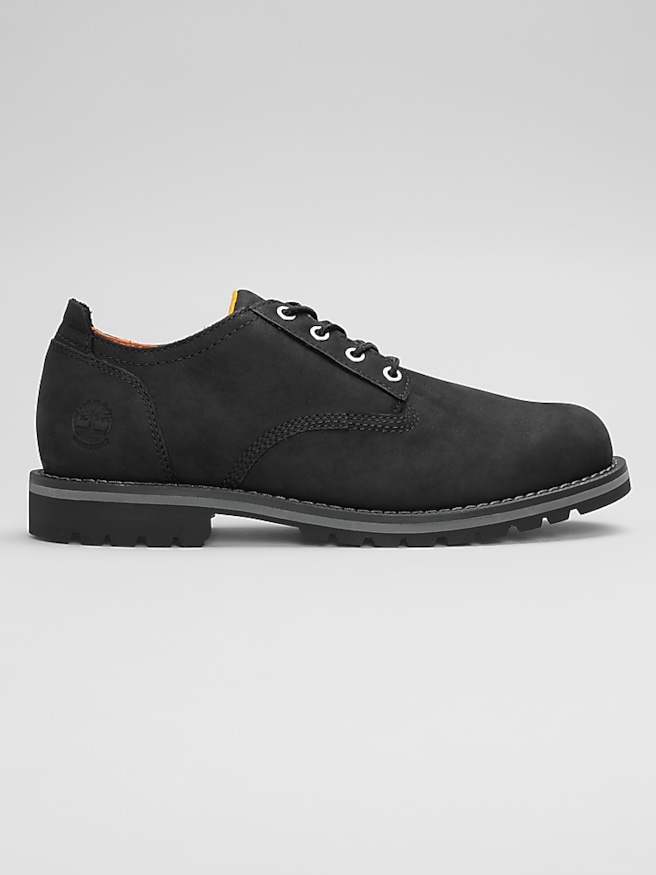
Men's black oxfords are lace-up dress shoes defined by closed lacing: the sections that hold the eyelets are stitched beneath the vamp, the part of the upper that covers the top of the foot. This construction creates a neat, close-fitting appearance that distinguishes an Oxford from an open-laced Derby. The clean profile makes black Oxford shoes a dependable match for tailored clothing, from a navy business suit to charcoal dress pants and a crisp white shirt. They bring a polished finish to job interviews, client presentations, weddings, and other occasions where footwear should look considered without drawing attention away from the outfit. The toe treatment helps set the tone. A cap-toe Oxford has a seam across the forefoot, adding subtle definition that works especially well with business attire. A plain-toe style keeps the front uninterrupted, while a wholecut Oxford uses a single main piece of leather for an especially streamlined upper. Decorative perforations, known as broguing, add texture and generally give the shoe a less formal character than an otherwise similar plain design. For traditional black-tie dressing, a sleek black Oxford in patent leather is an established option; highly polished smooth leather may also be appropriate, depending on the dress code. The details matter more than a glossy finish alone: a restrained silhouette, tidy lacing, and a well-maintained upper help create a cohesive appearance with formal tailoring. Shape also changes the overall impression. A softly rounded or almond-shaped toe offers a balanced look, while an elongated toe appears sleeker and needs enough room beyond the toes without becoming oversized. With straight or tapered dress pants, a hem that rests lightly over the shoe allows the lacing and toe shape to remain visible. For a groom, a wedding guest, or someone building a dependable professional wardrobe, black oxfords offer a foundation that can move between important occasions without requiring a completely separate approach to dressing.
Materials and construction influence how black Oxford dress shoes feel, wear, and respond to care. Smooth leather is a traditional choice because it can take polish and develop subtle character with repeated wear. Full-grain leather retains the hide's outer surface, while other leather finishes may be sanded, coated, or treated to create a more uniform appearance. Neither a glossy surface nor a material label alone tells the whole story; the flexibility of the upper, the quality of the lining, and the way the shoe is assembled also affect the wearing experience. Patent leather has a reflective finish suited to formal occasions, but it needs care appropriate to its coating rather than the same treatment used on ordinary smooth leather. Synthetic uppers can offer a consistent appearance and straightforward upkeep, though flexibility and breathability vary by material. Inside the shoe, a smooth lining, well-finished seams, and cushioning placed beneath the heel and forefoot can make a noticeable difference during a full schedule of meetings or a wedding reception. Outsole construction deserves equal attention. Leather soles offer a traditional dress-shoe appearance, while rubber soles can provide useful traction and cushioning; actual grip depends on the tread and the surface underfoot. A low-profile rubber sole can preserve a refined outline without giving the shoe an overly substantial look. Stitched constructions, including welted designs, may allow resoling when the rest of the shoe remains sound, although repair options depend on the particular construction and condition. Cemented construction bonds the sole to the upper and often creates a flexible, lightweight feel, but it is generally less straightforward to resole. Durability comes from the combination of materials, workmanship, fit, and maintenance rather than one feature in isolation. Someone who walks several blocks between appointments may prioritize sole flexibility and traction, while someone choosing footwear mainly for ceremonies may place greater emphasis on a sleek shape and a finish that complements formal clothing.
A good fit allows black oxfords to look sharp without making the wearer think about every step. The heel should feel secure, the widest part of the foot should align with the widest part of the shoe, and the toes should have room to rest naturally without pressing against the front or sides. Closed lacing offers a tidy appearance, but it also provides less adjustment over the instep than many open-laced designs. A high instep or broader forefoot can make width and the shoe's underlying shape especially important. The eyelet sections do not need to meet perfectly on every foot, but pronounced spreading, uncomfortable pressure, or excessive looseness can signal that another size or shape would work better. Leather may soften with wear, yet break-in should not be expected to correct pinched toes or a shoe that is too short. Trying dress shoes with the socks intended for the occasion gives a more useful sense of fit than trying them with thick athletic socks. For shoppers narrowing the search by size, Men's Size 9 Black Oxfords offer a focused starting point, with width and individual fit still worth checking. Regular care helps preserve both appearance and comfort. Dust and grit can be removed with a soft brush or cloth, and smooth leather benefits from suitable conditioner and polish used according to the material's care directions. Matching black cream can help maintain an even color, while a light application of wax polish can add shine where desired. Cedar shoe trees help maintain the upper's shape and absorb some interior moisture between wears. Allowing shoes to air out before storing them, keeping them away from direct heat, and addressing worn heels before they become uneven can extend their useful life. As a graduation gift, a career milestone gift, or a considered addition to an established wardrobe, black oxfords are most useful when the recipient's size, width, and usual dress requirements are known. The right pair should feel appropriate at a conference table, beneath a wedding suit, and at the next occasion that calls for polished tailoring.