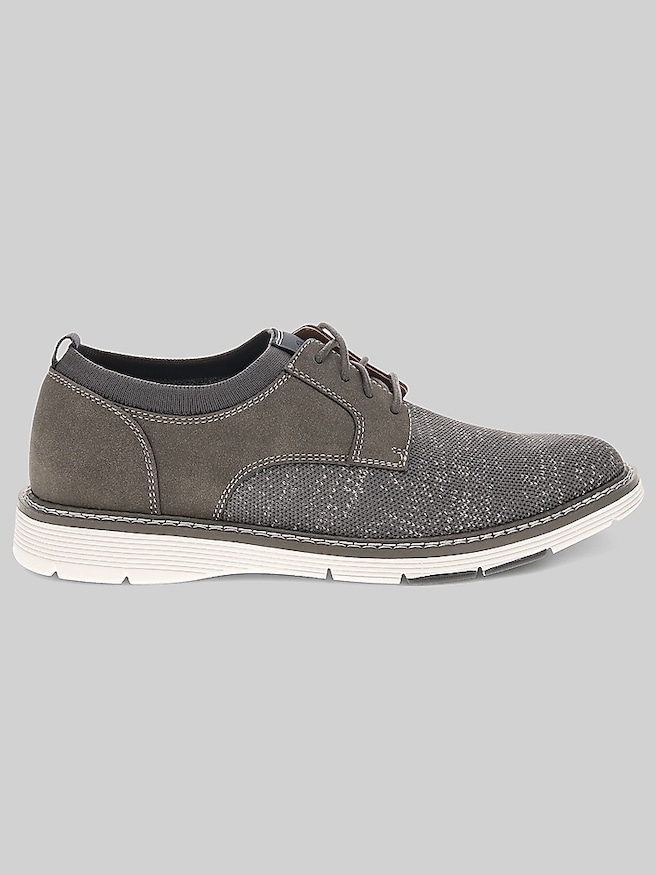
Gray leather shoes span polished oxfords, versatile derbies, easygoing loafers, and casual sneakers, making the color useful for both tailored clothing and everyday outfits. Their appeal lies in the balance between a familiar material and a less expected neutral: gray has the restraint of black without always looking as formal, and it offers an alternative to brown without demanding a brighter wardrobe. The shade makes a noticeable difference. Pale gray creates a softer contrast against dark trousers, medium gray works comfortably with blue and earth tones, and charcoal brings a deeper, more understated finish to dress clothing. Leather also gives gray dimension rather than a single flat appearance. Smooth leather can show subtle variations along the toe and quarters, while pebbled grain adds visible texture and makes the surface feel less formal. Suede has a soft nap that changes slightly as it catches the light; nubuck has a finely buffed surface with a similarly velvety character. These finishes are all leather, but they have distinct personalities and care requirements. Full-grain leather retains natural surface characteristics, while corrected-grain leather generally has a more uniform appearance. Neither the color nor the leather description alone determines how a shoe will feel or perform. The lining, sole, stitching, and overall construction all contribute to comfort and durability. A slim leather outsole creates a traditional dress-shoe profile, while a rubber outsole may offer cushioning, flexibility, or traction, depending on its design. Toe shape matters visually, too: a softly rounded toe tends to move easily between dress and casual outfits, while a longer, more tapered shape creates a sharper impression. Together, these details explain why two pairs of gray leather shoes can serve very distinct purposes, even when their color looks nearly identical.
The most useful styling combinations begin with the trousers and the occasion rather than an exact color match. Medium-gray leather shoes sit naturally beneath navy suit trousers, where the contrast is clear without becoming distracting. With charcoal tailoring, a slightly lighter shoe can keep the outfit from looking too uniform, while a deep charcoal shoe creates a quieter transition from hem to floor. Gray also pairs well with tan chinos, olive trousers, and dark denim, especially when the leather has a matte or textured finish. A smooth oxford with restrained detailing suits presentations, business meetings, and dressier dinners; the closed lacing gives the upper a clean, compact appearance. A derby has open lacing and a somewhat more relaxed character, making it an adaptable choice with a sport coat and separate trousers. Loafers bring an uncluttered shape to outfits built around chinos, knit polos, or softly tailored jackets, while leather sneakers belong with more casual clothing and workplaces that allow them. The versatility of Gray Men's Shoes is especially clear in these familiar combinations, where texture and silhouette influence the result as much as color. For a wedding guest outfit, gray leather can complement a blue suit without creating the strong contrast of a very dark shoe, provided the invitation’s dress expectations allow it. For an office-to-dinner day, a restrained lace-up can carry through both settings without requiring a complete outfit change. Accessories do not need to match the shoes precisely. A belt in a compatible gray or another neutral can feel more natural than trying to reproduce the exact shade and finish. Socks close to the trouser color generally create a continuous line, while a subtle pattern can connect the shoes to another color in the outfit. A trouser hem that falls cleanly over the shoe helps keep the overall effect intentional.
Fit is what makes that versatility practical beyond the first few minutes of wear. Gray leather shoes should feel secure through the heel and midfoot, with enough room for the toes to rest naturally rather than pressing against the front or sides. Leather may soften with wear, but a shoe that pinches or compresses the toes should not be treated as a good fit waiting to happen. Width, instep height, and the shape of the last all matter, so the same labeled size can feel noticeably distinct across silhouettes. Lace-ups offer some adjustment over the instep; loafers depend more on a close, balanced fit because there are no laces to hold the foot in place. Trying shoes with the socks intended for regular wear gives a more realistic sense of space, and walking on a clean surface helps reveal heel movement or pressure points. For days that involve a commute, standing conversations, or extended time on foot, cushioning and sole flexibility deserve as much attention as the upper. Long-term appearance depends on care suited to the leather finish. Smooth leather benefits from gentle cleaning and occasional conditioning with a compatible product, while gray cream or polish should be tested discreetly because it can alter the shade. A neutral product may also change the appearance, so compatibility matters more than the label alone. Suede and nubuck need brushes and care products intended for their textured surfaces rather than ordinary leather cream. Excess moisture should be blotted away, and shoes should dry naturally away from direct heat. Shoe trees can help retain shape between wears, while allowing time between outings helps the interior dry. Regular inspection of heels, stitching, and sole edges can catch wear before it becomes a larger repair. For someone building a work wardrobe, marking a graduation, or choosing a birthday gift, gray leather shoes offer a practical option beyond the usual black and brown. A gift is most useful when the recipient’s size, preferred fit, and typical dress requirements are known, so the shoes suit the person’s daily life as well as their style.