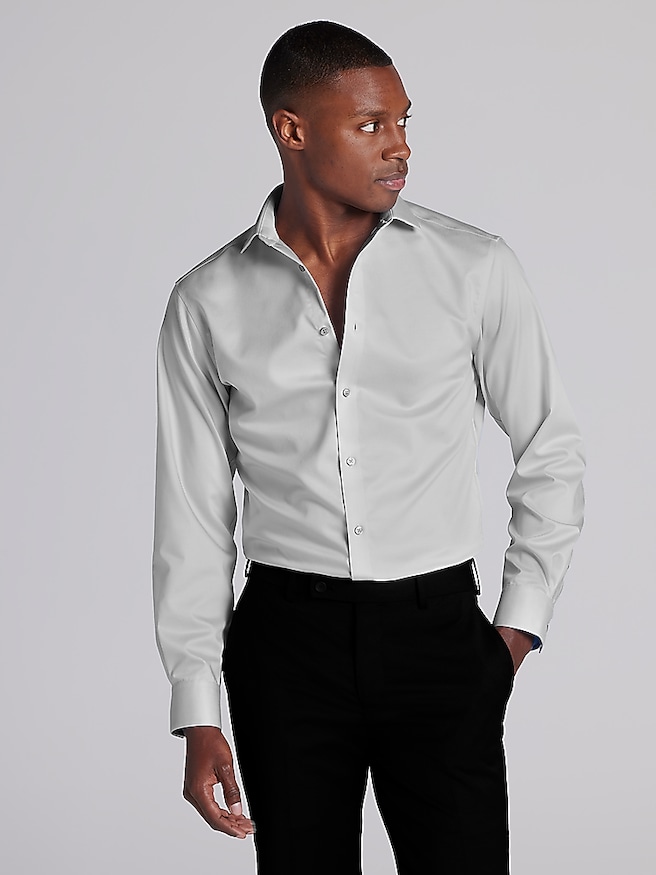
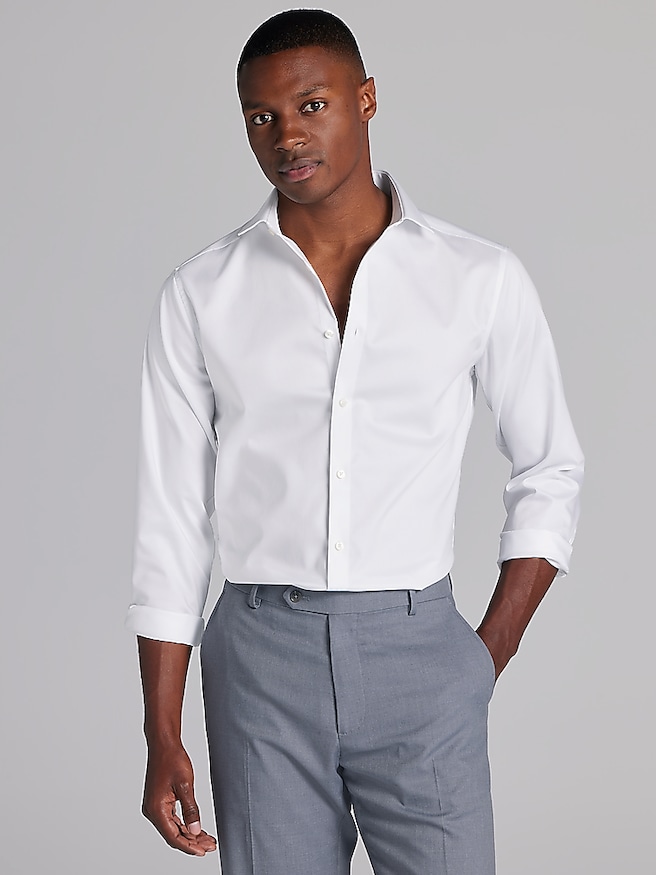
Large cotton shirts combine a familiar natural fiber with proportions suited to a larger size, spanning casual T-shirts, relaxed button-front styles, and dress shirts with a more structured appearance. The large designation describes size rather than a single silhouette: a large slim-fit shirt can sit closer to the body than a large classic-fit shirt, while an oversized cut creates a deliberately roomier outline. Cotton itself is valued for its softness, breathability, and absorbency, qualities that make it comfortable against the skin through a full day of work, errands, or time with friends. The fabric’s construction makes a noticeable difference in how a shirt looks and feels. Cotton jersey has the supple texture associated with everyday tees, while woven cotton holds a more defined shape through the collar, placket, and cuffs. Poplin typically has a smooth, relatively crisp surface that works well with tailored trousers. Oxford cloth has a more visible basketweave texture, giving a button-down a substantial feel without making it look overly formal. Cotton twill has a subtle diagonal weave and often drapes differently from a crisp plain weave. Fabric weight, yarn quality, and finishing also influence softness and structure, so two shirts with the same fiber content can feel quite different. A brushed finish can create a softer surface, while a smoother finish keeps the appearance clean and understated. Fiber labels distinguish all-cotton fabrics from cotton blends, which may include stretch fibers for easier movement or other fibers that change wrinkle behavior and drying time. Neither construction is automatically better; the right choice depends on whether natural fiber content, flexibility, or simpler upkeep matters most. Solid colors emphasize the fabric and cut, while stripes and checks add visual interest beneath a jacket or alongside plain pants. For a particularly versatile foundation, Cotton White Shirts offer a clean starting point for combinations ranging from dark denim to a tailored suit. The overall effect depends as much on the weave and fit as it does on the color.
A well-fitting large cotton shirt provides room to move without relying on excess fabric everywhere. Across the shoulders, a conventional set-in sleeve should generally meet near the shoulder’s edge; a dropped shoulder, by contrast, is an intentional feature of some relaxed designs. Through the chest, the fabric should lie comfortably when standing and sitting, without pronounced pulling between the buttons. Extra fabric is not always the solution to tightness: someone with broader shoulders may need a different cut rather than simply a larger size. Likewise, a shirt that fits the chest but balloons around the waist may feel better in a more shaped silhouette. Size charts matter because a large can represent different body measurements across cuts, and dress shirts may use neck and sleeve measurements instead of a single letter size. A comfortable collar leaves a little breathing room when fastened, while sleeves should reach the wrist without swallowing the hand. Shirt length deserves equal attention. A tucked shirt needs enough length to stay in place when reaching for a shelf or sitting through a meeting, whereas an untucked style generally looks more balanced when its hem does not extend too far down the thighs. Someone with a longer torso may need additional length rather than additional width, making the distinction between large and tall proportions useful. These details affect everyday use in practical ways. At a desk, adequate room through the upper back helps prevent the feeling of being restricted when typing or leaning forward. At dinner, a collar that remains comfortable when buttoned keeps the outfit from becoming a distraction. Under a blazer, a smoother, closer fit limits bunching at the waist and sleeves. Worn on its own with chinos, a roomier cotton button-front shirt can look relaxed while still feeling considered. A cotton tee offers an even simpler option with jeans or casual trousers, with its neckline, sleeve length, and fabric weight shaping the finished look. The best fit supports the way the shirt will actually be worn, not just how it appears while standing still.
The long-term value of large cotton shirts comes from a combination of sound construction, appropriate care, and repeated usefulness. Even stitching, securely attached buttons, and neatly finished seams are useful signs of attention to construction, especially around cuffs, underarms, and other areas that experience regular movement. A heavier fabric may feel substantial, but weight alone does not determine durability; yarn quality, weave, finishing, and laundering habits all contribute. Cotton can shrink, particularly with repeated exposure to high heat, so the care label is more reliable than a blanket rule about how every cotton shirt should be washed. Washing with similar colors, treating marks promptly according to the fabric’s care instructions, and avoiding unnecessary overdrying can help preserve both appearance and fit. Removing a shirt from the dryer promptly and smoothing the collar, placket, and seams can reduce the effort needed afterward. Some woven cotton shirts benefit from ironing or steaming for a crisp finish, while others are intended to retain a softer, more casual texture. Wrinkle-resistant treatments can simplify upkeep, but their care requirements still deserve attention. Storage also makes a difference: structured button-front shirts generally keep their shape well on suitable hangers, while folded jersey tees avoid the shoulder impressions that hanging can sometimes leave. These small habits help a shirt remain useful across office days, family gatherings, travel, and everyday plans. For gifting, a large cotton shirt is most successful when the recipient’s preferred fit, usual measurements, and care habits are already known. Someone who wears a shirt and tie regularly may appreciate a smooth fabric and a collar suited to that routine; someone who dresses casually may get more use from a soft knit or an easy button-down. Familiar colors and understated patterns can make a gift easier to combine with an existing wardrobe. Whether chosen for personal use or given to someone else, a thoughtfully selected cotton shirt earns its place through comfortable proportions, a fabric that suits the occasion, and care requirements that fit naturally into daily life.