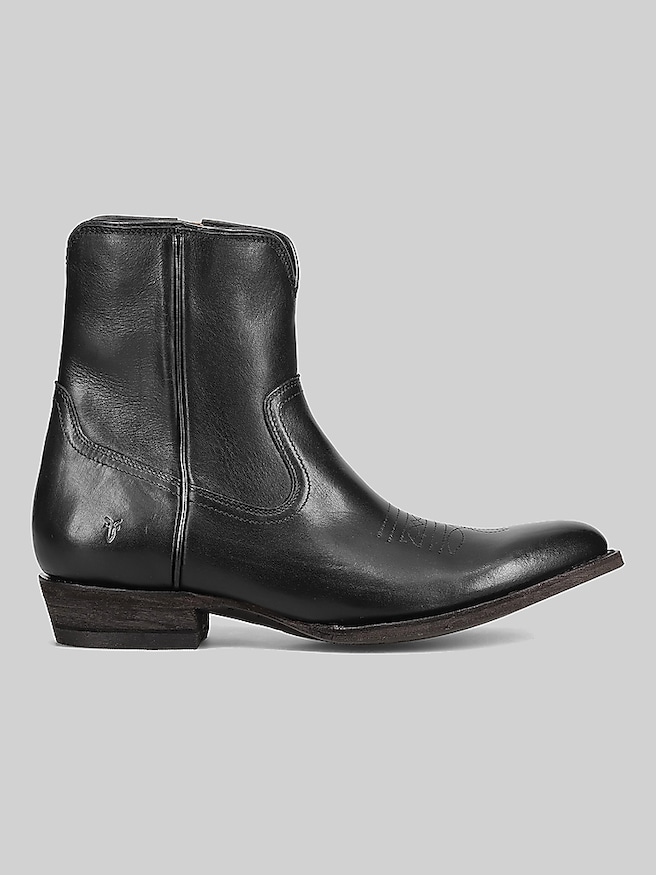
Men's lace boots are lace-up footwear with uppers that extend above the ankle, combining adjustable fastening with silhouettes that range from streamlined dress boots to substantial, work-inspired styles. The laces are more than a visual detail: they allow the fit to be adjusted across the instep and around the ankle, helping the boot feel secure without relying on a fixed opening. That versatility makes lace-up boots useful for everyday outfits, casual office settings, travel, and occasions that call for something more structured than sneakers but less formal than traditional dress shoes. A plain-toe design has a clean, uninterrupted front that works easily with chinos or dark denim, while a cap toe adds a defined seam and a slightly more tailored appearance. Moc-toe stitching, prominent eyelets, and thicker soles give a boot a more rugged character. Materials shape both the appearance and the ownership experience. Smooth leather can develop creases and a patina with regular wear, giving the surface character while still responding well to appropriate cleaning and conditioning. Full-grain leather retains the hide's natural grain, though its feel and flexibility depend on thickness, tanning, and finishing. Suede has a soft, textured surface that lends itself to relaxed outfits; nubuck has a finely buffed outer surface with a similarly understated look. Neither should be treated exactly like smooth leather when it comes to maintenance. Textile panels and linings can influence weight, flexibility, and the feel against the foot, while leather linings may gradually conform to the wearer. A boot's overall character also depends on proportions: a narrow profile and restrained stitching look more refined, whereas a broad toe and substantial outsole create a stronger casual impression. Those differences matter when a pair needs to move naturally between a desk, a dinner reservation, and a weekend gathering without looking out of place.
Fit is especially important with lace boots because the lacing system can fine-tune a suitable shape, but it cannot correct a boot that is fundamentally too short, too narrow, or too roomy. A comfortable fit leaves space for the toes to move without allowing the foot to slide forward with every step. The widest part of the foot should sit comfortably within the widest part of the boot, and the instep should feel held rather than compressed. Some slight heel movement can occur in a new leather boot, but repeated rubbing or pronounced slipping deserves attention. The socks intended for regular wear are part of the fit equation; a pair that feels right with thin dress socks may feel tight with thicker cushioned socks. Trying boots on both feet and walking on a clean indoor surface can reveal pressure points, uneven movement, or a tongue that bunches beneath the laces. Leather may soften with use, but painful pressure is not a sensible starting point, and added length should never be expected from a break-in period. Underfoot construction matters just as much. A cushioned footbed can soften the feel of each step, while a stable heel and a well-shaped sole can make a boot feel more settled during everyday walking. Rubber outsoles often suit casual use, although traction depends on the compound, tread pattern, and surface rather than thickness alone. Leather soles offer a traditional appearance and a distinct feel that may better suit polished outfits. Welted construction can allow resoling in some boots, while other construction methods emphasize flexibility or reduced weight; repair options depend on the individual construction and condition. Secure stitching, reinforced eyelets, and neatly finished edges are useful details to consider alongside comfort. Work-inspired styling should not be confused with protective work footwear, and hiking or job-site use requires footwear designed for those demands. For a commute, a day spent moving between meetings, or an evening on foot, comfort and appropriate construction matter more than a rugged appearance alone.
Lace boots are easiest to integrate into a wardrobe when their color, finish, and proportions complement the clothing worn most often. Black leather creates a clean line beneath charcoal trousers or black denim, particularly when the boot has a modest sole and minimal hardware. Dark brown offers a softer contrast with navy, olive, and gray, while textured suede can make a button-down shirt and chinos feel less formal without appearing careless. For a lighter contrast with dark denim, Tan Boots bring an earthy tone that also works with cream, navy, and muted green. A straight or gently tapered trouser leg usually sits more naturally over the shaft than an extremely narrow opening, and the hem should not bunch heavily above the boot. More refined lace-up styles can complement less formal tailored outfits when the setting allows, but substantial lug soles and pronounced stitching generally belong with casual clothing rather than black-tie attire. Care helps preserve both the finish and the structure. Dust and surface grit can be removed with a soft brush or cloth, and smooth leather benefits from a cleaner and conditioner appropriate to its finish. Too much conditioner can leave residue or change the appearance, making a small test on an inconspicuous area worthwhile. Suede and nubuck call for suitable brushes and dedicated care products rather than ordinary leather polish. After wear, allowing the interiors to air out helps manage everyday moisture, while properly sized shoe trees can support the shape. Boots should dry naturally away from direct heat if cleaning leaves them damp. Laces also deserve attention: frayed fibers, stretched sections, or damaged tips can affect both appearance and fastening, and replacements should match the length and thickness the eyelets require. Alternating footwear when practical gives each pair time between wears, and checking heels and soles before they become heavily worn can help preserve repair options. Lace boots can also make a thoughtful gift for a partner, father, brother, or friend who appreciates practical wardrobe pieces. Familiarity with the recipient's usual size, preferred fit, and everyday clothing makes the choice more personal, especially when comfort and long-term use take priority over an unfamiliar style.