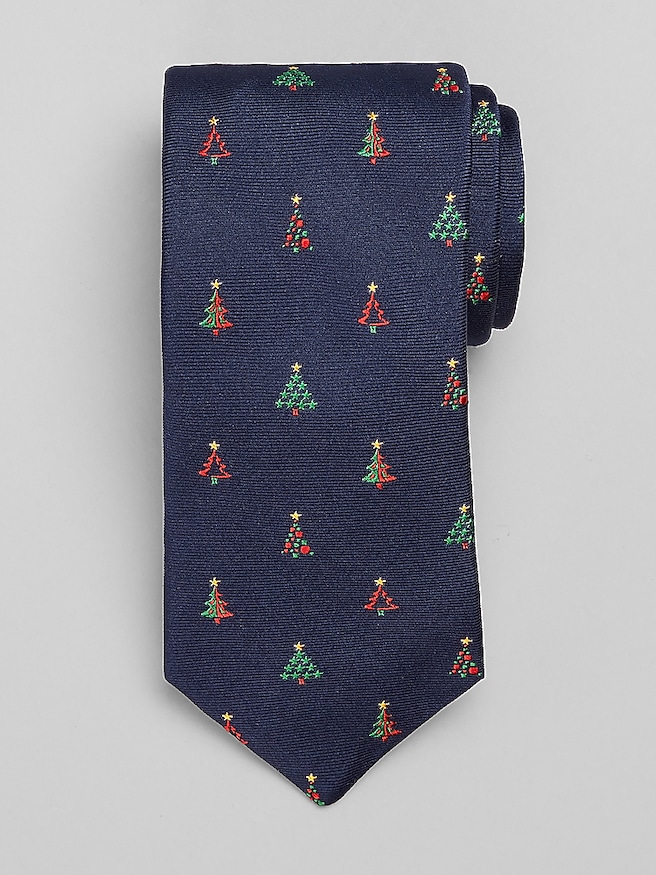
Holiday ties for men include classic tartan plaids, subtle seasonal patterns, rich textures, and playful novelty designs suited to office celebrations, family gatherings, and festive evenings. A tie can bring a holiday note to a familiar suit without changing the character of the whole outfit: burgundy against a white shirt, deep green beside charcoal wool, or a small gold pattern that catches the light at dinner. Traditional plaids have an especially strong connection to holiday dressing, combining intersecting lines and familiar colors in patterns that can feel understated or expressive depending on their scale. Small snowflakes, evergreen trees, and other recognizable motifs make the seasonal connection more explicit, while geometric patterns offer a quieter approach that can work beyond a single celebration. Color matters as much as the motif. Red and green create a recognizable Christmas palette, but navy, silver, wine, and forest tones can feel equally festive without relying on a themed print. For a workplace gathering, a small repeating pattern often sits comfortably between everyday business dress and a more celebratory look. At a relaxed family dinner, a cheerful design can become the focal point of a simple shirt-and-trouser combination. Evening occasions may call for a darker palette, a smoother finish, or a bow tie, depending on the dress code; a holiday theme does not replace the expectations of a formal invitation. Pattern combinations also affect the overall impression. A detailed tie stands out clearly against a solid shirt, while a small tie motif can sit alongside a broader shirt stripe without competing at the same scale. With a plaid jacket, a solid or subtly textured tie gives the eye a place to rest. These choices let holiday neckwear reflect the occasion and the wearer, whether the goal is a polished appearance for a company dinner, a memorable family photograph, or a little personality beneath a suit jacket.
Fabric gives holiday neckwear much of its character, influencing how a tie reflects light, forms a knot, and drapes down the shirtfront. The soft luster of holiday silk ties complements dress shirts and tailored clothing, particularly when a celebration calls for a refined finish. Silk can have a smooth, luminous surface or a more textured appearance, depending on the weave; a woven design may create dimension through the fabric itself, while a printed design applies its pattern to the surface. Wool and wool blends generally have a softer, more matte appearance that pairs naturally with flannel suits, tweed jackets, and other textured tailoring. Velvet brings a distinctive pile and a deeper-looking color, making it an expressive choice for festive evening outfits. Knit ties offer visible texture and a less formal character, although their suitability still depends on the setting. Fiber content alone does not determine durability or ease of care: the weave, lining, stitching, and finishing all contribute to how a tie wears and recovers after use. Shape and proportion are just as important as material. A tie width that relates to the jacket lapels usually creates a balanced appearance, rather than making the neckwear look disconnected from the suit. Length should allow the front blade to finish around the belt line or waistband once the knot is tied, so torso length, collar size, and knot choice all influence the fit. A taller wearer or someone who favors a fuller knot may need additional length. Lightweight fabrics can form a compact knot, while thicker fabrics naturally produce more volume at the collar. A narrow collar opening generally accommodates a smaller knot more comfortably; a wider spread leaves room for a fuller shape. The finished knot should sit neatly within the collar without forcing the points outward or feeling restrictive. A small dimple beneath the knot adds depth, but a clean drape matters more than a perfectly symmetrical crease.
Holiday ties also make thoughtful gifts because a familiar accessory leaves room for personal expression. A recipient who wears a suit regularly may appreciate a restrained plaid or a small seasonal motif that fits easily into an established wardrobe. Someone who enjoys hosting Christmas dinner or attending lively holiday parties may prefer a more noticeable pattern. The most useful clues are often already in the closet: favorite shirt colors, preferred tie widths, typical jacket fabrics, and whether the recipient tends toward bold prints or quiet texture. A tie that coordinates with a navy or charcoal suit can feel personal without requiring a completely new outfit. For someone who dresses formally only a few times a year, versatility may matter more than an elaborate seasonal design; a rich solid or understated pattern can suit a holiday celebration and other dressed-up occasions. Care helps preserve that usefulness. The care label should determine the cleaning method, especially for silk, wool, velvet, and ties made with multiple materials. Many ties require professional cleaning, and rubbing a spill or applying water without checking the fabric can leave marks or disturb the surface. Prompt attention according to the label is preferable to repeated home treatments. After wear, gently undoing the knot instead of pulling the narrow end through a tightened opening reduces unnecessary strain on the fabric and seams. Rest between wears allows minor creases to relax, while appropriate storage helps prevent crushing and snags. Many woven ties can be stored loosely rolled or on a suitable hanger; knit styles may benefit from flat storage to avoid stretching. Direct heat and careless pressing can flatten texture or leave a shine, so finishing methods need to match the material. With sensible care, holiday neckwear can remain part of a recurring tradition, returning for company celebrations, family dinners, and New Year’s Eve gatherings while still looking considered and well kept.