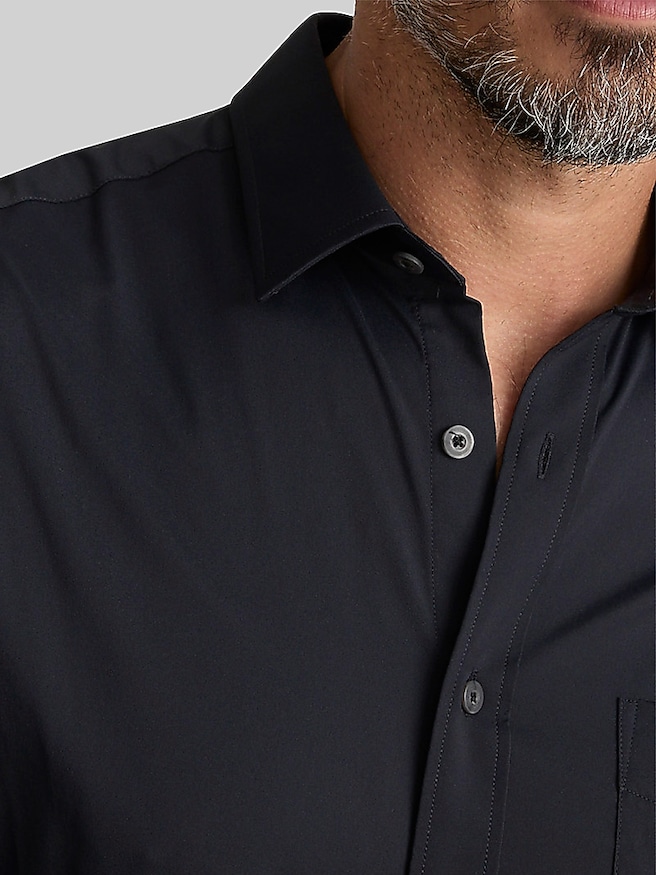
High-quality shirts combine well-chosen fabric, sound construction, and a fit that stays comfortable through everyday movement. Quality is not defined by softness alone: the way a shirt holds its shape, the security of its buttons, and the neatness of its seams all contribute to how it looks after repeated wear. Cotton is a familiar choice for its breathable feel and versatility, with longer-staple fibers capable of producing smoother yarns that resist fuzzing. The weave matters, too. Poplin typically has a smooth, relatively crisp surface that works well beneath a suit, while twill has a subtle diagonal texture and often a more fluid drape. Oxford cloth brings a visible basket-weave texture that feels natural with chinos, denim, or an unstructured jacket. Linen offers distinctive texture and an easy drape, with natural creasing that belongs to its character rather than signaling poor quality. Blended fabrics can introduce stretch, easier care, or improved wrinkle resistance, depending on their composition and finish. Fabric weight and opacity deserve consideration alongside fiber content; a lightweight shirt can be exceptionally well made, but its appearance over an undershirt may differ from that of a denser weave. Construction provides another layer of distinction. Even stitching, smoothly finished seams, securely attached buttons, and reinforcement at frequently stressed areas help a shirt withstand regular use. A collar should sit neatly, a placket should lie flat, and cuffs should feel substantial enough to keep their shape without becoming stiff or distracting. Pattern alignment at prominent seams can also indicate attention to detail, although it is only one part of the overall picture. Neither a high thread count nor an unusually thick fabric guarantees a better shirt. The strongest combination is a fabric suited to the occasion, construction that supports repeated wear, and finishing that feels comfortable against the skin. Those details become especially noticeable during a full day of meetings, a wedding reception, or an evening out.
Fit gives those materials and construction details their purpose. A well-fitting shirt follows the body without pulling across the chest, ballooning at the waist, or restricting the shoulders when reaching forward. Shoulder seams generally sit near the natural shoulder edge, and sleeves should allow comfortable movement without gathering excessively at the wrists. A dress-shirt collar needs enough room to button comfortably, particularly when worn with a tie, while cuffs should close securely without gripping the wrist. Slim, tailored, and classic fits describe broad silhouettes, but those labels are not standardized measurements; neck size, sleeve length, chest room, and overall length provide a more useful picture. A closer cut can create a clean line beneath a jacket, while a roomier shape may suit someone who prefers extra ease through the torso. Neither is inherently better quality. The right choice depends on body proportions, personal comfort, and how the shirt will be worn. Longer shirttails help a tucked shirt remain in place during a commute or a presentation, whereas a shirt designed for untucked wear generally has a shorter, balanced hem. Collar shape also affects the finished outfit. A spread collar creates room for a fuller tie knot, a point collar offers a more contained frame, and a button-down collar has an easygoing character with or without a jacket. For routines that involve extended sitting, frequent reaching, or travel, Performance Shirts can bring stretch, moisture management, or wrinkle resistance into consideration, with exact benefits depending on the fabric and construction. These features complement good fit rather than replace it. An office shirt should remain comfortable at a desk and look composed when standing to greet a client; a shirt for a celebration should allow room to sit, eat, and move without constant adjustment. The best match feels appropriate to the occasion while leaving attention on the conversation instead of a tight collar or a pulling sleeve.
Lasting quality also depends on how a shirt fits into a regular care routine. Care instructions reflect the needs of the fabric, dyes, finishes, and structural components, so they are more useful than a single washing rule applied to every shirt. Some fabrics tolerate machine washing, while others need gentler handling or professional cleaning. Excessive heat can contribute to shrinkage, fading, and wear, particularly when it is repeated, and a wrinkle-resistant finish does not mean a shirt is immune to creasing. Prompt attention to collar and cuff soil helps prevent everyday buildup from becoming harder to remove. Any stain treatment should be compatible with the fabric and its care label, especially on richly colored cloth or delicate weaves. Removing washable shirts promptly after a cycle and smoothing the collar, placket, and cuffs can make finishing easier. When ironing is appropriate, the recommended heat setting helps protect the fabric; removable collar stays should be taken out before washing or pressing. Properly sized hangers support the shoulders without creating pronounced bumps, while neatly folded shirts travel more easily when their collars are not crushed beneath heavier belongings. Durability becomes visible over time in seams that remain secure, fabric that retains a pleasing surface, and collars and cuffs that continue to sit neatly. No shirt avoids wear indefinitely, but thoughtful construction and appropriate care can help preserve its appearance. Versatility matters just as much for a working wardrobe. A restrained solid color can move from tailored trousers to dark denim, while a subtle stripe or check adds interest beneath a plain jacket. High-quality shirts can also make useful gifts for a graduate starting a professional role, a father who appreciates dependable essentials, or a partner preparing for an important occasion. Accurate sizing and a clear sense of the recipient’s preferred fit make the gesture more personal. Whether worn for work, celebrations, or everyday plans, a well-made shirt earns its place through comfort, reliable construction, and an appearance that feels polished without requiring constant attention.