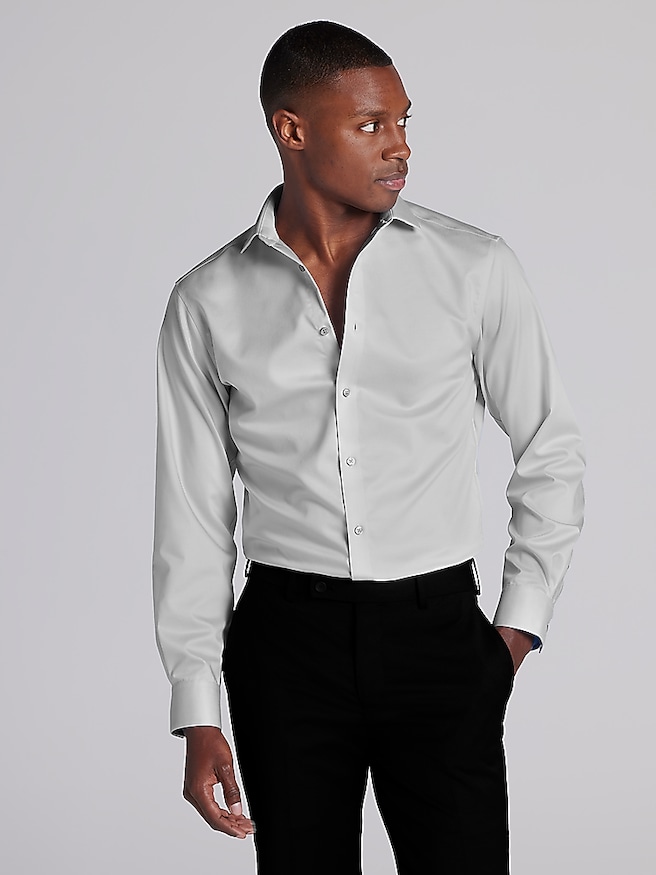
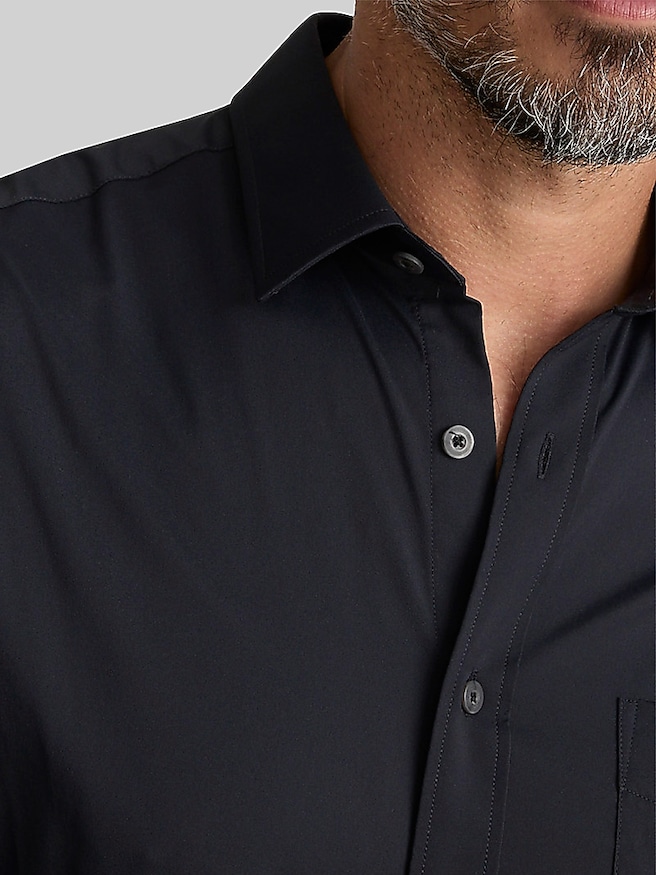
Performance shirts are designed to support comfort and movement, often using polyester, nylon, or blended fabrics that help move moisture away from the skin and dry quickly. Depending on their construction, they may also provide stretch, wrinkle resistance, or a lightweight feel without looking like athletic clothing. That combination makes performance shirts useful for workdays, business travel, dinners, and other occasions that call for a neat appearance through hours of wear. A woven shirt with a structured collar can look at home beneath a suit jacket, while a knit construction generally offers a softer drape and more flexibility. The fabric blend helps explain how a shirt will feel: polyester is commonly used for moisture management and shape retention, nylon can add a smooth hand and resilience, and elastane contributes stretch. Cotton blends may appeal to someone who prefers a familiar, soft texture with added flexibility or easier maintenance. Fiber content alone does not tell the whole story, though. Fabric weight, weave, finishing treatments, and garment construction all influence comfort and appearance. A dense, fine weave may look more polished, while a more open structure may allow greater airflow. Moisture-wicking and quick-drying describe related but distinct qualities: one concerns moving moisture through the fabric, while the other concerns how readily that moisture evaporates. Neither means a shirt prevents perspiration, and odor resistance is a separate feature rather than an automatic benefit of performance fabric. For someone moving from a commute to a morning meeting and then an evening reservation, the appeal is practical: a shirt that allows natural movement while maintaining a composed look. The best match depends on whether the priority is a crisp business silhouette, a softer everyday feel, or a balance between the two. Subtle texture and a matte finish can also make technical fabric feel more natural in a dressed-up wardrobe, particularly when the shirt needs to coordinate with tailored trousers rather than workout clothing.
Fit matters just as much as fabric in performance shirts, especially when stretch is part of the appeal. A flexible material should make reaching, sitting, and bending more comfortable; it should not have to compensate for a shirt that is too small. The shoulder seams should sit close to the shoulders, and the front should lie smoothly without the buttons pulling apart across the chest or stomach. A trim cut creates a closer silhouette under a jacket, while a roomier cut leaves more space through the torso and upper arms. Either can look polished when the proportions suit the wearer. Sitting at a desk, reaching for an overhead compartment, or fastening a seat belt quickly reveals whether there is enough room across the back. Sleeves should allow the elbows to bend freely, with cuffs that sit neatly at the wrist rather than sliding over the hand. For a shirt worn with a tie, the collar needs comfortable room when buttoned; for an open-neck look, collar shape and structure help determine how neatly it frames the face. Length deserves attention, too. A longer hem helps a tucked shirt stay secure through repeated movement, while a shorter, balanced hem is generally better suited to untucked wear. Fabric surface is another consideration for anyone drawn to Smooth Shirts, particularly when an even finish needs to sit cleanly beneath a jacket or sweater. Some performance fabrics have a visible sheen, while others resemble traditional cotton shirting more closely. Neither is inherently better, but the difference affects how a shirt coordinates with textured tailoring, chinos, or denim. Solid colors keep combinations straightforward, and restrained patterns add interest without taking attention away from the rest of an outfit. For business travel, a versatile appearance can be especially useful: the same general style may work with tailored pants for appointments and a more relaxed pairing afterward, without requiring an entirely different approach to dressing.
Durability and care help determine how well performance shirts hold their appeal after repeated wear. Stretch recovery is worth considering because fabric that returns to its original shape is less likely to look stretched out at the elbows or loose around the collar. Neat stitching, secure buttons, and evenly finished seams contribute to a shirt that feels dependable during regular use. Wrinkle-resistant fabric can reduce the effort needed to look presentable, but it is not necessarily wrinkle-proof, especially after being compressed in a travel bag. Care requirements vary with the blend and finish, so the garment label remains the most reliable reference for washing, drying, and ironing. Excessive heat can affect stretch fibers or certain finishes, and fabric softener may interfere with moisture-management properties in some materials. A care routine that follows those instructions helps preserve both the appearance and the intended performance of the fabric. Removing a shirt promptly after drying and hanging it neatly can also limit creasing without unnecessary pressing. For frequent wear, rotating shirts gives each garment a break and makes it easier to keep up with cleaning. Performance shirts can be a thoughtful gift for someone starting an office role, traveling regularly for work, attending professional events, or simply looking for everyday clothing with more freedom of movement. Familiar collar and sleeve measurements are helpful when choosing a gift, along with an understanding of whether the recipient prefers a close fit or additional room. A person who regularly wears ties may value collar structure more than someone who usually dresses with the top button open. Someone spending long stretches seated may care most about softness, stretch, and a waistband area that stays smooth. These everyday details make the category useful beyond any single occasion. A well-chosen performance shirt brings together a suitable fit, an appealing fabric, and manageable care requirements, making it a practical part of a wardrobe built around both presentation and comfort.