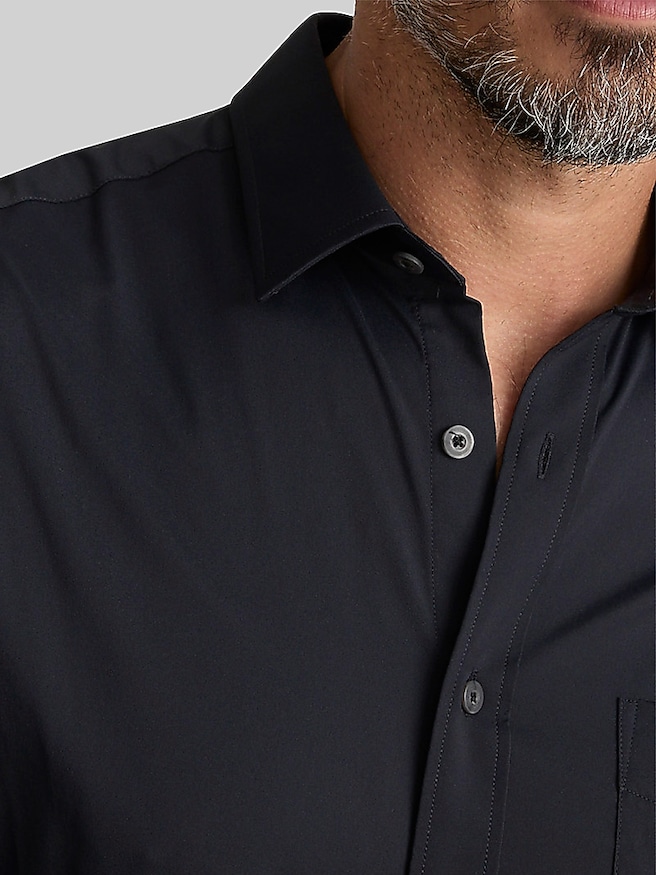
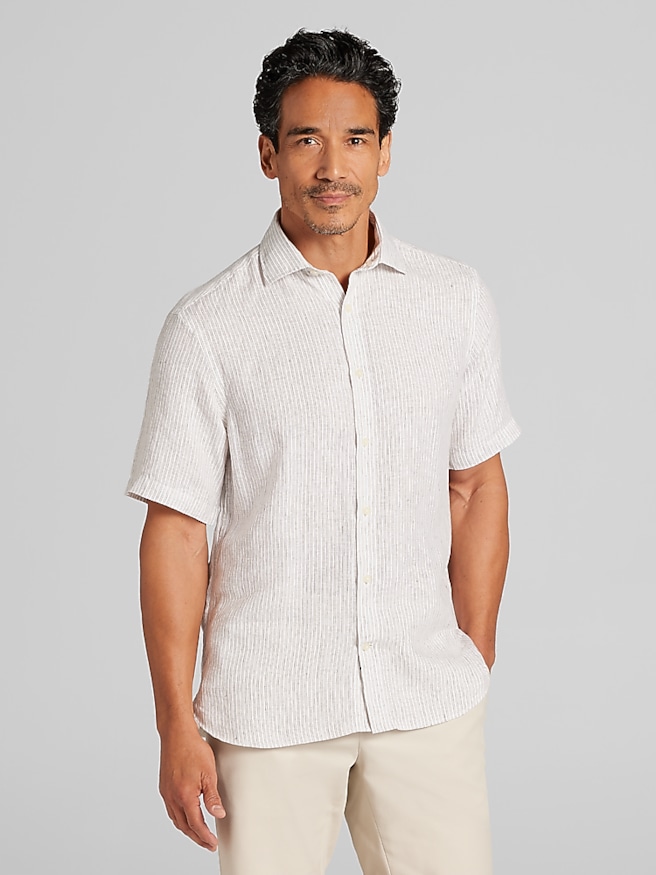
Heathered shirts are shirts made with yarns that combine fibers in two or more colors, creating a softly mottled or speckled appearance rather than a uniform solid shade. Those small variations give the fabric visual depth: a charcoal shirt might have lighter gray flecks, while a blue shirt may show subtle threads of white or navy. The effect comes from the way the yarn is colored and constructed, not necessarily from a raised or rough surface. A heathered shirt can feel smooth against the skin even when its color looks richly textured. Heathering also describes an appearance, not a single fabric composition. Cotton, polyester, rayon, and blends of these fibers can all contribute to the finished material, so the fiber label tells more about everyday comfort and care than the color name alone. Cotton offers a familiar, breathable feel and absorbs moisture, making it a comfortable option for everyday wear. Polyester can contribute shape retention and often dries more quickly than cotton, while rayon can add softness and a more fluid drape. The proportions matter: a cotton-rich knit may feel more substantial and familiar, while a blend with more rayon may fall closer to the body. Knit structure and fabric weight matter just as much. A lightweight jersey generally has an easy, flexible feel; a more substantial knit can provide greater coverage and hold its outline more clearly. Heathering by itself does not promise stretch, moisture management, or wrinkle resistance, so those qualities depend on the fabric and construction. Across T-shirts, polos, and casual button-front styles, the shared appeal is color with a little more dimension. Seen up close, the tiny shifts in tone are noticeable; from across a room, they usually blend into an understated shade that works easily with everyday clothing.
Fit determines whether that subtle texture looks relaxed, tailored, or somewhere between the two. A shirt that follows the shoulders and leaves comfortable room through the chest usually sits more cleanly than one that pulls across the upper body or gathers heavily at the waist. On a conventional set-in sleeve, the shoulder seam generally rests near the edge of the shoulder; dropped-shoulder designs intentionally place that seam farther down the arm. Slim fits tend to sit closer through the torso, while classic and relaxed fits allow more room for movement. Neither approach needs to look tight or oversized. Reaching forward, sitting down, and bending at the elbows should feel natural, without the placket spreading or the fabric straining across the back. Length deserves attention, too. An untucked shirt should look proportionate to the rise of the pants, while a shirt intended for tucking needs enough length to stay comfortably in place. These details help heathered shirts move between familiar settings without looking like an afterthought. A heathered polo with chinos can suit a casual office where collared shirts are appropriate, while a simple crewneck with dark jeans works for a neighborhood dinner or a weekend visit with friends. Under an unstructured jacket, a fine, smooth knit adds quiet texture without introducing another bold pattern. The neckline should lie flat, and the shirt should have enough room beneath the jacket to avoid bunching at the shoulders. Color makes these combinations easier to build. Gray offers a restrained foundation, and Grey Shirts share that useful neutral range, though not every gray fabric has a heathered finish. Blue, burgundy, olive, and other muted heathered shades can also sit comfortably beside solid pants. Pairing the flecked surface with clean, uncomplicated fabrics lets the variation remain visible without making the outfit feel busy. For dress codes that call for a crisp dress shirt, however, a casual heathered knit is not an equivalent substitute.
Long-term satisfaction comes from how a shirt wears and how easily its care fits into a regular routine. The sewn-in care label is the best starting point because two shirts with a similar heathered appearance may have very different fiber blends and finishing requirements. Some washable knits benefit from a gentle cycle, similar colors, and being turned inside out to reduce friction against the outer surface. High dryer heat can contribute to shrinkage in some fabrics and may affect elastic fibers, so the recommended drying method matters more than a general assumption about casual shirts. Removing a shirt promptly after drying can help limit creasing, while reshaping a damp knit and drying it flat may be appropriate when the label directs it. Storage also affects appearance: folding can help prevent shoulder bumps or stretching in soft, heavier knits, while suitable hangers can support shirts designed to hang. Durability depends on yarn quality, fabric construction, seams, and repeated care, not on the heathered finish alone. Even stitching, secure hems, and a neckline that returns to shape after gentle stretching are useful details to notice. Small pills can develop where fabric rubs against a seat belt, bag strap, or the side of the body; heathering does not prevent that friction. Addressing snags gently rather than pulling them can help avoid further damage. For someone building a dependable everyday wardrobe, a heathered shirt offers an alternative to both flat solids and obvious prints. It can also make a thoughtful gift for a father, partner, brother, or friend whose usual wardrobe includes easy knits and understated colors. Matching the recipient’s preferred fit, sleeve length, and care habits is more useful than choosing by color alone. A shirt that feels comfortable through a full day, works with familiar pants, and holds its shape through appropriate washing is the kind that earns a regular place in the rotation.