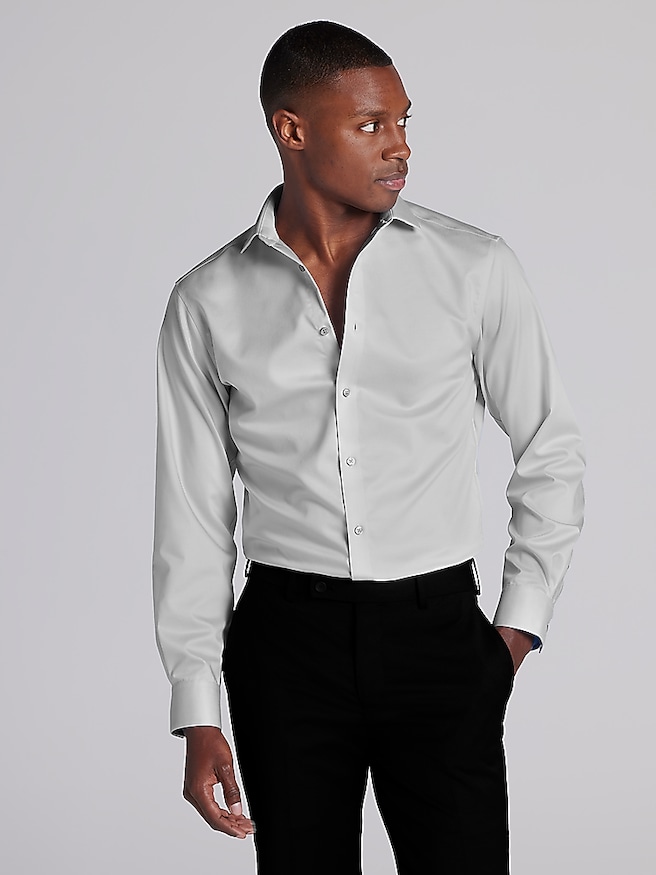
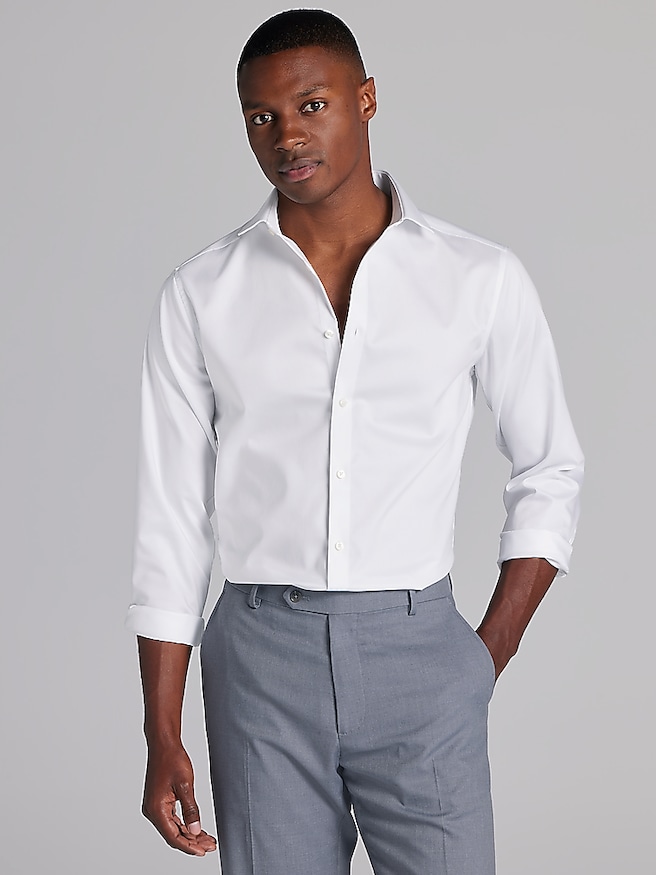
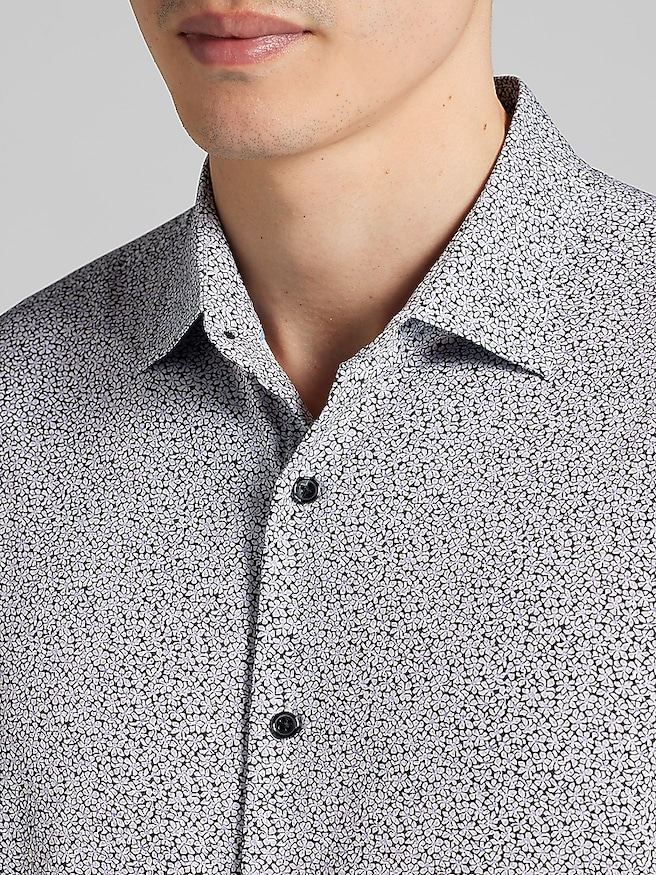
Lightweight shirts are made with fabrics that feel light on the body and add little bulk, making them useful for everyday dressing, office outfits, travel, and layering. Fabric weight, weave, and construction all contribute to that easy feel; a shirt does not need to be exceptionally thin to wear comfortably or sit neatly beneath a jacket. Cotton offers a familiar softness, while linen brings a textured surface and a relaxed appearance that becomes more pronounced with wear. Cotton-linen blends can balance those qualities, combining a natural hand with a slightly smoother finish. Lightweight woven fabrics often hold a collar and button front neatly, while fine-gauge knits offer flexibility for movement and a less structured look. Some synthetic blends are designed for moisture management, stretch, or wrinkle resistance, though those benefits depend on the fabric and should be confirmed in the garment details. Breathability is influenced by both the fibers and how tightly they are woven, so two shirts with a similar weight may feel quite distinct. An airy weave can offer a more open feel, while a closely woven fabric may look smoother and provide greater coverage. That distinction matters for a pale dress shirt worn without a jacket, especially when an undershirt needs to remain discreet. A subtle texture, small-scale pattern, or slightly deeper color can make lightweight fabric feel more substantial visually without adding much bulk. Collars, cuffs, and front plackets also shape the overall impression: a crisp collar supports a business-ready outfit, while a soft collar and an easy drape feel more natural with casual pants. The appeal is versatility rather than a single dress code. A lightweight shirt can look at home during a day of meetings, over a relaxed lunch, or at a family gathering, with the fabric and finishing details setting the tone. Even simple details, such as a smooth shoulder seam or a placket that lies flat, help the shirt look considered rather than merely thin.
Fit gives lightweight shirts much of their character. A clean fit leaves enough space across the chest and upper back for reaching, sitting, and moving without pulling the buttons apart or making the fabric cling. Shoulder seams that sit near the edge of the shoulder create a balanced outline, while sleeves should allow comfortable movement at the upper arm. A more tailored shape can sit smoothly under a blazer, and a relaxed silhouette offers extra ease when the shirt is worn on its own. Lightweight fabric tends to reveal bunching and strain, so sizing down for a sharper appearance can have the opposite effect. At a desk or behind the wheel, enough room through the middle helps the front remain comfortable instead of riding upward. Length matters just as much: a curved hem with adequate coverage generally stays tucked more reliably, while a shorter, straighter hem often looks more intentional untucked. Sleeve length changes the mood of an outfit without requiring a completely new approach to dressing. A lightweight long-sleeve shirt can bring polish to chinos and leather shoes, with cuffs that fit comfortably beneath a jacket sleeve. For an easy alternative, men's lightweight short sleeve shirts pair naturally with casual trousers, clean sneakers, or loafers. The sleeve opening should feel comfortable without appearing overly wide, and the hem should sit at a length that keeps the overall proportions balanced. Solid colors make straightforward companions for patterned jackets or textured pants, while checks, stripes, and understated prints can give a simple outfit more personality. For a dinner out, a softly textured shirt tucked into tailored trousers offers definition without looking overly formal. For an ordinary workday, a smooth woven shirt under an unstructured jacket keeps the layers manageable. The most useful choice reflects how the shirt will actually be worn, including whether it needs room for an undershirt, a comfortable collar when buttoned, or a hem that stays neat through repeated movement.
Care and construction help determine how well a lightweight shirt holds up beyond its first few wears. Lower fabric weight does not automatically mean lower durability; consistent stitching, securely attached buttons, and neatly finished seams all contribute to dependable wear. Areas that receive repeated stress, including the collar, cuffs, underarms, and buttonholes, deserve particular attention. A lightweight shirt intended for frequent office use benefits from a fabric and care routine that fit naturally into the weekly laundry cycle. Care labels remain the best reference because cotton, linen, rayon blends, and performance fabrics can require different washing, drying, and pressing methods. Excessive dryer heat can cause shrinkage or affect stretch fibers, while an appropriate drying method helps preserve the intended fit. Promptly removing a washable shirt after its cycle and smoothing the collar, placket, and seams can make the next wear easier. Linen typically retains some natural creasing, which is part of its character rather than a sign that the shirt is poorly cared for. A more polished finish may call for pressing at the setting specified on the label; easy-care claims should likewise be checked rather than assumed from the fabric’s appearance. For travel, lightweight shirts take up relatively little space and allow several outfit combinations without a bulky bag. A shirt that works with both jeans and tailored pants can cover a daytime appointment and a casual dinner, although wrinkle resistance and quick-drying performance vary by garment. Comfortable, versatile shirts can also make thoughtful gifts for a partner, father, brother, or friend whose usual size and style preferences are known. Familiar colors, a preferred collar shape, and a manageable care routine often matter more than an unfamiliar detail. Whether worn regularly for work or kept for easy weekend dressing, a well-chosen lightweight shirt combines comfortable fabric, useful proportions, and a finish suited to the occasion. Those practical qualities give it a lasting place in a wardrobe built around clothes that feel as good as they look.