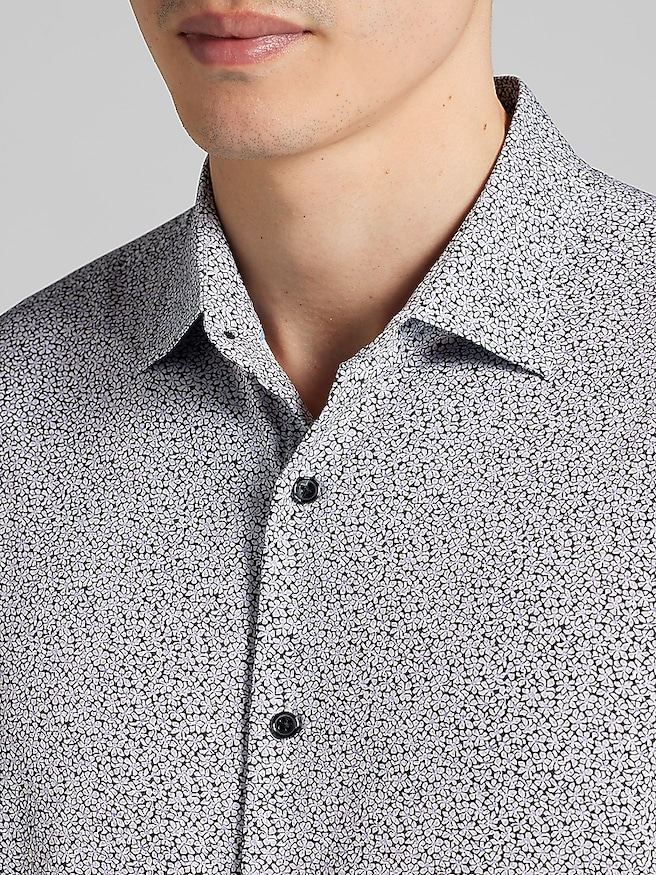
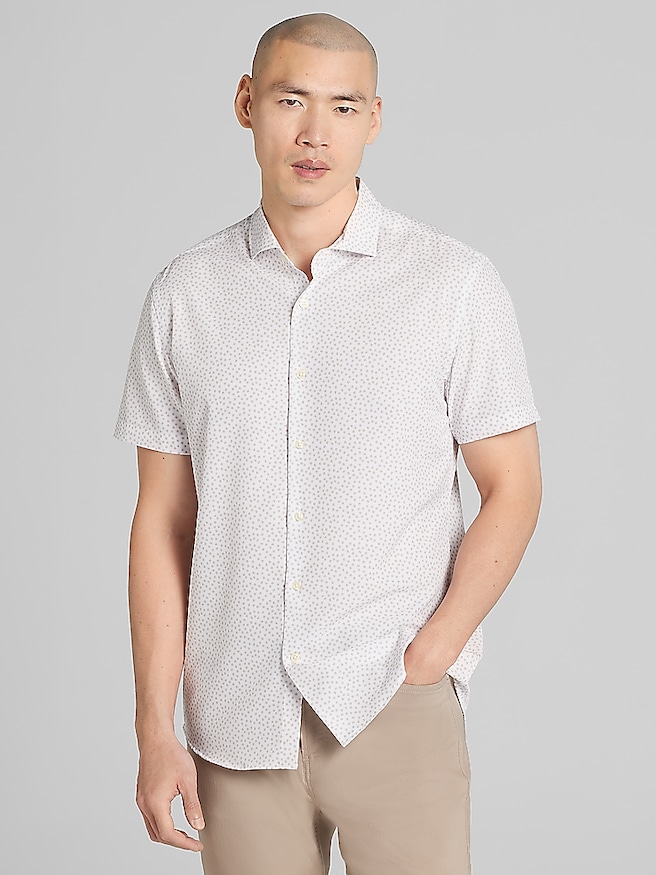
Men's lightweight short-sleeve shirts combine reduced fabric bulk with a shorter sleeve, creating an easy-wearing option for everyday outfits, travel, relaxed workplaces, and casual gatherings. The category includes woven button-front shirts, polos, and soft knit styles, each with its own balance of structure and ease. Fabric composition matters, but so do the weave, knit, thickness, and finishing: two shirts made from cotton can feel noticeably different against the skin. A lightweight cotton weave often has a clean, familiar hand, while cotton jersey offers a softer, more flexible feel. Linen has a distinctive textured surface and tends to allow air to circulate, with natural creasing that contributes to its relaxed appearance. Cotton-linen blends can soften that texture and balance linen's character with cotton's familiar feel, though they are not automatically wrinkle-resistant. Lyocell and viscose blends often drape smoothly rather than holding a crisp shape, making them useful for shirts meant to fall loosely through the body. Polyester and nylon blends may dry more quickly than some natural-fiber fabrics, while a small amount of elastane can add stretch for reaching, sitting, and moving comfortably. Those benefits depend on the complete fabric construction, not simply the presence of one fiber. Moisture absorption and moisture wicking are also distinct: a fabric that absorbs perspiration does not necessarily move it away from the skin or dry quickly. Performance claims are most useful when they are stated for the garment rather than assumed from its fiber content. Open weaves and fine knits can feel airy, but they may also be more sheer, particularly in lighter colors. A shirt with enough opacity to wear comfortably on its own offers straightforward versatility. Smooth poplin, subtly textured slub fabric, and fine piqué each bring a distinct surface to an outfit without requiring a heavy material. The result can be neat and understated or soft and casual, depending on how the fabric handles the collar, sleeve, and hem.
Fit gives a lightweight short-sleeve shirt its shape and helps determine where it belongs in a wardrobe. A slim fit generally sits closer through the chest and waist, a regular fit leaves more room for everyday movement, and a relaxed fit creates a looser silhouette. Those descriptions vary by cut, so chest measurements and garment length are more useful than relying on a size label alone. On a shirt with a conventional set-in sleeve, the shoulder seam usually sits near the edge of the shoulder; intentionally dropped shoulders create a more casual outline. Sleeves should leave enough room around the upper arm to move without pulling, whether the wearer is lifting a carry-on into an overhead compartment or reaching across a lunch table. A woven button-front shirt should lie smoothly through the chest when fastened, without gaps between buttons or pronounced pulling across the back. Extra room is especially important in fabrics with little stretch. At the same time, excess fabric can bunch beneath a jacket or gather at the waistband, so a comfortable fit does not have to mean an oversized one. Length deserves equal attention. An untucked shirt usually looks balanced when its hem falls around the middle of the trouser fly, although body proportions and the intended silhouette affect that placement. A shirt intended for tucking needs enough length to stay secure while sitting and moving. Straight hems, side vents, and camp collars often reinforce an untucked, casual look, while a conventional collar can bring a cleaner outline to chinos or tailored trousers. A knit polo offers another option for settings where a T-shirt feels too informal but a dress shirt would seem out of place. Solid colors make outfit coordination simple, while stripes, small checks, and restrained prints add interest alongside plain pants. For a casual office, a tucked polo with chinos can look composed without feeling elaborate. For dinner with friends, a textured button-front shirt worn untucked with dark denim gives the outfit an easy finish. Short sleeves suit relaxed dress codes; occasions requiring formal business attire generally call for another shirt style.
Thoughtful care helps men's lightweight shirts maintain their shape, texture, and comfortable feel through repeated wear. The care label is the best reference because washing and drying requirements can change with the blend, trim, and construction. Washing with similar colors, using an appropriate cycle, and avoiding unnecessary heat can help reduce fading and stress on the fabric. Cotton and linen may shrink under unsuitable washing or drying conditions, while excessive heat can affect stretch fibers and some finishes. When machine drying is permitted, the recommended setting matters more than an assumption that every lightweight shirt needs the same treatment. Some woven styles benefit from being smoothed and placed on a hanger after washing; knits may need reshaping or flat drying to avoid stretching, according to their care instructions. A quick press or suitable steaming can sharpen a collar and button placket, while linen's softer creases can remain part of the look. Fabric softener is not appropriate for every performance fabric, so care directions should take priority over habit. Durability also depends on more than fabric weight. Even stitching, neatly finished seams, secure buttons, and a stable collar help a shirt stand up to regular use. Lightweight does not necessarily mean fragile, but fine fabrics can snag against rough bag straps, hook-and-loop closures, or abrasive surfaces. Rotating frequently worn shirts and treating stains promptly can help preserve their appearance. For travel, a fabric's tendency to crease and its drying requirements are practical considerations alongside comfort; packing a shirt carefully cannot make a naturally wrinkle-prone fabric wrinkle-free. As a gift, a lightweight short-sleeve shirt is especially useful when its fit and style reflect the recipient's routine. A familiar collar shape, a dependable size, and colors that coordinate with frequently worn pants are often more thoughtful than an unfamiliar statement print. Someone who favors polished casual clothing may appreciate a smooth woven fabric, while someone who prefers softer, less structured outfits may gravitate toward a knit. The most useful choice brings together comfortable movement, manageable care, and a silhouette that feels natural for the places it will be worn.