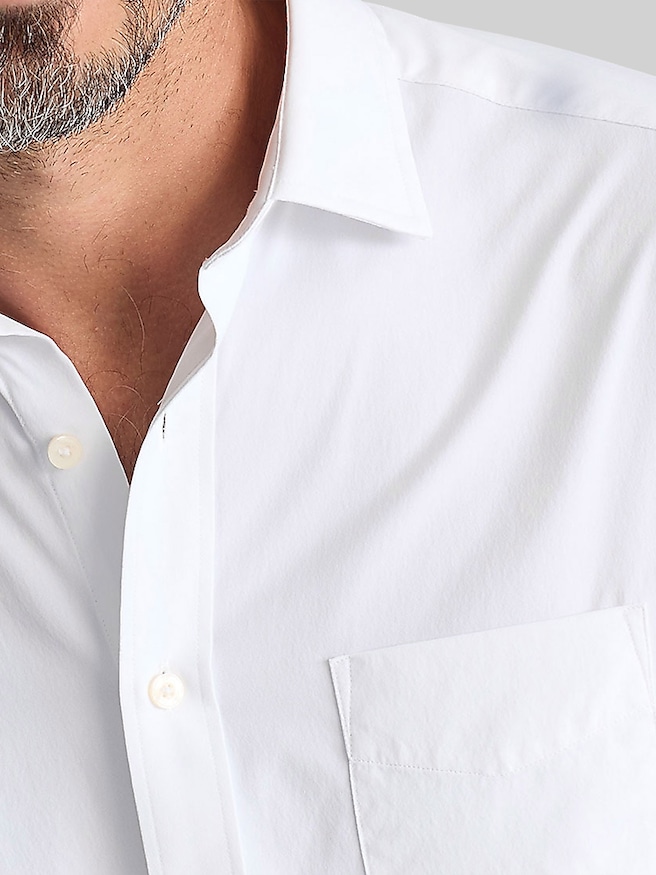
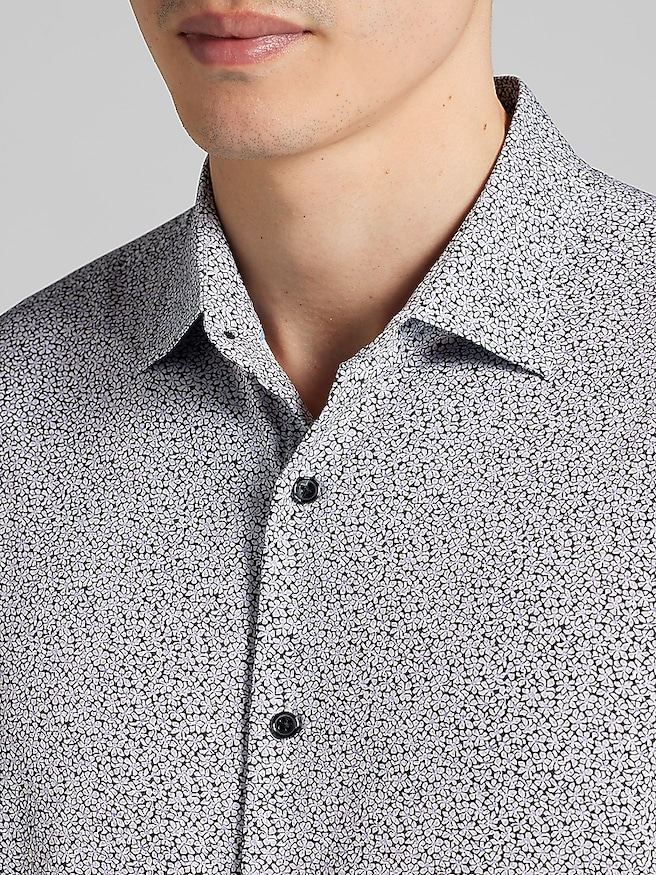
Men's lightweight long sleeve shirts offer the coverage of a full sleeve without the bulk of a heavier shirt, making them useful for everyday dressing, travel, casual offices, and relaxed gatherings. The category includes soft knit shirts that move easily with the body and woven button-front styles that bring a more structured look to an outfit. Fabric weight, construction, and fit all influence how a shirt feels; a thin fabric is not necessarily breathable, and a breathable fabric does not automatically wick moisture. Cotton is a familiar choice for its soft hand and ability to absorb moisture, while lightweight cotton poplin has a smooth surface that works well with tailored trousers or chinos. Linen has a distinctive texture and a relaxed appearance, with natural creasing that becomes part of its character. Cotton-linen blends combine qualities of both fibers, though softness, drape, and wrinkle behavior depend on the blend and finish. Lightweight jersey knits generally have a softer outline than woven fabrics and suit untucked outfits, simple layering, and low-key plans. Polyester and nylon blends can be useful when quick drying or moisture management matters, but those properties should be confirmed in the garment description rather than assumed from fiber content alone. A small amount of stretch can make reaching, sitting, and bending more comfortable, especially in a closer-fitting shirt. Fabric density matters, too: an open construction may allow more airflow, while a closely woven cloth can provide a smoother, more substantial appearance without necessarily feeling heavy. Pale colors and fine fabrics may reveal an undershirt, so opacity is worth considering when a clean, polished finish is the goal. For someone moving between a desk, a commute, and an evening meal, the appeal is straightforward: long sleeves provide styling flexibility, while a lighter fabric keeps the outfit from feeling cumbersome. The best match depends on whether softness, a crisp collar, freedom of movement, or easy packing matters most.
Fit gives men's lightweight long sleeve shirts much of their versatility. In a traditionally cut woven shirt, the shoulder seams should sit near the edges of the shoulders, with enough room across the upper back to reach forward comfortably. The front should lie smoothly when buttoned rather than pulling into small gaps across the chest or stomach. A slim fit creates a closer outline, while a classic or relaxed fit leaves more space through the torso; neither should restrict ordinary movement. Knit shirts may have intentionally dropped shoulders or a roomier shape, so the overall cut matters more than applying dress-shirt rules to every style. Sleeves should allow the elbows to bend comfortably, and cuffs should rest near the wrist without sliding over the hands. A cuff that opens sufficiently to roll neatly can make a button-front shirt more adaptable, although repeated tight rolling may leave pronounced creases in delicate fabrics. Shirt length also changes how an outfit comes together. A longer, curved hem generally stays tucked more securely, while a shorter hem can look balanced worn loose over chinos or jeans. When layering under a jacket, a smooth sleeve and a comfortable armhole help prevent bunching at the upper arm. An undershirt should sit flat beneath a lightweight woven shirt rather than competing with it for space. Collars, pockets, and surface texture shape the level of formality: a clean collar and subtle pattern can suit a business-casual setting, while a soft knit neckline reads more casually. Solid colors make repeat wear and outfit coordination simple, and restrained stripes or small checks add visual interest without dominating the look. A wardrobe built around Men's Lightweight Shirts can accommodate both approaches, with long sleeve styles serving as standalone pieces or low-bulk layers. For travel, that flexibility can mean fewer outfit changes between a daytime meeting, a lengthy drive, and dinner with friends, provided the shirt's fabric and finish suit each setting.
Performance details and thoughtful care help a lightweight long sleeve shirt remain useful beyond its first few wears. For active use or days involving plenty of walking, a garment specifically labeled moisture-wicking is designed to move perspiration away from the skin so it can spread across the fabric and evaporate. Quick-drying claims describe another useful property, but drying time still varies with fabric construction, saturation, and surrounding conditions. Long sleeves provide coverage, but lightweight fabric alone does not establish reliable ultraviolet protection. For extended time outdoors, a shirt with a stated UPF rating is the clearer choice; UPF 50 fabric blocks about 98 percent of ultraviolet radiation under test conditions. Any protective claim should come from the garment's labeling, and clothing coverage works alongside protection for exposed skin. For everyday durability, even stitching, secure buttons, neatly finished seams, and cuffs that hold their shape are practical details to examine. A light shirt does not have to feel fragile, though fine yarns and open textures can be more vulnerable to snagging against rough surfaces or exposed hook-and-loop fasteners. Care should follow the sewn-in label, since cotton, linen, stretch blends, and treated performance fabrics can have distinct washing and drying requirements. Separating rough or heavily fastened garments from delicate shirts can reduce abrasion, while promptly removing a shirt after washing or drying can limit stubborn creasing. Excessive dryer heat may contribute to shrinkage or affect stretch recovery, and fabric softener can interfere with some moisture-management finishes. Pressing or steaming, when permitted, helps restore a woven shirt's appearance without requiring every fabric to look perfectly crisp. These considerations also make lightweight long sleeve shirts a thoughtful gift for a dad, brother, partner, graduate, or frequent traveler. Matching the recipient's usual fit, preferred neckline, and willingness to iron is more useful than choosing by appearance alone. A shirt that feels comfortable through a full day, fits familiar routines, and works with clothing already in the closet is likely to earn regular wear.