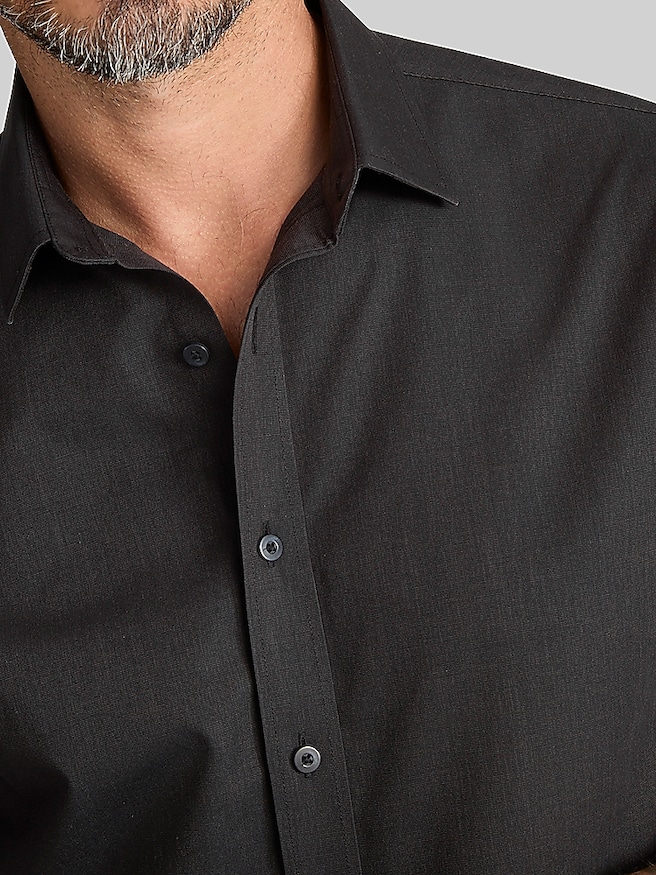
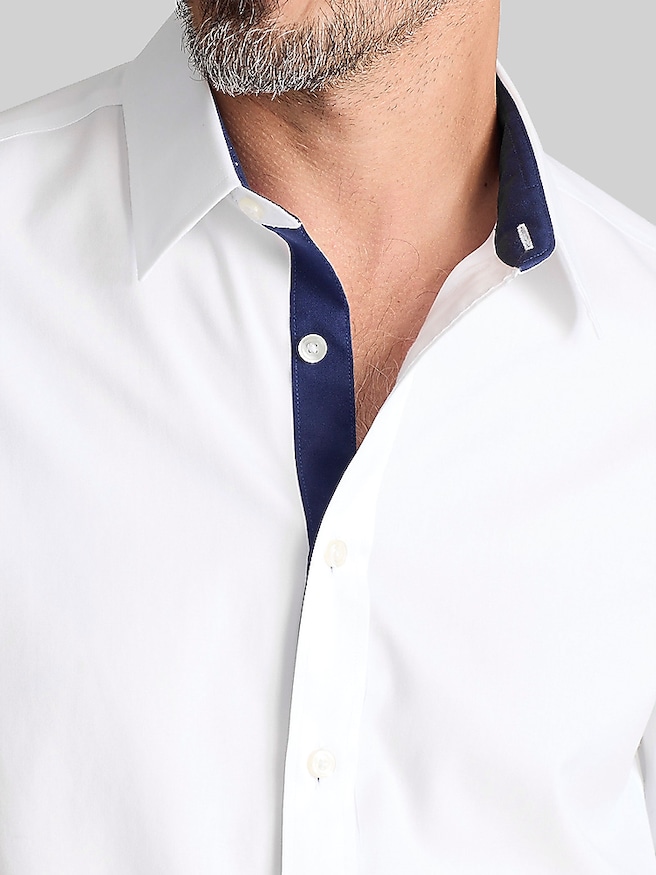
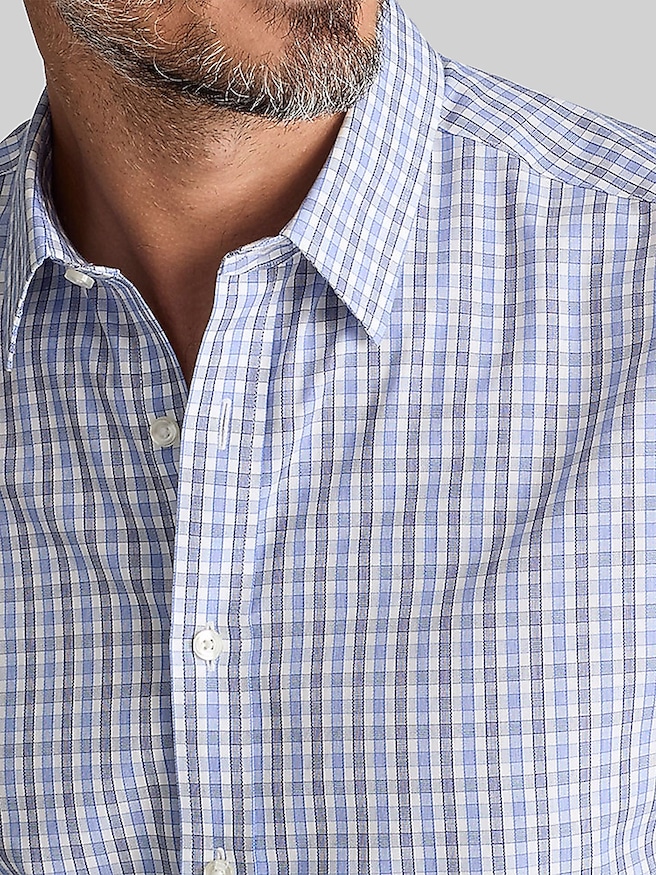
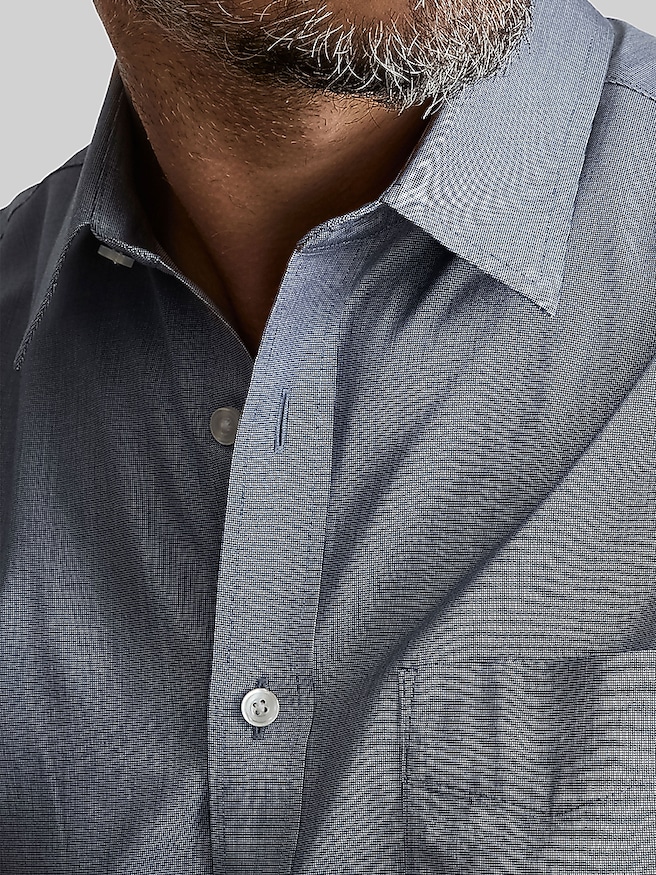
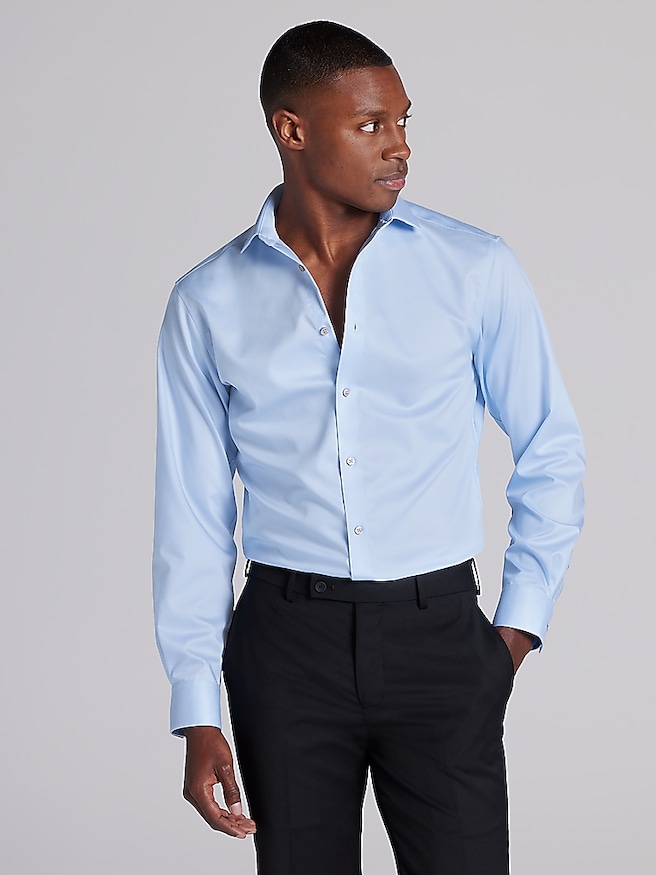
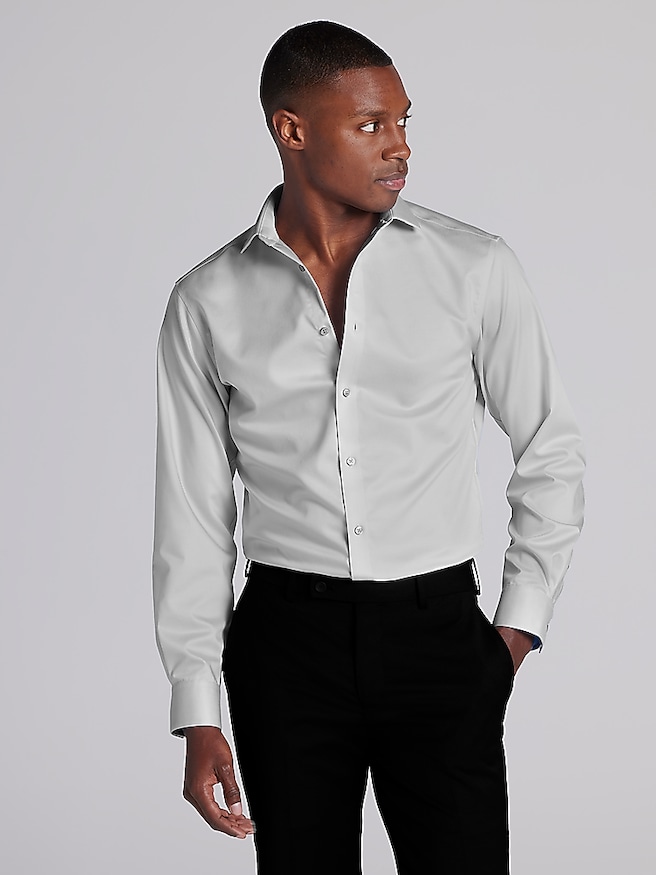
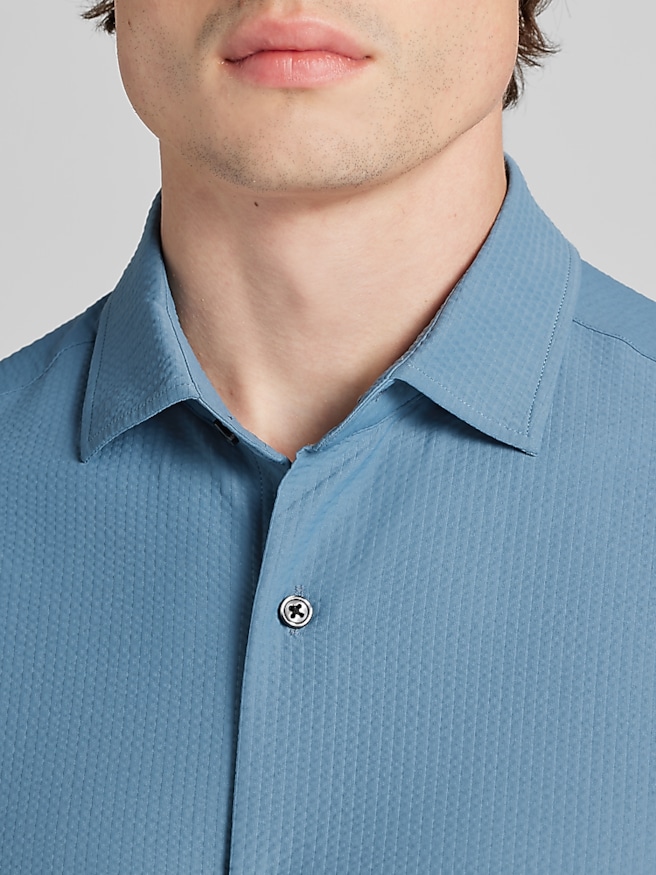
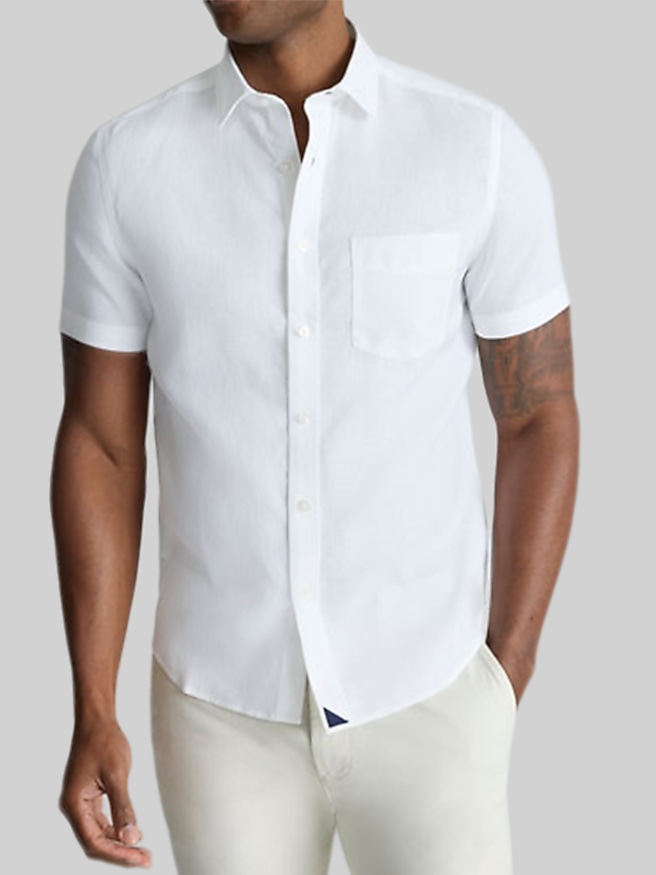
Lightweight dress shirts bring an easy sense of polish to the moments when a heavier shirt feels restrictive. Designed with breathable fabrics, lighter weaves, or performance fibers, they can help you stay comfortable through a full day of commuting, meetings, celebrations, travel, and evenings out. Linen is a natural choice when breathability matters most; its airy texture allows heat to escape and its quick-drying qualities make it useful in warm, humid conditions. Cotton poplin and broadcloth offer a smoother, crisper appearance with a tightly woven surface that still feels lighter than many traditional dress shirt fabrics. Performance blends may include moisture-wicking synthetics, stretch fibers, or technical knits that encourage airflow, move with the body, and resist the rumpled look that can develop between the first coffee and the last appointment. These qualities make lightweight dress shirts especially useful for men who spend part of the day in a warm office, walk between destinations, travel with limited luggage, or move from work to dinner without time to change. They also layer naturally as the weather shifts: worn beneath a blazer or suit jacket during cooler months, under a sweater for added warmth, or on their own when the air is mild. A lightweight shirt does not have to look casual. A clean collar, neatly finished cuffs, and a smooth front can create the same refined foundation as a more substantial dress shirt while making the entire outfit feel less bulky. For a versatile wardrobe, look for shades that work across several settings, including white, light blue, soft gray, pale pink, and understated patterns. A solid white or blue shirt can anchor a suit for formal business or special occasions, while a subtle stripe or small check can add dimension beneath a sport coat without overpowering the rest of the outfit. Those building a travel wardrobe may appreciate wrinkle-resistant stretch fabrics that fold easily and recover their shape after time in a suitcase. Someone who prefers natural fibers may gravitate toward cotton or linen for their soft hand and breathable feel. The best choice often comes down to the balance of texture, structure, stretch, and care that fits the way the shirt will be worn.
When selecting lightweight dress shirts, start with the fit through the neck, shoulders, chest, and sleeves. The collar should sit comfortably without pressing against the throat, while the shoulder seam should rest close to the natural edge of the shoulder. A shirt that is too full through the torso may look untidy beneath a jacket, but one that is too narrow can pull across the buttons when you sit, reach, or drive. Stretch can provide welcome mobility, especially for long travel days or active schedules, though a well-cut shirt made from a breathable woven fabric can feel just as comfortable. Consider the construction as well: a reinforced collar, secure buttons, smooth seams, and a hem that stays tucked can make a noticeable difference over repeated wear. Moisture-wicking materials are helpful for warm commutes, crowded gatherings, and days that move between indoor and outdoor settings, while natural linen and lightweight cotton can offer a relaxed, tactile finish. During the cooler months, these shirts are particularly useful as layering pieces because they add a polished collar and cuff without the weight of thick flannel or heavy knitwear. Pair one with tailored trousers for the office, dark denim for a dinner out, chinos for a more relaxed dress code, or a complete suit when the occasion calls for formal presentation. They can also be thoughtful gifts for a partner, son, father, brother, graduate, or colleague, particularly when you choose a dependable color and an easy-to-wear fit. A well-made lightweight shirt often earns a place in a weekly rotation because it works for the calendar’s in-between days: crisp enough for an early presentation, comfortable enough for a train ride, and polished enough to wear when plans continue after work. To keep the fabric looking its best, follow the care instructions, avoid leaving a damp shirt crumpled in a hamper or suitcase, and hang it promptly after washing. Linen may develop a natural lived-in texture, while cotton and performance fabrics may benefit from a quick press or a careful smoothing while still slightly damp. For additional warm-weather and layering options, explore Lightweight Shirts to find breathable styles that support a comfortable, put-together wardrobe across changing temperatures.