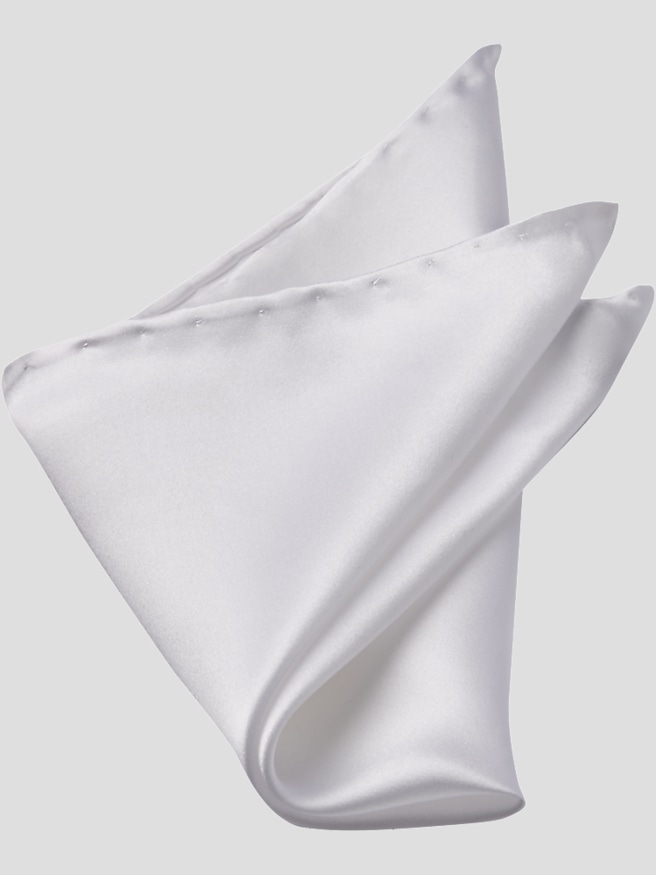
Groomsmen pocket squares are decorative accessories worn in a suit or tuxedo’s breast pocket to give the wedding party a coordinated, finished appearance. A small accent above the lapel can connect several outfits through color, texture, or pattern without requiring every detail to match. Against a navy suit, a white pocket square creates a crisp point of contrast; with charcoal, a muted blue or burgundy accent can pick up a color used elsewhere in the celebration. The most cohesive combinations often complement the necktie rather than repeat its exact fabric and pattern. A solid tie can sit comfortably beside a subtly patterned square, while a patterned tie usually leaves room for a simpler pocket accent. Exact matching is also a valid choice when a uniform look is the priority, but shared colors do not have to mean identical accessories. For example, groomsmen might wear squares with a narrow colored border while the groom wears plain white, creating a distinction that remains understated in group portraits. White and ivory deserve particular attention because they are not interchangeable: beside a bright white shirt, ivory reads warmer, and the contrast may be more noticeable in photographs than on its own. A cohesive approach to Wedding Pocket Squares leaves room for these small distinctions while keeping the party visually connected. The square also needs to work with the jacket’s lapel, the tie’s width, and any boutonniere. A large floral arrangement and a generously puffed square can compete for space, whereas a narrow folded edge gives both details breathing room. For a black-tie ceremony, a restrained white square provides a familiar formal finish. At a less formal celebration, a small print or textured weave can bring personality to the same breast pocket. Across these settings, the accessory works best as part of the full outfit rather than as an isolated patch of wedding color. Its size may be modest, but its placement makes it a visible part of the overall impression.
Fabric influences how groomsmen pocket squares look, feel, and hold their shape throughout a ceremony and reception. Silk often has a fluid drape and a subtle luster, making it well suited to soft puffs and rounded folds, although the weave and finish can produce anything from a smooth sheen to a more textured surface. Linen typically has a crisp hand and visible texture that lends definition to a straight edge or pointed fold. Cotton often provides a matte finish and enough structure for clean, controlled shapes. Polyester and blended fabrics can offer resilience and consistent color, with care requirements determined by their construction and finish. Satin describes a weave rather than a single fiber, so a satin pocket square may be made from silk, polyester, or another material; its smooth, reflective face is the defining characteristic. These distinctions matter when several people are dressing for the same event, because similar colors can appear noticeably lighter or darker on matte and lustrous surfaces. The fabric also affects fit within the breast pocket. A square needs enough material to stay anchored, but excess thickness can create a bulge that interrupts the jacket’s line. A larger, lightweight square may settle more comfortably than a smaller square made from heavy cloth, so dimensions alone do not tell the whole story. Pocket depth, fabric weight, and the amount of material folded inside all contribute to the result. A flat, presidential fold shows a narrow horizontal band and has a neat, tailored character; a pointed fold adds definition, while a puff creates a softer outline. None requires the entire square to be visible. A modest amount above the pocket is often sufficient, particularly beside a boutonniere. Neatly finished edges, secure stitching, and fabric that tolerates repeated folding are useful construction details for an accessory that may be adjusted several times before the first photograph. A rolled edge can become part of the visible design in a puff, while a straight fold draws more attention to an even hem and a clean top line.
Beyond the ceremony, groomsmen pocket squares can become useful keepsakes rather than accessories worn once and forgotten. A restrained solid, a fine border, or a small-scale pattern can work with a business suit, an anniversary dinner outfit, or attire for another wedding. That versatility makes a pocket square a thoughtful gift for a best man, a sibling, a close friend, or another member of the wedding party, especially when the color reflects the celebration without limiting future use. The personal value comes from the occasion, while the lasting usefulness depends on fabric, construction, and care. Care labels remain the best reference because silk, linen, cotton, and blended fabrics may require different treatment, and decorative finishes can change what is appropriate. Some squares are suitable for washing, while others call for professional cleaning; assuming that every small piece of fabric can go into a regular laundry load risks shrinkage, color changes, or damage to the finish. When pressing is permitted, the appropriate heat setting and a pressing cloth help protect the surface, particularly on delicate or lustrous materials. Heavy creases may suit a flat fold but make a soft puff harder to arrange later. Clean, dry storage, either laid flat or loosely folded, helps limit unnecessary wrinkling and keeps the accessory ready for another occasion. During the wedding itself, a pocket square is primarily decorative rather than a substitute for a practical handkerchief. Keeping a separate handkerchief inside the jacket preserves the visible fold through emotional vows, speeches, and a long reception. Comfort matters as well: the square should sit securely without pulling the pocket open or pressing awkwardly against the chest. When the fabric, proportions, and color work together, the result feels considered without looking overworked. That balance gives each groomsman a polished finish while allowing the people, rather than their accessories, to remain the focus.