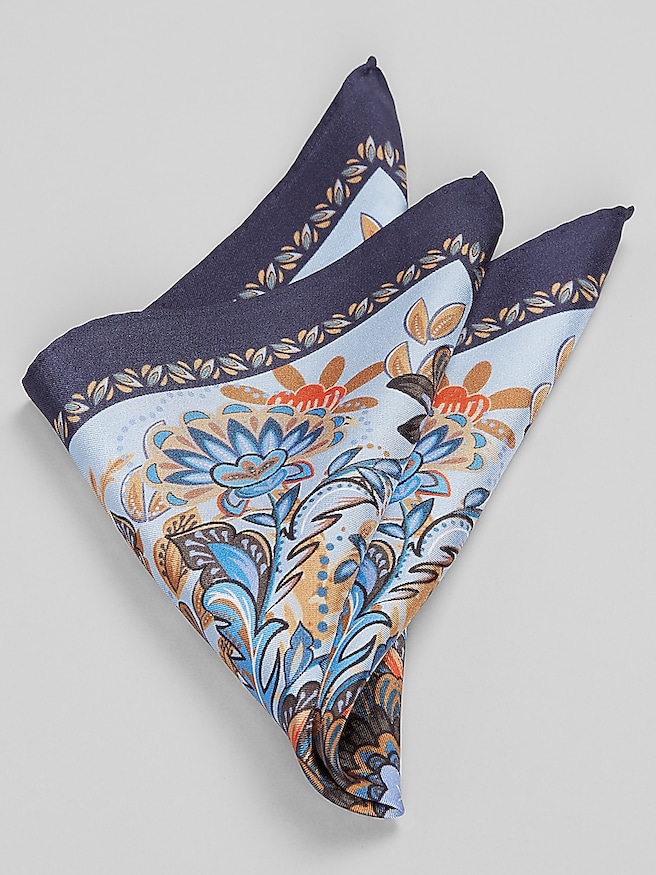
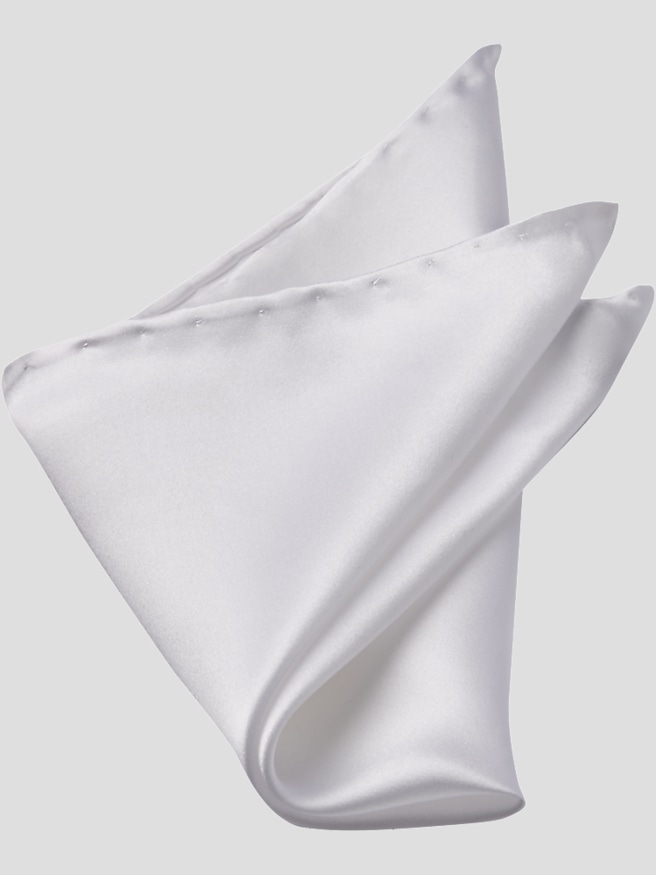
Wedding pocket squares add a finishing detail to a suit or tuxedo, bringing color, texture, and individuality to the breast pocket. A wedding pocket square should generally complement the tie and wedding color palette rather than match the tie’s fabric and pattern exactly. A shared accent color is enough to connect the two accessories while allowing each to have its own character. For example, a burgundy tie with a small geometric pattern pairs naturally with a cream square edged in burgundy, while a navy suit and pale blue tie can work with a white square carrying a quiet blue detail. A white pocket square is a versatile starting point for formal wedding attire, particularly alongside a white dress shirt and a dark suit or tuxedo. Its appeal is in the clean contrast: a narrow line of white above a black jacket pocket looks polished without competing with the rest of the outfit. For a more expressive combination, a patterned square can echo a color from the flowers, a partner’s attire, or another detail in the celebration. The connection does not need to be literal; muted green can suggest foliage without repeating a floral print, and a soft gold accent can bring a subtle glow to a deep blue jacket. Pattern scale helps keep these combinations balanced. A small tie motif and a larger pocket square print tend to remain visually distinct, whereas two equally busy patterns can pull attention away from the face. When the tie or jacket already makes a strong statement, a solid square gives the outfit a quieter finishing touch. For a groom, a distinctive fold or subtle border can create separation from the rest of the wedding party without abandoning a shared palette. For a guest, a restrained square brings personality to dress-code-appropriate attire without looking like part of the coordinated wedding party. The strongest combinations feel connected rather than identical, with enough contrast for the square to register in photographs.
Fabric influences both the appearance of wedding pocket squares and the way they sit in a jacket. Silk often has a fluid drape and light-reflecting surface, making it well suited to softly rounded puff folds and dressier combinations. Linen typically offers a drier texture and more structure, giving a straight presidential fold or defined points a crisp appearance. Cotton generally has a softer, matte finish that works comfortably with many tailored outfits, while textured wool or blended fabrics can complement a jacket with a more pronounced weave. Fiber content is only part of the picture: thickness, finish, and construction also affect how easily a square folds and how much volume it creates. A lightweight square can provide a generous puff without making the pocket bulge, while a thicker square may need a simpler fold to keep the jacket front smooth. Pocket square size should work with the depth and width of the breast pocket. Too little fabric may slip below the opening; too much can create a lump that interrupts the jacket’s line. A balanced fit leaves the intended edge, points, or puff visible while keeping the remaining fabric comfortably contained. Fold style can reinforce the character of the outfit, from the quiet precision of a straight edge with a tuxedo to a relaxed puff with a patterned suit. Neatly finished edges matter, especially when a contrasting border is part of the design. Secure stitching and an even hem support repeated folding, though delicate weaves still deserve protection from sharp jewelry, rough surfaces, and pocket hardware. Care should follow the fabric label rather than a single rule for every square. Silk may call for professional cleaning, while some cotton or linen fabrics permit gentle washing. Appropriate pressing helps restore crisp edges, but excessive heat can damage delicate fibers or finishes. Clean, dry storage with minimal compression helps reduce stubborn creases between occasions, and keeping the decorative square separate from a functional handkerchief helps preserve its appearance throughout the celebration.
Wedding pocket squares also offer a practical way to coordinate a group without making every outfit identical. Coordinating Groomsmen Pocket Squares around a shared color family creates a clear visual connection while leaving room for differences in ties, suit shades, or personal style. A consistent fabric and fold can unify the group even when the pocket squares do not repeat every detail of the ties. The groom might wear a white square with a fine border while the wedding party picks up that border color in a subtle print. Another approach is a shared neutral square with distinct neckwear, which keeps the overall composition calm when several people stand together for portraits. Fathers and other close participants can echo one accent without duplicating the wedding party’s full look. Venue and dress code provide useful context: a formal evening ceremony generally supports a restrained white square and precise fold, while a less formal celebration leaves more room for visible texture, expressive patterns, and softer shapes. The jacket still sets the boundaries, and the square should sit naturally within its proportions rather than dominate the chest. Comfort matters across a full wedding day, too. A fold that stays secure through the ceremony, photographs, dinner, and dancing is more useful than an elaborate arrangement that needs constant adjustment. For a gift, a pocket square can mark the occasion without requiring exact clothing measurements. A neutral shade, a meaningful accent color, or a pattern suited to the recipient’s usual wardrobe gives the gesture a personal connection. Its usefulness can continue after the wedding, whether paired with a business suit, worn to an anniversary dinner, or brought out for another formal celebration. A well-chosen wedding pocket square earns that continued use through adaptable color, suitable fabric, and construction that holds up to careful wear—not through an exact match to a single tie.