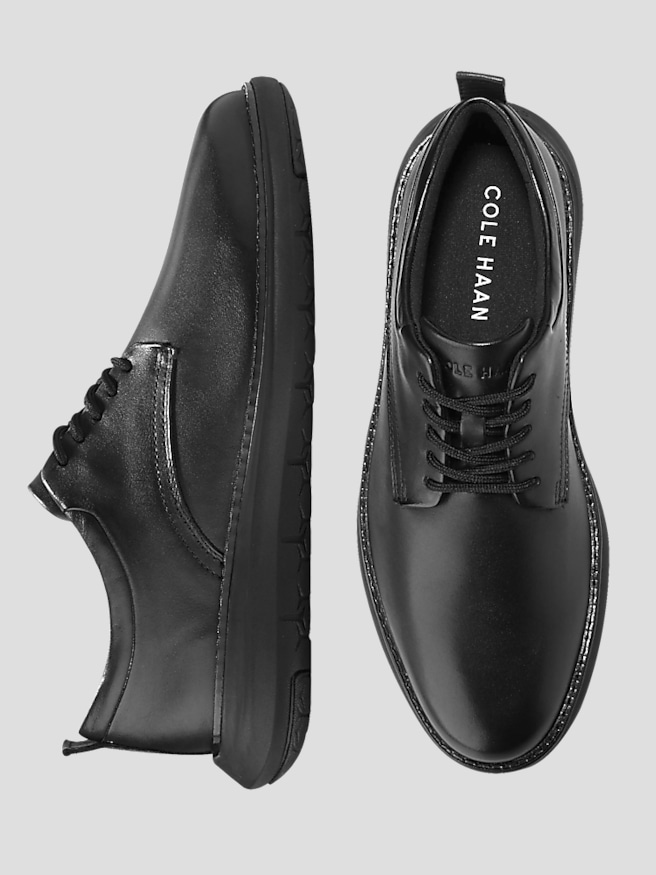
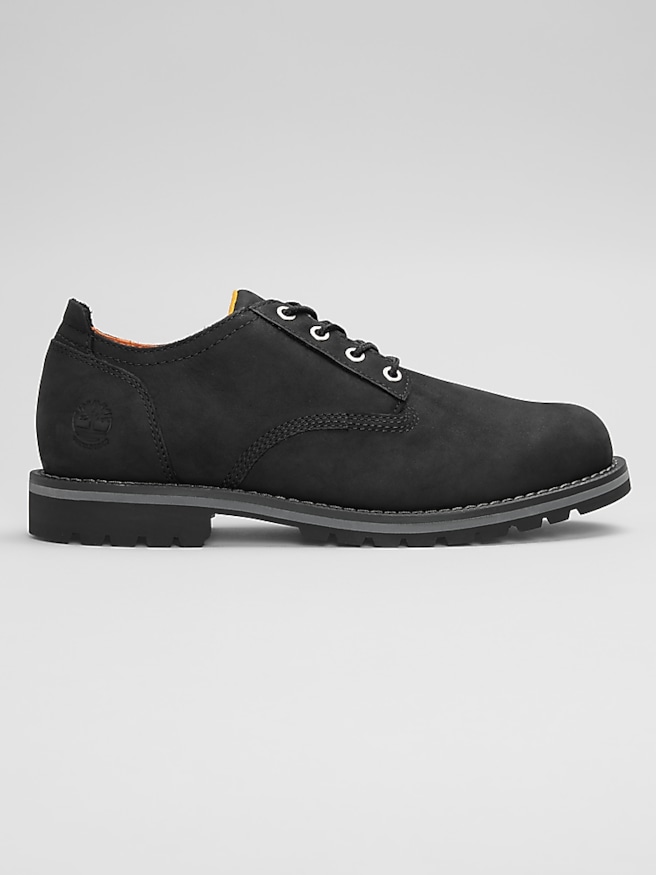
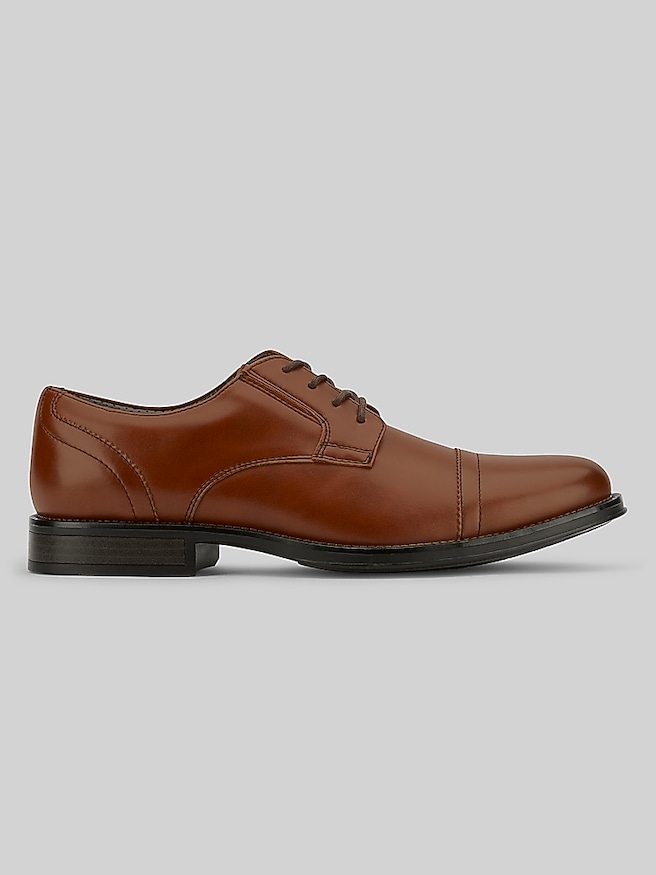
Glossy black oxford shoes bring a crisp, reflective finish to tailored clothing, with a silhouette that feels especially at home beneath a tuxedo or a sharply pressed suit. Their defining feature is closed lacing: the sections holding the eyelets are stitched beneath the front portion of the upper, creating a neat profile across the instep. That construction distinguishes an oxford from an open-laced dress shoe and contributes to its traditionally formal appearance. Within that familiar shape, the material and finish make a noticeable difference. Patent leather has a coated surface that produces a pronounced, mirrorlike gleam without repeated polishing. Smooth calfskin and other dress leathers can develop a deep shine through careful conditioning and polishing, although the effect is usually softer than patent’s glassy reflection. Synthetic uppers may also have a glossy finish, so shine alone does not identify the underlying material. Patent black oxfords are a classic companion to black-tie attire, particularly when a plain toe keeps the shoe visually clean. Polished leather oxfords offer more flexibility across business suits, evening attire, and other dressed-up settings. A subtle cap toe adds definition without much ornamentation, while decorative perforations generally create a less formal impression. For a wedding ceremony, an awards dinner, or a performance onstage, that restrained black finish provides a grounded contrast to the fabric above it. A groom might favor a sleek plain toe with a tuxedo, while a guest wearing a charcoal suit may prefer the quieter gloss of polished leather. Black also pairs naturally with navy tailoring, keeping the overall effect composed rather than drawing attention away from the outfit. The broader range of Men's Black Oxfords offers context for how toe shape, detailing, and surface finish influence the character of this dress-shoe style. The strongest pairing is not necessarily the shiniest shoe; it is the one whose level of formality complements the clothing and the occasion.
Comfort matters just as much as appearance when glossy black oxfords are worn through a ceremony, photographs, dinner, and time on the dance floor. Closed lacing creates a tidy look, but it can feel restrictive over a high instep if the shoe’s shape is not compatible with the foot. A secure fit holds the heel comfortably, leaves room for the toes to rest without crowding, and avoids concentrated pressure beneath the laces. The widest part of the foot should sit near the widest part of the shoe, with the natural bend occurring around the ball of the foot rather than across the toes. A longer, tapered toe may include extra space at its tip by design; that space is not, by itself, a reason to size down. Width, instep volume, and heel shape all matter alongside the marked size. Trying dress shoes with the socks intended for the occasion gives a more useful impression than trying them with thick athletic socks. Thin dress socks create less bulk, while a smooth toe seam can help prevent irritation during extended wear. Leather may soften with use, but a painful fit should not be treated as something a break-in period will necessarily fix. Underfoot details also influence the experience. A cushioned footbed can soften contact with hard floors, while a supportive shape and a stable heel help the shoe feel settled through standing and walking. Leather soles offer a traditional appearance and can feel sleek underfoot, though smooth surfaces may provide limited grip until worn. Rubber soles or rubber contact areas can add traction and flexibility without always making the profile look heavy. Durability depends on the combination of upper material, sole attachment, lining, and wear habits rather than shine alone. Some stitched constructions permit sole replacement, while other constructions are less suited to repair. For someone who wears dress shoes frequently, those details may matter as much as the first impression in a mirror.
Maintaining glossy black dress shoes starts with recognizing that patent leather and conventionally polished leather need distinct care. Patent’s shine comes from its surface coating, so ordinary leather cream and wax are generally unnecessary and may leave residue or affect the finish. A soft, dry cloth removes light dust, and a slightly damp cloth can lift surface dirt when the material’s care directions allow it. Any cleaner intended for patent should be compatible with the coating and tested discreetly before broader use. Abrasive pads, harsh solvents, and aggressive rubbing can turn a small mark into lasting surface damage. Smooth, non-patent leather usually benefits from gentle cleaning, occasional conditioning with a suitable product, and thin applications of compatible polish. A high shine can be built gradually on firmer areas such as the toe and heel, but thick wax across the flexing part of the shoe is more likely to crack or look uneven. This distinction is useful when comparing a naturally polished appearance with a uniform patent gloss: the finishes can create a similar impression from a distance, yet they do not share the same upkeep. After wear, allowing shoes to air out before storage helps manage interior moisture. Properly sized shoe trees support the shape without stretching the uppers, and soft shoe bags protect the finish from scratches during travel. Glossy surfaces are best kept from rubbing against other shoes or sitting pressed against colored materials that could transfer onto the coating. Direct heat is not a shortcut for drying, and deep scuffs or coating damage may require professional attention rather than more polish. These practical details make glossy black oxfords especially meaningful for someone building a formal wardrobe, preparing for a milestone celebration, or stepping into a role that calls for tailored clothing. As a gift for a graduate, partner, or family member, they work best when the recipient’s size, width, and preferred dress-shoe shape are known. A pair that feels comfortable standing through a reception and still looks sharp beneath a clean trouser hem has value beyond a single photograph. With an appropriate fit, a finish suited to the occasion, and material-specific care, glossy black oxfords remain a distinctive expression of classic formal style.