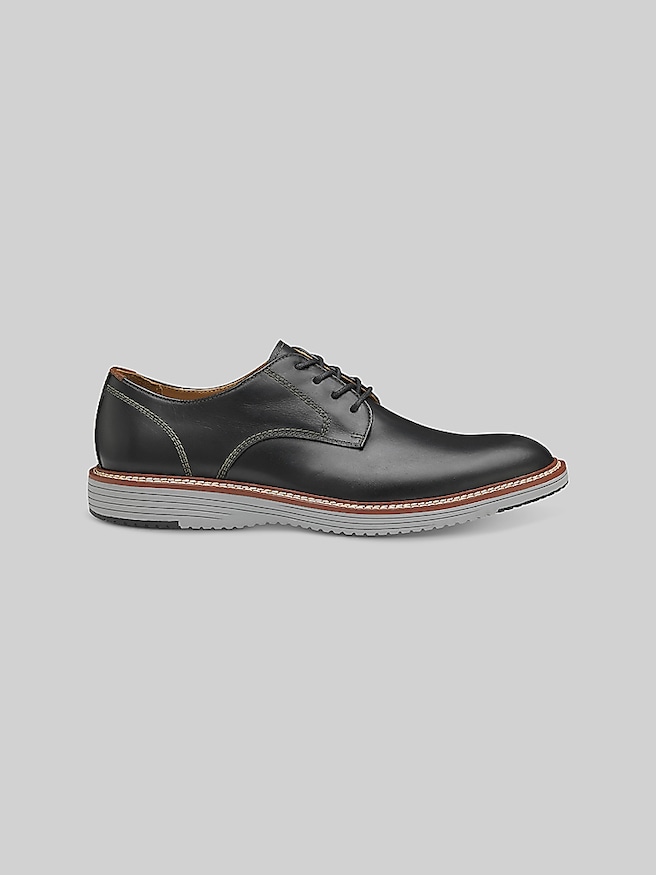
Comfortable black oxford shoes bring together a polished dress-shoe profile and features that make long stretches on your feet more manageable. The most useful combination is a secure fit, cushioning under the heel and forefoot, a supportive footbed, and a sole that flexes naturally as you walk. Soft linings and a well-finished interior also matter, especially when the day includes a commute, several meetings, and dinner afterward. An oxford’s defining detail is its closed lacing system: the sections holding the eyelets sit beneath the front of the upper, creating a neat, close-fitting appearance. That construction gives black oxfords their familiar place alongside tailored trousers, business suits, and wedding attire. Within that classic shape, plain toes offer an uninterrupted surface, cap toes add a restrained line across the front, and subtle perforations introduce texture without changing the shoe’s basic character. Smooth leather uppers provide a traditional finish and can gradually conform to the foot, while softer leather treatments may feel more forgiving from the start. Synthetic uppers have their own care requirements and may feel less yielding, so material descriptions matter as much as appearance. Breathable leather or textile linings can help manage moisture, although no lining replaces a comfortable fit and suitable socks. Underfoot, foam cushioning softens the initial step, while a stable platform helps keep the foot from feeling perched on a narrow base. EVA midsoles can reduce weight, and rubber outsoles can add flexibility and traction, depending on their construction and tread. A slim leather outsole creates a particularly traditional silhouette, but its feel underfoot differs from a cushioned rubber design. The broader category of Men's Black Oxfords spans these variations in shape and construction, making the relationship between dress level, materials, and everyday comfort more meaningful than any single feature alone.
Fit is what turns those construction details into something useful. A comfortable oxford should hold the heel securely without pressing into the back of the ankle, leave room for the toes to rest naturally, and feel snug rather than restrictive across the instep. Because closed lacing offers less adjustment across the top of the foot than an open-laced design, width and instep volume deserve particular attention. Pulling the laces tighter cannot correct a shoe that is too roomy, and choosing extra length is not a dependable substitute for the right width. An elongated dress-shoe toe may leave space beyond the toes by design; the more important signs are where the foot bends, whether the widest part sits comfortably, and whether the heel stays controlled while walking. Trying shoes with the dress socks intended for them gives a more realistic sense of fit. Feet can also become fuller over the course of a normal day, which makes a comfortably secure fit more useful than one that feels barely tolerable at first. Leather may soften with wear, but persistent pinching, numbness, or pressure against the toes should not be treated as a normal break-in requirement. Cushioning has similar limits: a plush footbed cannot make up for a cramped toe box or an unstable heel. For someone who walks between office buildings or spends time standing at presentations, moderate cushioning paired with a flexible forefoot can feel more balanced than an excessively soft interior. A padded collar may reduce rubbing around the ankle, while smooth seams help limit friction inside the shoe. Removable footbeds can be useful for people who use their own inserts, provided the shoe has enough depth to accommodate them without crowding the foot. The best match also depends on the setting. A clean, understated profile works naturally with a navy or charcoal suit, while a slightly rounded toe and discreet rubber sole can suit tailored business-casual outfits. For a wedding party member moving between photographs, the ceremony, and the reception, dependable fit matters just as much as the finish visible beneath the trouser hem.
Lasting comfort depends partly on how well the shoe holds its shape and how consistently it is cared for. Smooth leather benefits from having dust removed with a soft brush or cloth before an appropriate conditioner or polish is applied. Conditioner helps maintain suppleness, while black cream polish can refresh color and a suitable wax can add shine; each should be compatible with the leather’s finish. Heavy layers are not a substitute for regular, light maintenance, and patent or coated surfaces need care suited to their particular finish rather than an automatic application of standard leather products. Allowing shoes to air out between wears helps the interior dry, and cedar shoe trees can help preserve the shape and absorb some moisture. A shoehorn protects the heel counter from being repeatedly crushed when putting shoes on. If leather becomes damp, gentle drying away from direct heat is less harsh on the material than forcing the process. Outsoles and heel edges also deserve attention: uneven wear can change how a shoe feels well before the upper looks worn. Some stitched constructions can be resoled by a qualified repair professional, although repair options depend on the shoe’s design and condition. Cemented construction can offer a light, flexible feel, but future sole replacement may be more limited. Neither construction method alone guarantees comfort or durability; the quality of the materials, the fit, and the demands of regular wear all contribute. These considerations make comfortable black oxfords useful for professionals building a dependable work wardrobe, graduates preparing for interviews, and anyone who needs dress shoes for recurring celebrations. As a gift, they are most thoughtful when the recipient’s size, width, and preferred shape are already known. A familiar fit is more valuable than a dramatic silhouette that rarely leaves the closet. Whether paired with a carefully tailored suit or pressed trousers and a dress shirt, a well-chosen black oxford offers a composed finish without demanding attention. Its appeal is practical as well as visual: a shoe that looks appropriate at an important appointment and still feels comfortable on the walk back.