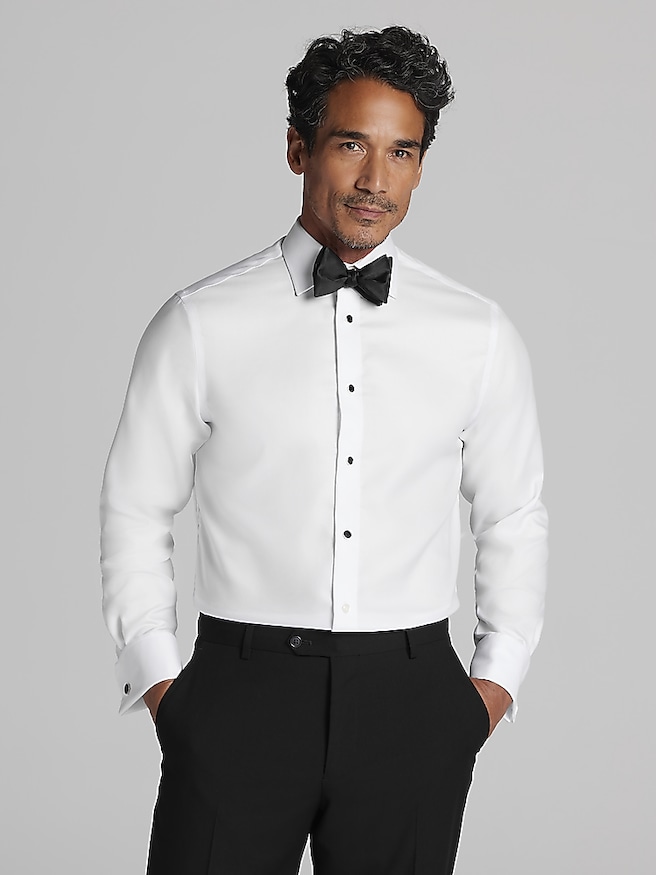
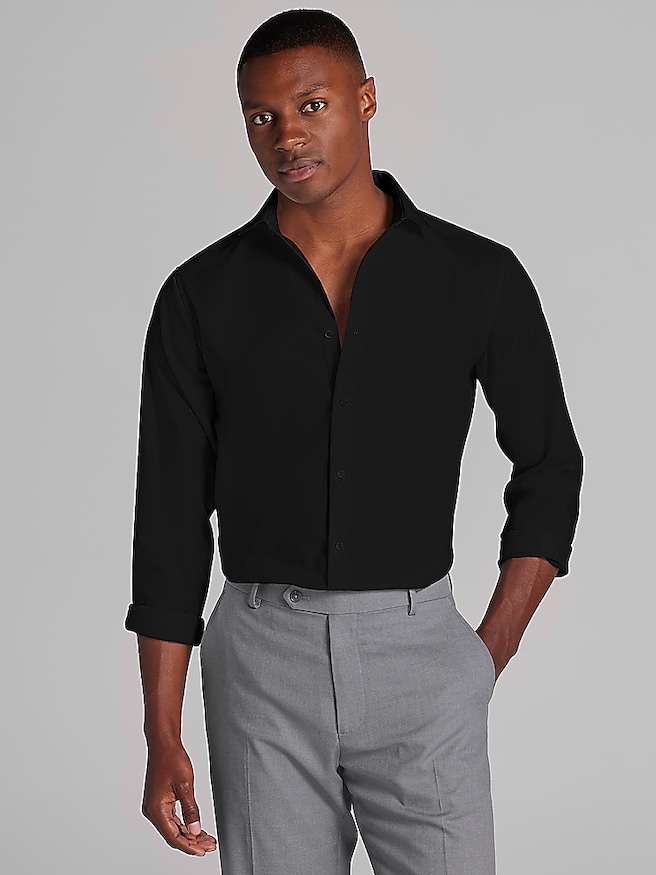
Formal wear for young men includes tailored suits, tuxedos, dress shirts, and coordinating accessories for proms, weddings, school dances, and other occasions with a dress code. The right combination reflects both the event’s expectations and the wearer’s personal style, whether that means a navy suit for a family wedding or a black tuxedo for a black-tie celebration. Suits offer flexibility across occasions where a jacket and tie are appropriate, while tuxedos have distinctive formal details, such as satin-faced lapels and a coordinating stripe along the trousers. Tailored separates can work for less formal celebrations, but they do not replace a tuxedo when an invitation specifies black tie. For teens and young adults wearing formal clothing for the first time, comfortable proportions matter more than an especially narrow silhouette. A slim fit follows the body closely, while other tailored cuts provide additional room through the chest, seat, and thighs. Neither should restrict natural movement. Jacket shoulders should sit cleanly without extending far beyond the natural shoulder, and the front should lie smoothly when buttoned rather than pulling into pronounced creases. Trousers need enough room for sitting through a ceremony, stepping onto a stage, and spending time on the dance floor. A clean hem keeps extra fabric from pooling over dress shoes, while a visible sliver of shirt cuff gives the jacket sleeve a finished appearance. For someone still growing, fit deserves another look close to the event; a familiar jacket can become short in the sleeves before it looks noticeably small elsewhere. Alterations may refine sleeve length, trouser length, or the waist when the garment’s construction allows. The result should feel intentional rather than oversized or tight, with enough ease to move naturally through photographs, handshakes, dinner, and dancing. A well-proportioned outfit lets a young man focus on the occasion instead of repeatedly adjusting his collar, waistband, or cuffs.
Fabric and construction influence how formal clothing feels, drapes, and holds its shape over repeated wear. Wool suiting is valued for its natural resilience and ability to fall cleanly through the jacket and trousers, making it a useful foundation for a wardrobe that spans multiple dressier occasions. Wool blends can combine that tailored appearance with characteristics from other fibers, while synthetic blends may offer crease resistance and straightforward maintenance, depending on the fabric and care instructions. Stretch can add ease when sitting or reaching, though it does not compensate for a garment that is too small. Fabric weight, weave, lining, and construction all affect comfort; fiber content alone does not tell the whole story. A smooth lining helps a jacket slide over a dress shirt, and neatly finished seams support a clean interior. Secure buttons, tidy buttonholes, and even stitching are practical details for clothing that may move between ceremonies, receptions, and formal dinners. Dress shirts bring their own considerations. Cotton offers a familiar feel and breathability, while blended fabrics may help reduce wrinkling. A collar should sit comfortably against the neck with a tie fastened, and the shirt should stay tucked without excessive fabric bunching beneath the jacket. Opaque fabric and a smooth front help maintain a polished appearance in photographs and under bright event lighting. Color also influences versatility. Navy and charcoal suits create understated foundations for many wedding guest outfits and school celebrations; black and midnight blue are established choices for tuxedos. Subtle texture can add depth without drawing attention away from the overall outfit, while a pronounced pattern creates a more expressive impression. For young men expecting to wear formal clothing again, restrained colors and balanced proportions make it easier to change the mood with a different shirt or tie. The strongest foundation is clothing that looks cohesive up close and across a room, with fabric and finishing suited to its intended use.
The foundations of Formal Wear For Men remain consistent at any age: appropriate formality, balanced proportions, and details that work together. A white dress shirt creates a crisp contrast with a dark suit or tuxedo, while a pale blue shirt can bring a softer effect to a suit when the dress code allows. Tie width generally looks most balanced when it relates to the width of the jacket lapels rather than feeling disconnected from them. A bow tie has a familiar place in traditional black-tie dressing, supported by a shirt and accessories appropriate to the tuxedo. Pocket squares add a finishing touch without needing to duplicate the tie’s pattern exactly, and restrained accessories allow the tailoring to remain the focus. Footwear should match the formality of the clothing: polished leather dress shoes complement suits, while sleek, appropriately formal shoes complete a tuxedo. Comfortable shoes matter during a long reception or an evening spent standing with friends, and trying the entire outfit together can reveal details that are easy to miss when each piece is considered separately. For a young man receiving formal clothing as a graduation or milestone gift, accurate measurements and a clear sense of upcoming occasions make the gift more personal and useful. A versatile suit may become part of later celebrations and professional events, while a tuxedo serves occasions with more specific formal expectations. Care helps preserve both appearance and durability. The care label determines whether a garment requires professional cleaning or permits another method; jackets, trousers, and shirts may have different requirements even within one outfit. A supportive hanger helps maintain a jacket’s shape, and trousers stored neatly are less likely to develop unwanted folds. Allowing clothing to air after wear, addressing marks promptly according to care directions, and avoiding unnecessary cleaning can help protect the fabric and finish. With thoughtful care and occasional attention to fit, formal clothing can remain a dependable part of a young man’s wardrobe beyond a single memorable photograph.