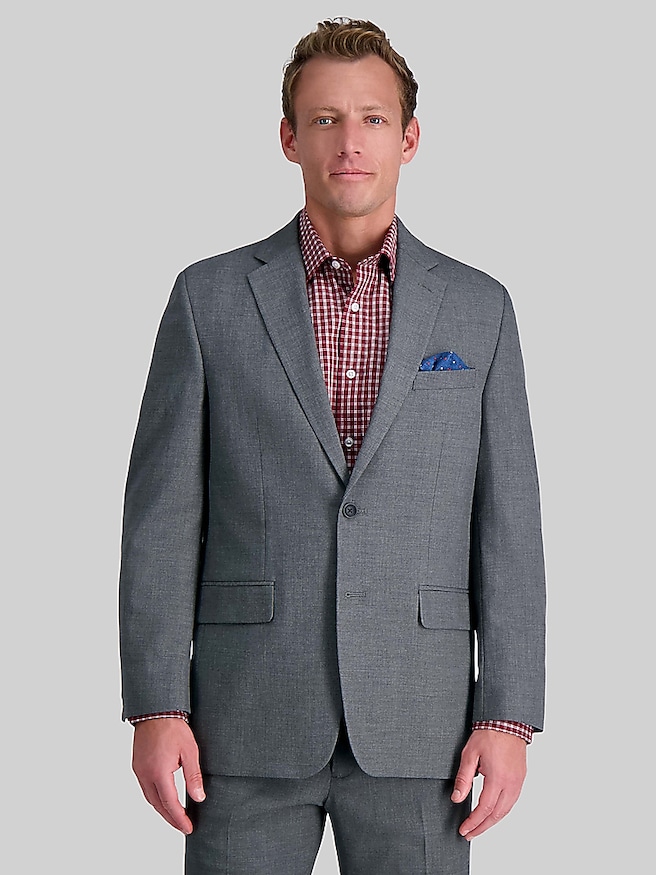
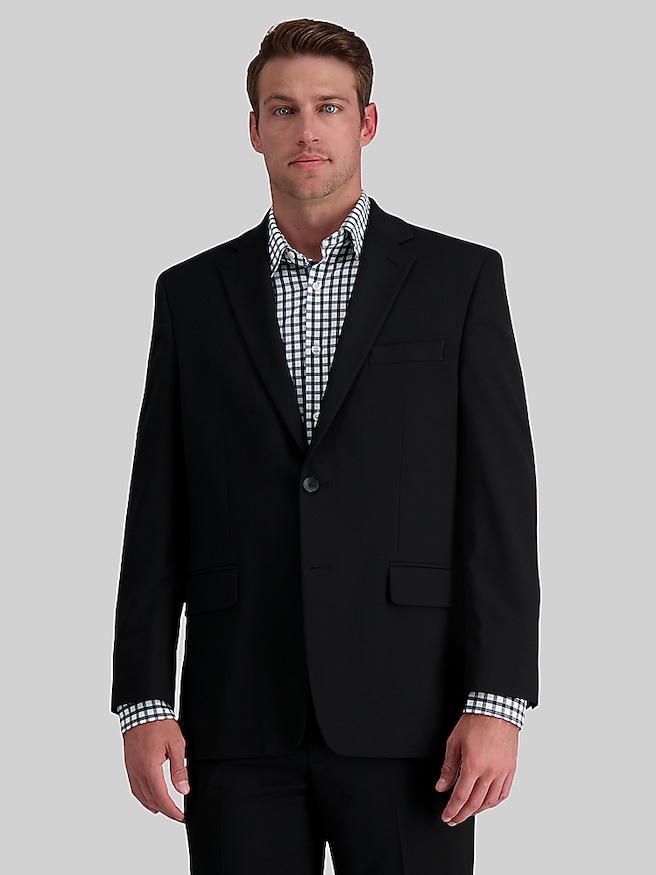
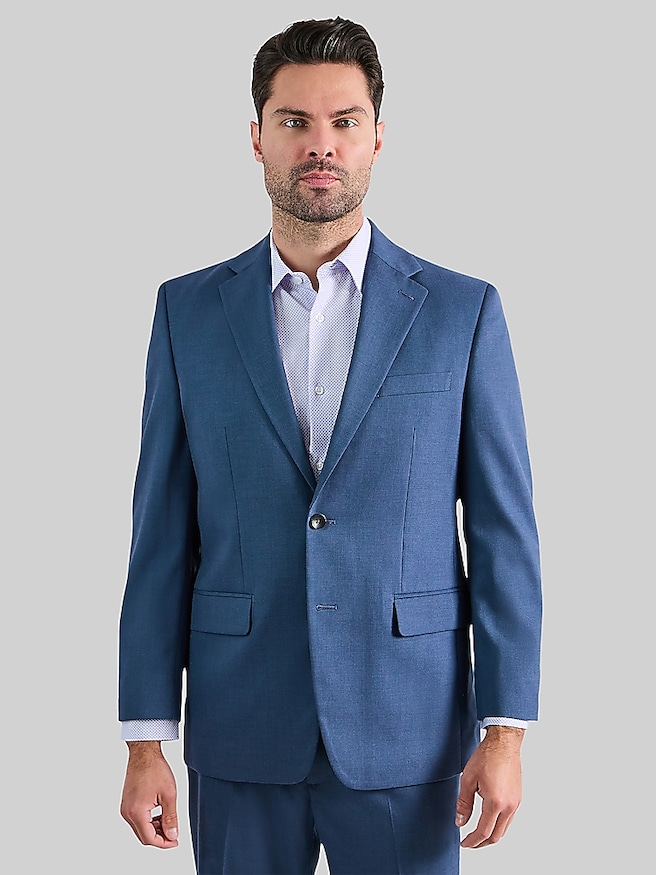
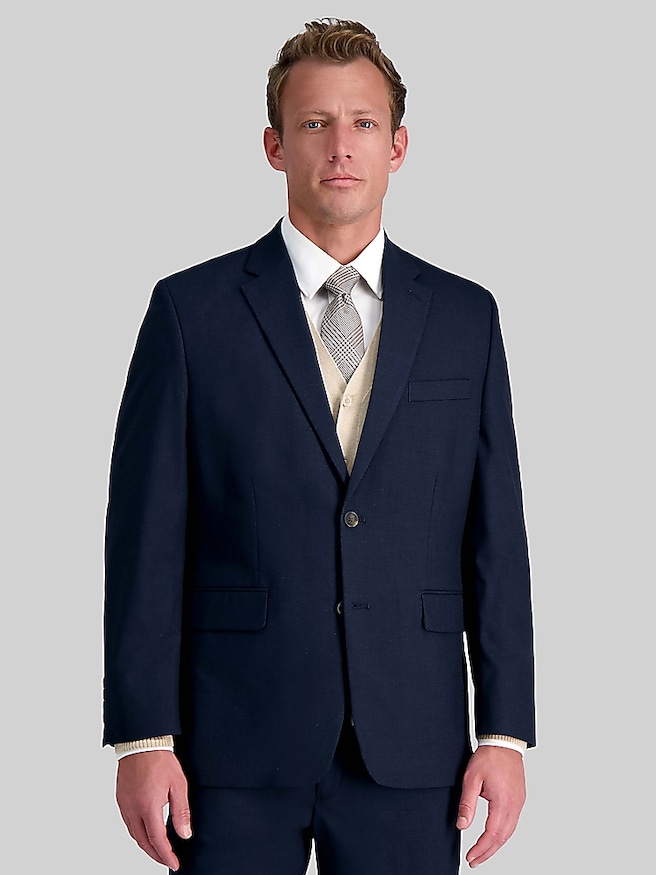
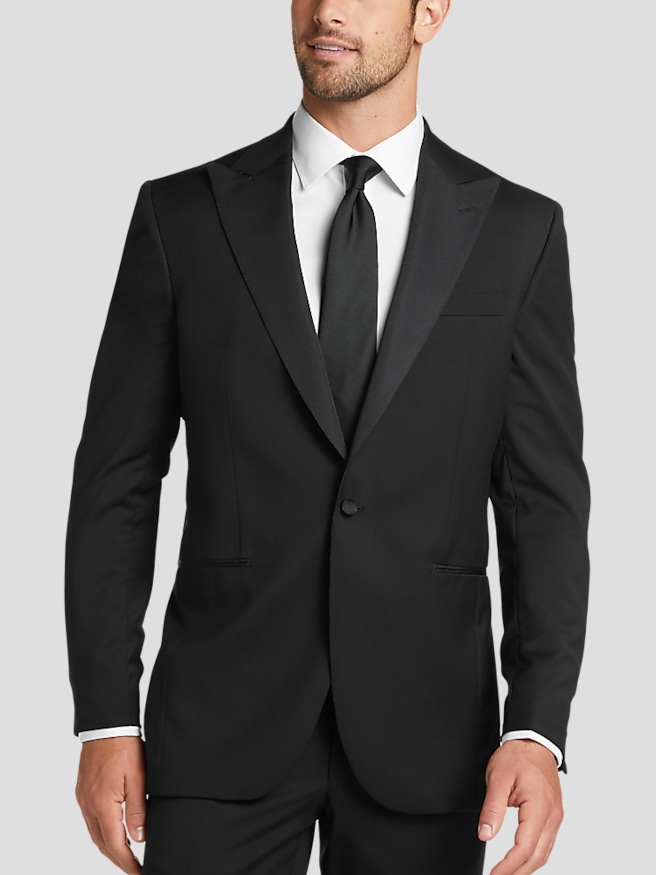
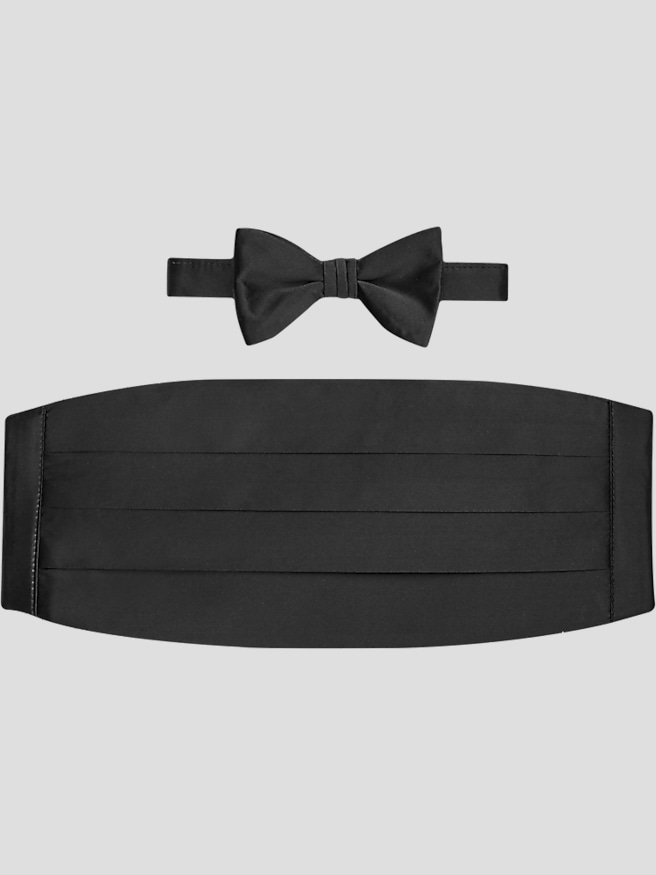
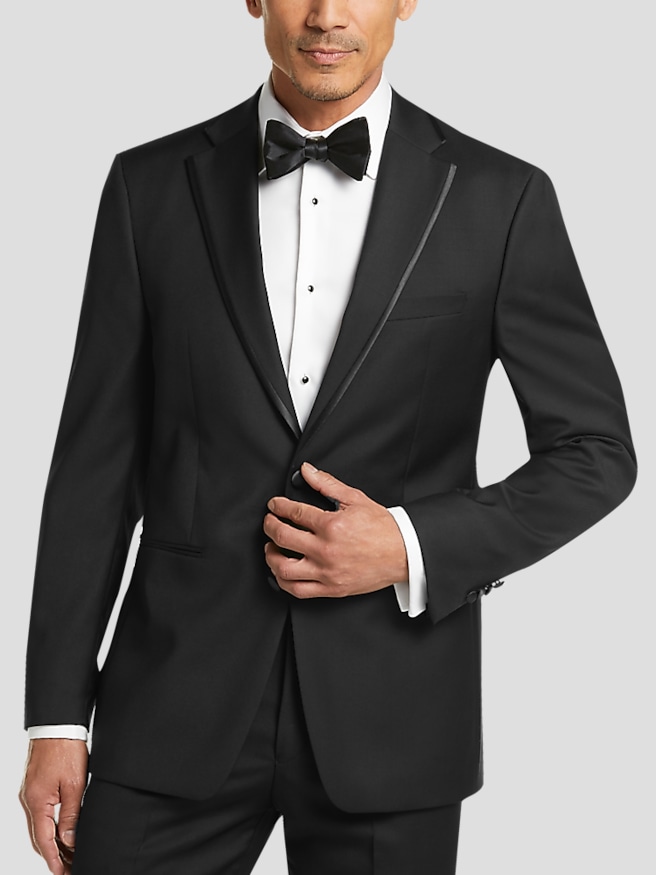
Formal tuxedo suits are designed for occasions where traditional evening dress and polished presentation matter. Unlike a standard business suit, a tuxedo is defined by coordinated satin or grosgrain details, including trim on the lapels, matching accents at the pocket welts and buttons, and a narrow stripe running along the outer seam of each trouser leg. These details create the clean, continuous line associated with black-tie attire. A classic tuxedo jacket often has a single-button closure, though double-breasted silhouettes offer a broader, more structured appearance. Peak lapels and shawl collars remain especially refined choices, while notch lapels can provide a slightly more contemporary interpretation. Tuxedo trousers traditionally avoid belt loops, using side adjusters or suspenders to keep the waistline smooth and the satin stripe properly aligned. When choosing a formal tuxedo suit, consider the invitation, venue, time of day, and expected dress code first. A black-tie wedding in an elegant ballroom may call for traditional black styling, while a gala, formal reception, holiday gathering, or milestone celebration may allow subtle variation in texture, lapel shape, or shirt details. The most successful look feels intentional from collar to hem, with every layer supporting the same level of formality. Browse Adult Formal Wear for additional context on coordinated dressing for formal occasions.
Fit is the most important consideration after dress-code requirements. A tuxedo jacket should lie flat across the chest and shoulders without pulling at the button, and the shoulder seam should finish where the shoulder naturally ends. The collar should rest neatly against the back of the neck, while the sleeve should allow a small, even glimpse of shirt cuff. Trousers should sit securely at the natural waist or slightly below it, depending on the cut, with enough room to move comfortably without creating folds through the seat or thigh. The hem should meet the shoe cleanly, avoiding excessive stacking that can interrupt the line of the satin stripe. Slim, modern, tailored, and classic fits each create a different impression, but the right choice depends on proportions and comfort rather than the label attached to the silhouette. Stretch fabrics can offer ease during long ceremonies, seated dinners, and crowded dance floors, while wool blends and structured cloth can provide a crisp drape and dependable shape. Pay attention to the full outfit rather than judging the jacket alone: the shirt collar, trouser rise, vest or cummerbund, tie, pocket square, socks, and shoes should work together without competing for attention. A useful fitting-room test is to button the jacket, sit down, raise both arms naturally, and take several steps. A tuxedo that looks sharp while standing should also remain comfortable through photographs, toasts, dinner, and an evening of conversation.
Formal tuxedo suits are often chosen for weddings, proms, galas, award ceremonies, charity dinners, formal dances, and other celebrations where photographs and first impressions carry lasting importance. They can also make thoughtful gifts for someone preparing for a wedding party, graduating into a profession with formal events, or building a wardrobe for recurring celebrations. For a gift, focus on versatile details and dependable fit, and keep the recipient’s measurements, preferred silhouette, and event requirements in mind. A classic black tuxedo with a restrained finish can serve across many occasions, while a contemporary cut may suit someone who prefers sharper lines and a closer profile. Coordination is particularly important when several people will dress together: matching lapel treatments, shirt styles, accessories, and trouser stripes create a unified appearance without requiring every person to have identical proportions. During the cooler months, a well-cut tuxedo layers comfortably beneath a formal overcoat for travel between the car, venue, and reception, while breathable construction remains valuable indoors where lighting and crowds can raise the temperature. Care also helps preserve the garment’s appearance. Use a substantial hanger, allow the fabric to air after wearing, brush away surface lint gently, and follow the care label before pressing or cleaning. With thoughtful selection and proper fit, a formal tuxedo suit provides more than a polished outfit for one evening; it becomes a reliable foundation for meaningful ceremonies, photographs shared for years, and occasions that deserve a particularly confident standard of dress.