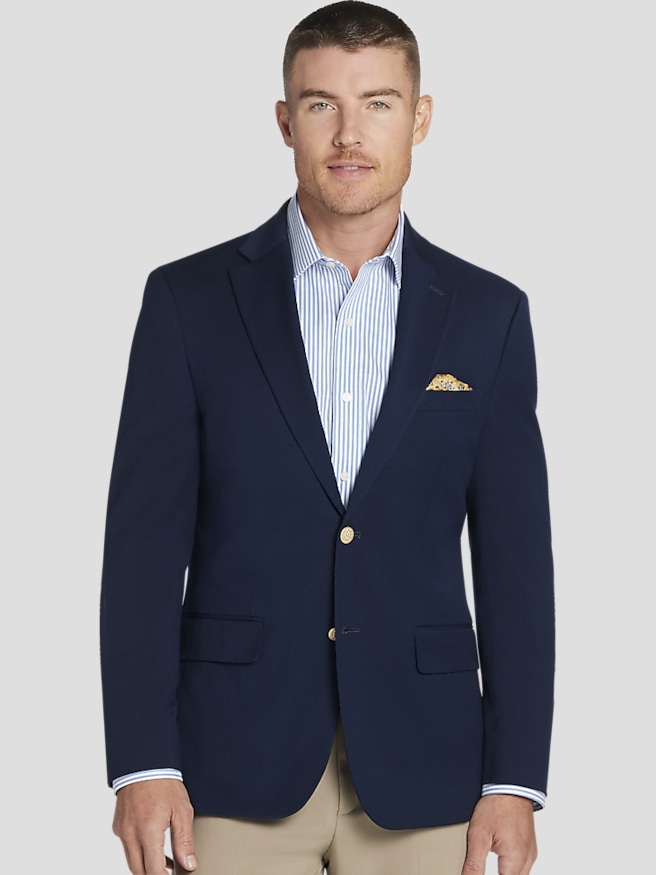
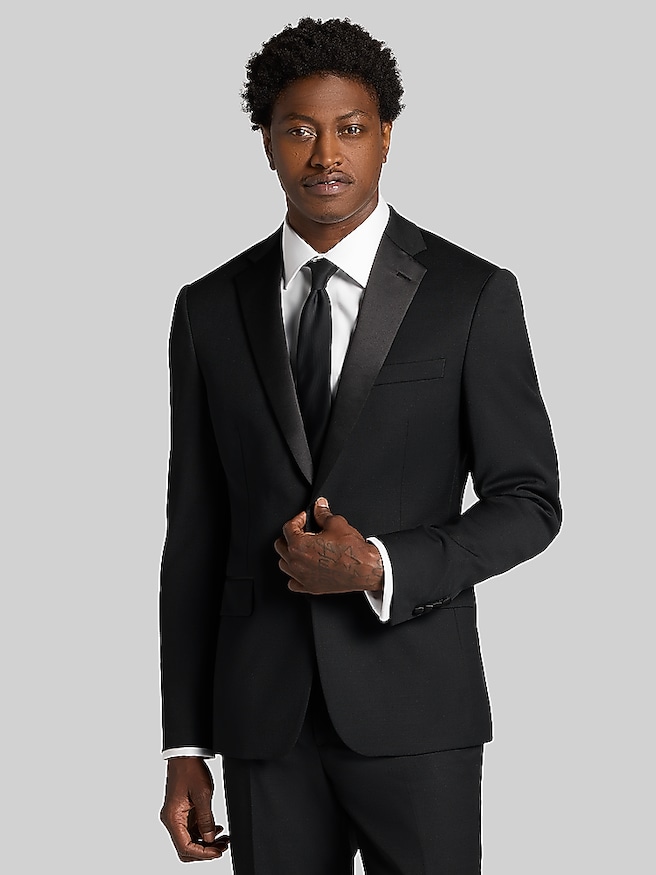
A formal outfit for men brings together tailored clothing, a dress shirt, polished footwear, and accessories suited to the occasion. The distinction between a dark suit and a tuxedo matters: a dark suit works for many weddings, ceremonies, and dressy receptions, while a tuxedo is the traditional choice for black-tie events. Black tie typically calls for a black or midnight blue tuxedo, a white formal shirt, a black bow tie, and black formal shoes. A black-tie-optional invitation generally allows either a tuxedo or a dark suit with a dress shirt and conservative tie. These distinctions give formal clothing its purpose, whether the wearer is standing beside a wedding couple, accepting an award, or arriving at an evening gala. A coordinated outfit looks intentional without relying on elaborate details. Jacket and trouser fabric, shirt collar, shoe finish, and the scale of a tie all contribute to that impression. Within Formal Wear For Men, familiar silhouettes take on distinct personalities through lapel shape, fabric texture, and color. Notch lapels have an understated character on suits; peak lapels bring a stronger line to the chest and shoulders. Shawl collars create a smooth, rounded frame commonly associated with tuxedos and dinner jackets. Satin or grosgrain facing on tuxedo lapels distinguishes them from the self-fabric lapels of most suits, and coordinating trim may appear along the trouser seams. Navy and charcoal suits offer a restrained foundation for occasions that do not require black tie, while subtle woven patterns add depth without dominating the outfit. A white shirt creates crisp contrast, and a neatly folded pocket square adds a small, deliberate finishing touch. The result can feel ceremonial, professional, or celebratory, but the essential appeal stays the same: clean lines and coordinated details that look appropriate in person and in photographs.
Fabric and construction influence how formal clothing drapes, moves, and holds its appearance through an event. Wool is a traditional suiting material because its fibers offer resilience, breathability, and a natural ability to recover from minor creasing. Smooth worsted wool creates a refined surface with a clear outline, while textured weaves bring more visual depth to a suit. Wool blends can combine that familiar appearance with other performance characteristics, depending on the fiber content and construction. A small amount of stretch may provide extra give through the seat, elbows, or knees, although stretch cannot compensate for a garment that is too tight. Fabric weight also affects structure: a cloth with some substance may hang more cleanly, while a lighter fabric can feel less substantial against the body. Neither weight nor softness alone determines quality or durability. Seams, lining, reinforcement at stress points, and the way the garment is maintained all play a role. Inside a tailored jacket, canvas or fused construction helps establish the shape through the chest and lapels; the visible result should be a smooth front rather than pulling or bubbling. Fit gives those materials room to perform. Jacket shoulders should sit close to the natural shoulder line without collapsing or extending noticeably beyond it. A buttoned jacket should follow the torso without forming sharp tension lines, and its collar should rest neatly against the shirt collar. Slim, tailored, and classic fits describe general silhouettes rather than universal measurements, so the same label may feel distinct across cuts. Trousers need enough room for sitting through a ceremony, walking between tables, and stepping onto a dance floor. The waistband should stay in place comfortably, with a smooth seat and a leg line that falls cleanly toward the shoe. Hem length can range from little or no break to a modest fold above the shoe, depending on the trouser width and intended look. Sleeve length, trouser hems, and modest adjustments through the jacket body can often be refined through alterations, while major shoulder changes are more involved.
Shirts, shoes, and accessories complete a formal outfit without needing to compete for attention. A dress shirt collar should frame the tie knot neatly and remain comfortable when fastened, especially during a long dinner or ceremony. Cotton offers a familiar crispness and comfortable feel, while cotton blends may provide easier maintenance; the care label gives the most reliable direction for a particular garment. A spread or point collar pairs naturally with many suits, while tuxedo shirts may feature a pleated or textured front and closures designed for studs. French cuffs accommodate cufflinks, adding a restrained detail at the wrist. For suit-based outfits, a silk tie with a subtle pattern can introduce color while keeping the overall effect composed. With traditional black tie, a black bow tie and appropriately styled formal shirt maintain the expected balance. Accessories are most effective when their proportions and finishes feel connected rather than perfectly matched: a pocket square can complement a tie without repeating its exact fabric or pattern. Footwear deserves equal attention because its shape and condition affect the whole silhouette. Black leather lace-ups are a dependable companion to dark formal suits, while highly polished formal shoes suit traditional tuxedo dressing. Comfortable socks that stay up and cover the leg when seated help preserve a continuous line beneath the trousers. For someone building a wardrobe around occasional ceremonies, versatile tailoring and restrained accessories can support repeated use across suitable dress codes. A frequent gala attendee may place more emphasis on dedicated evening attire and the finer points of tuxedo styling. Ties, pocket squares, and cufflinks can also make thoughtful gifts when the recipient’s preferences and occasion are known. After wear, a shaped hanger supports the jacket, and properly hung trousers help maintain their crease. Prompt attention to stains, gentle brushing when appropriate, and cleaning according to the garment label protect the fabric without unnecessary treatment. Shoes benefit from routine polishing and suitable shoe trees. These habits help formal clothing retain its shape and finish, preserving the details that make a carefully assembled outfit feel complete.