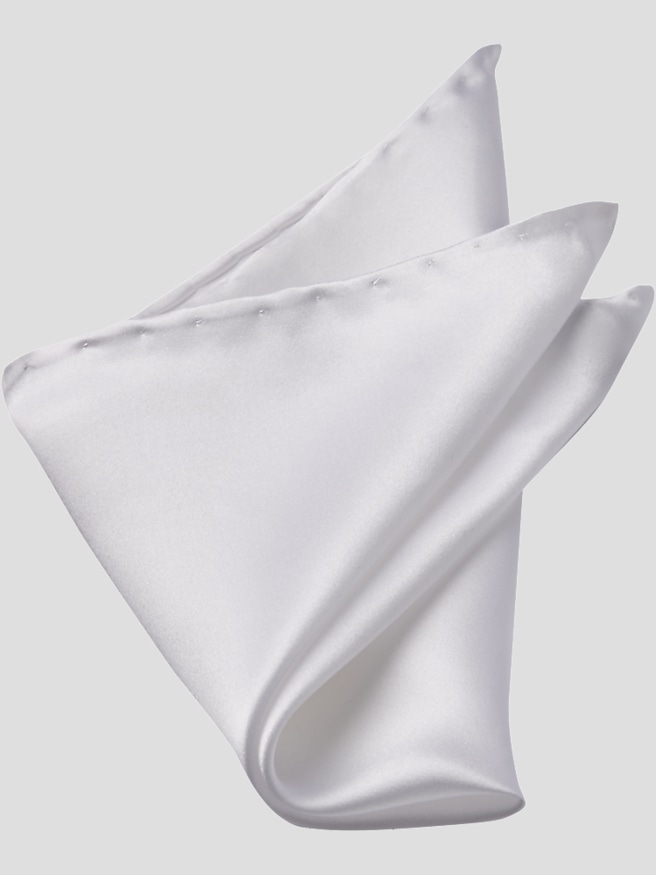
Floral pocket squares are decorative fabric accessories featuring flower or botanical patterns, worn in the breast pocket of a suit jacket, blazer, or sport coat. Designs can range from tiny, closely spaced blossoms to larger flowers mixed with curling stems and leaves. Unlike a boutonniere, which is pinned to a lapel, a floral pocket square brings its pattern to the jacket through a folded piece of cloth. That small area of color can change the character of an otherwise understated outfit without overwhelming the tailoring. A navy suit and white shirt, for example, take on a more expressive look with a blue floral square edged in cream. Burgundy flowers against a dark background can echo the color of a tie while adding depth that a solid accessory would not provide. Pattern scale makes a noticeable difference: small motifs tend to read as texture from across a room, while larger blooms create a clearer focal point. The amount of fabric visible above the pocket also affects the impression, allowing the same design to look restrained or more expressive. Color coordination works best when the square relates to the outfit rather than duplicates every element. Picking up a minor shade from a striped tie, checked jacket, or shirt creates a connection without making the accessories look like a matched set. With a patterned jacket, a floral design with an open background can provide enough visual separation to keep the combination clear. With a solid jacket, a denser print adds interest where there is little competing detail. Cream, navy, gray, and brown backgrounds offer familiar starting points, while brighter accents can bring personality to simple tailoring. The appeal lies in that balance: recognizable floral detail, a considered relationship to the surrounding colors, and just enough fabric on display to make the breast pocket feel finished.
Fabric influences how a floral pocket square looks, folds, and holds up to repeated wear. Silk generally offers a smooth surface and fluid drape, giving printed petals and leaves a softly shifting appearance as the fabric catches the light. Its suppleness works especially well with a relaxed puff, where curved folds reveal several parts of the pattern at once. Cotton usually has a more matte appearance and enough structure for a neat, controlled fold, making it an easy complement to everyday suits and sport coats. Linen brings visible texture and a crisp hand, with natural creasing that belongs to its character rather than signaling damage. Blended fabrics can combine qualities, so fiber content, thickness, and finish are more useful considerations than appearance alone. Size matters in relation to both the material and the jacket pocket. A thin square needs enough fabric to remain secure, while a thick square can create unwanted bulk if too much material is tucked into a shallow pocket. The goal is a comfortable shape that stays in place without pulling the pocket outward or distorting the jacket front. A narrow, straight fold emphasizes a border or a small strip of pattern; a puff or softly arranged points exposes more of the floral artwork. Finished edges also deserve attention because they help protect the fabric from fraying and may remain visible above the pocket. Neat stitching and secure hems support repeated folding, although delicate fabric still benefits from careful handling. Care should follow the attached label, since silk, cotton, linen, dyes, and decorative finishes can require distinct cleaning methods. Spot treatment, washing, pressing, or professional cleaning should never be assumed suitable for every square. Between wears, letting the fabric relax before storing it flat or loosely folded helps prevent persistent creases. Keeping it away from rough objects and avoiding forceful tugging at the edges can also reduce snags and unnecessary strain.
Floral pocket squares suit a broad range of occasions, from a restaurant dinner in a blazer to a wedding celebration with coordinated suits. For an office setting where tailored clothing is customary, a small botanical print in muted colors can add individuality without becoming the loudest part of the outfit. At an anniversary dinner or graduation celebration, a larger flower pattern can bring a more festive note to a familiar jacket. Wedding attire offers room for especially thoughtful color connections, whether the square belongs to the groom, a member of the wedding party, or a guest. Floral designs sit naturally alongside other Wedding Pocket Squares, with the pattern providing a way to reflect a celebration’s palette without reproducing it exactly. A cream background with blue blossoms, for instance, can relate to blue suits and pale shirts while remaining distinct from the tie. Coordinated wedding-party looks do not require every accessory to carry the same print; a shared accent color can create continuity while leaving room for individual taste. When a boutonniere is also part of the outfit, a quieter square can keep the jacket from looking crowded. Strict dress codes deserve priority, particularly when traditional formal accessories are expected. Beyond special events, a floral square can give a frequently worn sport coat a fresh point of interest, making it useful for someone who enjoys tailoring but prefers subtle changes over a completely new look. It can also be a thoughtful gift for a graduate, a partner celebrating an anniversary, or someone beginning a role that calls for suits. Unlike fitted clothing, it does not require a shirt size or waist measurement, though the recipient’s preferred colors and jacket styles still matter. A restrained print may suit someone building confidence with accessories, while an expressive botanical design can appeal to an established collector. The most useful choice feels connected to the wearer’s wardrobe and personality, with a fabric, pattern, and level of detail that can earn a place in regular rotation.