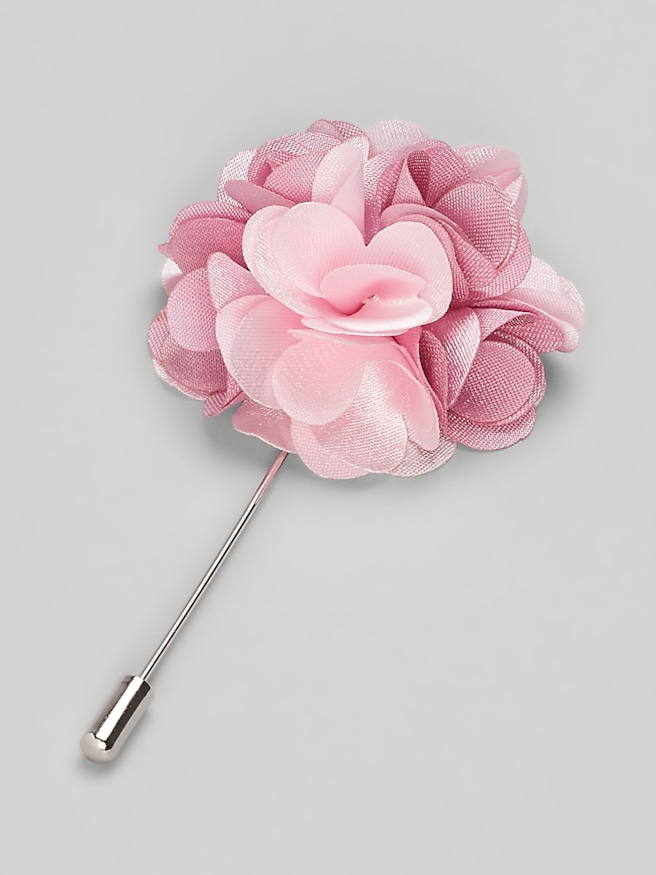
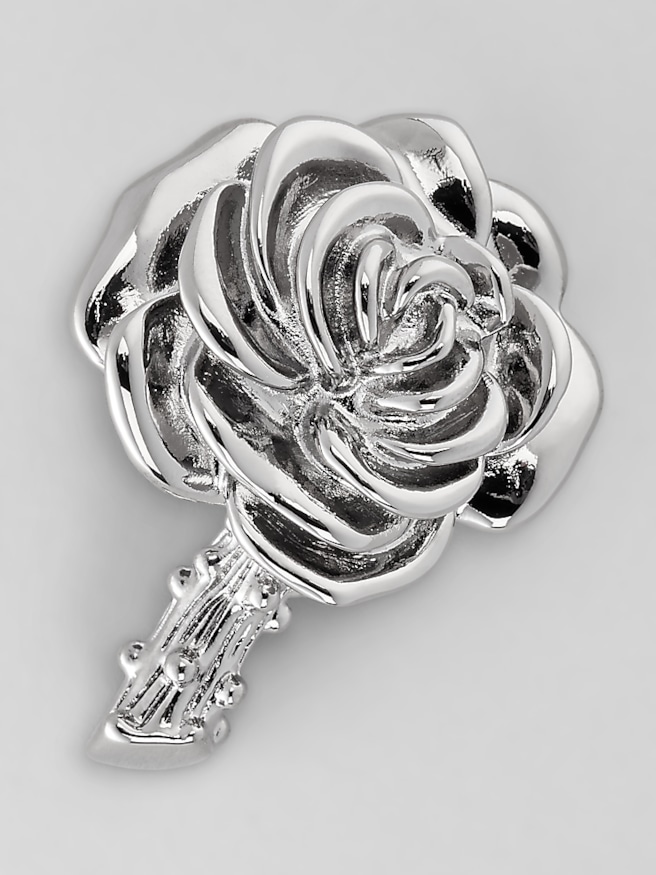
Floral lapel pins add a flower-shaped accent to a suit jacket, blazer, or sport coat without requiring a fresh bloom. Their appeal comes from the contrast between a tailored garment and an organic detail: layered petals soften a crisp lapel, while a sculpted metal flower adds definition with a smaller profile. Designs can suggest a rose, a rounded rosette, or a simpler blossom, with each shape creating a different impression. A tightly formed flower looks restrained and precise; an open, dimensional design makes a more noticeable statement. Within the broader category of Men's Lapel Pins, floral styles offer a distinctive way to bring color, texture, and personality to dressed-up clothing. They work especially well for weddings, prom, anniversary dinners, and receptions, where a small accessory can make a familiar suit feel more personal. A burgundy flower against a navy jacket creates depth without overwhelming the outfit, while an ivory accent on charcoal offers a quieter contrast. Tone-on-tone combinations are another option: a dark blue flower on a blue lapel draws attention through texture rather than a strong color difference. The pin does not need to match a tie or pocket square exactly. Repeating one subtle color from a patterned tie often creates a more natural connection than matching every accessory. When the pocket square already has a bold print, a simple floral shape can keep the overall look balanced. A floral lapel pin can also serve as an alternative to a fresh-flower boutonniere when the event permits, offering a decorative detail that can be worn again. For wedding parties, coordination with the planned floral palette helps the accessory feel intentional, though any designated boutonniere arrangement should take priority. The strongest combinations leave room for the flower to be noticed without making every part of the outfit compete.
Material influences both the appearance of a floral lapel pin and how it sits against the jacket. Silk can give fabric petals a soft sheen and a dressier finish, while linen typically brings a more visible weave and a relaxed texture. Felt creates fuller, matte shapes with clearly defined edges, and synthetic fabrics can support consistent folds and structured petals. Actual performance depends on the fabric, construction, and care rather than the fiber name alone. Metal floral pins offer a different effect, with sculpted surfaces or enamel color creating a flatter, more defined accent. Their finish may be polished, brushed, or subtly textured, which changes how much light the pin catches. On a smooth suit fabric, a matte flower introduces contrast; on a textured sport coat, a cleaner metal shape can stand out without adding more fabric texture. Proportion matters as much as material. A compact bloom generally sits comfortably on a narrow lapel, while a wider lapel can accommodate more dimension without looking crowded. The flower should rest within the visual space of the lapel rather than spill heavily over its edges or press against the shirt collar. Weight deserves attention, too, because a heavy pin may pull on a lightweight jacket and interrupt its clean line. Common fastening styles include a long stem with a protective end cap and shorter posts with a clutch backing. A secure closure, smooth edges, firmly attached petals, and a stable connection between the flower and its base are useful construction details to consider. Floral pins are conventionally worn on the left lapel, often at the lapel buttonhole when the fastening design allows. An existing buttonhole can help limit unnecessary punctures, but the attachment should suit the jacket’s construction. A tailor can advise on delicate fabric or a closed buttonhole. Whatever the fastening style, the point should be covered and the flower supported so it stays upright without twisting the lapel. A quick check while seated can reveal whether a larger design brushes the chin or shifts against the collar.
Care helps preserve the details that make a floral lapel pin distinctive, especially raised petals, textured edges, and decorative finishes. Fabric flowers generally benefit from gentle handling and dry storage where the bloom will not be crushed beneath heavier accessories. Removing the pin before cleaning or pressing a jacket protects both the accessory and the garment; direct heat and steam can alter shaped petals, adhesives, or finishes. Loose surface dust may be lifted carefully with a soft brush, provided the material and construction tolerate it. Metal components can often be wiped with a soft, dry cloth, while enamel and plated surfaces need protection from abrasive cleaners and rough rubbing. Material-specific care directions should take precedence over general advice, and soaking an assembled pin can damage parts that are not meant to get wet. After wear, fastening the cap or backing securely helps prevent a sharp point from catching nearby fabric. A small compartment or protective box keeps the flower separate from cuff links, tie bars, and other hard accessories that could scratch or flatten it. This repeat-wear potential makes floral lapel pins a thoughtful gift for someone who enjoys tailoring or wants a subtle way to personalize formal clothing. A recipient who favors navy and gray suits may get frequent use from a muted, versatile shade, while someone comfortable with patterned jackets may appreciate a more expressive bloom. For a graduation gift or a first formal event, a modest profile is easy to incorporate without requiring a complete change of wardrobe. For a wedding or milestone celebration, the flower’s color can carry a personal connection to the occasion. Dress codes still matter: a restrained accent usually integrates more easily into traditional settings, while a larger flower brings greater emphasis to a celebratory outfit. With a well-chosen scale, comfortable fastening, and material that complements the jacket, a floral lapel pin provides a small but memorable finishing detail.