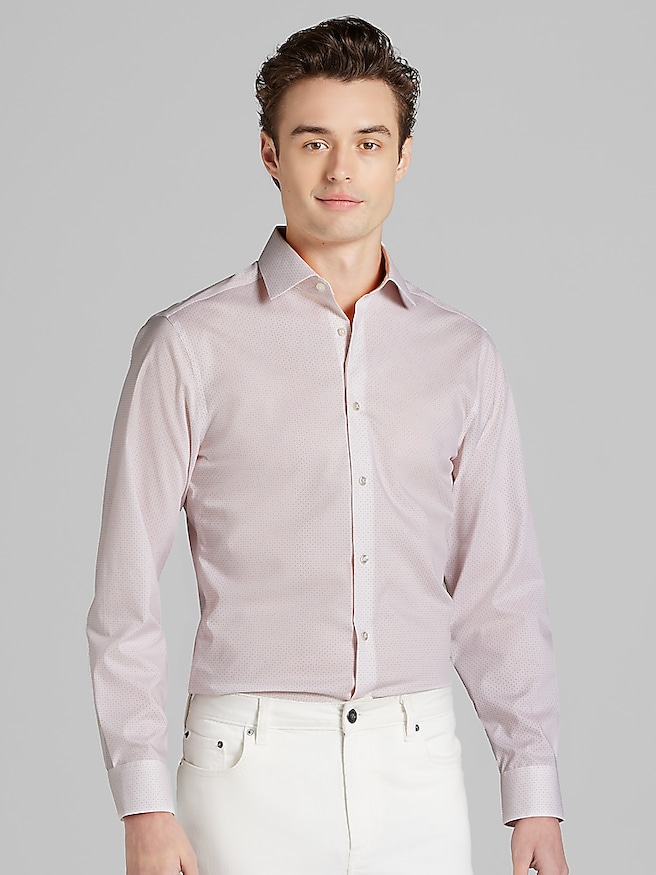
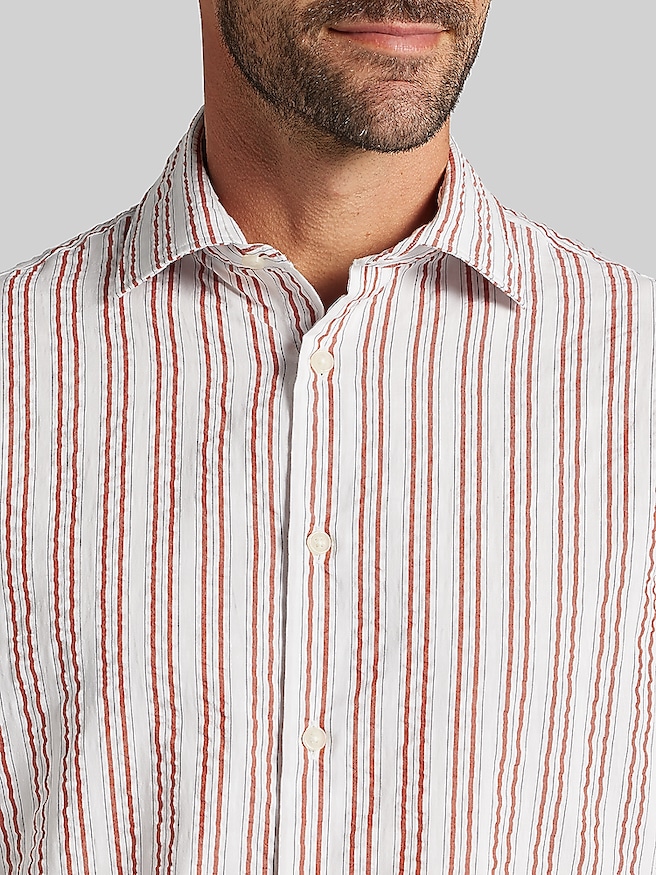
Floral clothes for Valentine’s Day bring a romantic note to men’s dressing through botanical prints, rich color, and details that feel expressive without looking like a costume. Small, closely spaced blossoms can read almost like a subtle texture, while larger flowers and trailing leaves create a more noticeable statement. Both approaches suit the occasion; the distinction is how much attention the pattern draws and how it works with the rest of an outfit. Burgundy, rose, and blush echo the holiday’s familiar palette, but florals in navy, cream, charcoal, or muted green offer an equally thoughtful alternative. A dark background gives a floral print depth and makes it easy to coordinate with tailored clothing. A lighter background creates more contrast, allowing the outlines and colors of the flowers to stand out. For a restaurant reservation, an anniversary celebration that falls on Valentine’s Day, or an evening at the theater, that balance can make patterned clothing feel polished rather than overly casual. Floral shirts are a natural focal point, while patterned accessories provide a smaller expression of the same theme. The overall effect depends as much on proportion as color: a fine botanical pattern can sit comfortably beneath a jacket, whereas an expansive print benefits from a little uninterrupted space. Solid layers and understated accessories give the flowers room to register without making every part of the outfit compete. For anyone putting together an outfit for Valentine’s Day, a useful starting point is one color pulled directly from the print and repeated elsewhere. A muted pink blossom against navy, for example, feels cohesive alongside deep blue tailoring and a pale neutral layer. Floral clothing also works beyond a romantic dinner, bringing personality to a gathering with friends, a dressy brunch, or a celebration where the dress code leaves room for individual taste. The appeal is a look that acknowledges the occasion while still feeling like something its wearer would choose on any other meaningful night out.
Fabric and construction shape how floral clothing looks and feels throughout an evening. Cotton generally offers breathability and a familiar, comfortable hand, although the weave and finish influence whether it looks crisp or relaxed. A smooth, tightly woven fabric tends to give printed petals and fine stems clear definition; a fabric with more surface texture can soften their edges and make the pattern feel less graphic. Linen has an airy character and a naturally rumpled appearance that suits relaxed settings, while silk brings fluidity and a subtle sheen often associated with dressier accessories. Blended fabrics may offer stretch, easier care, or improved resistance to wrinkling, depending on their composition and construction. The fiber label matters more than appearance alone when deciding what will feel comfortable through a meal, a performance, or several hours of conversation. Fit is just as important. Shoulder seams should sit near the shoulder’s edge, and the chest should allow comfortable movement without pulling the print apart across the buttons. A floral pattern can make strain especially noticeable because the lines and shapes become distorted when the fabric is stretched. Sleeves need enough room for bending the arms, and a collar worn closed should feel secure without pressing into the neck. Under tailoring, a trim but unrestricted fit helps fabric lie smoothly rather than bunching around the waist or upper arms. An untucked silhouette calls for a hem intended to sit neatly outside the waistband, while a tucked style needs enough length to stay in place when sitting or reaching. These practical differences matter in everyday moments: leaning across a dinner table, taking off a jacket, or standing for a photograph. The best result is not simply a sharp first impression but clothing that continues to hang well as the evening unfolds. Matte textures usually keep florals understated, while a noticeable sheen adds a dressier character that works best when other elements remain restrained.
Floral clothes can also make a thoughtful Valentine’s Day gift for a partner, spouse, or someone who enjoys adding character to familiar tailoring. A successful choice reflects the recipient’s habits rather than the giver’s preferred level of boldness. Someone who usually wears solid colors may feel most comfortable with a small-scale print in a familiar palette, while someone drawn to expressive clothing may appreciate larger blooms or stronger contrast. Existing wardrobe colors offer useful clues, as do preferred collar shapes, usual fits, and comfort with visible patterns. For gifting, a familiar silhouette with an unexpected floral detail often feels more personal and wearable than a complete departure from the recipient’s style. Longevity comes from that versatility as well as sound construction. Secure buttons, even stitching, neatly finished seams, and fabric that recovers its shape after gentle movement are useful qualities to consider. Pattern placement can affect the finished appearance, particularly near the front opening, collar, and cuffs, although exact matching is not standard across every design. Care requirements deserve the same attention as color and fit. Always follow the garment’s care label, since a cotton print, a stretch blend, and a silk accessory may need very different treatment. When machine washing is permitted, turning printed clothing inside out and using the recommended cycle can help limit surface abrasion. Appropriate drying and ironing settings help protect both the fibers and the appearance of the print; excessive heat can be especially troublesome for stretch fibers and delicate fabrics. Prompt attention to spills matters after dinner, but rubbing aggressively can spread a stain or damage the surface. Between wears, clean clothing benefits from storage that prevents crushing and prolonged exposure to direct sunlight. These small habits help preserve the details that make floral patterns appealing in the first place. Beyond Valentine’s Day, restrained botanical prints can fit into birthday dinners, wedding celebrations, and other occasions that call for personality with polish. That lasting usefulness gives floral clothing its strongest appeal: a romantic association for the holiday, with enough character and versatility to remain part of a well-used wardrobe.