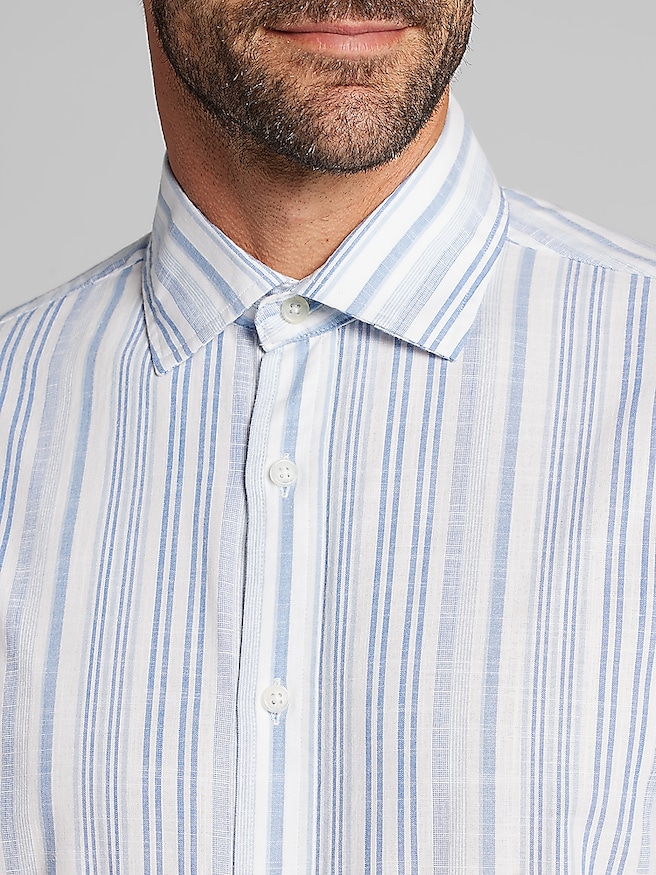
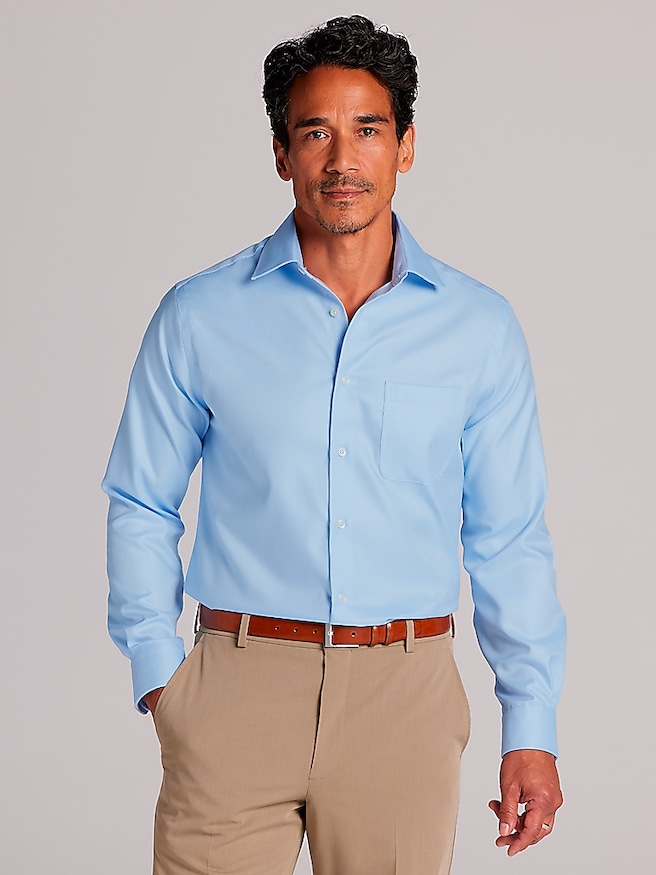
Striped casual shirts for Valentine’s Day bring pattern and personality to an outfit without making the occasion feel overly formal. Pink, red, burgundy, and white can echo the holiday’s familiar palette, while navy, gray, and blue stripes offer a quieter approach that works just as well beyond the celebration. A narrow pink stripe against a white background reads softer than a broad red-and-white pattern, so stripe width matters as much as color when choosing the overall effect. Fine stripes tend to blend together from a distance, creating an understated look; wider bands make the shirt a more noticeable part of the outfit. Vertical stripes emphasize the length of the shirt, while horizontal stripes give a casual knit shirt a more graphic character. Neither requires a complicated outfit to look intentional. Dark denim and clean sneakers suit a relaxed dinner, while chinos and leather loafers bring a little more polish to an evening reservation. For a coffee date followed by a gallery visit, a striped button-front shirt worn open over a plain crewneck can feel comfortable without looking like an afterthought. The most useful color combinations connect with clothing already in regular rotation: burgundy stripes alongside charcoal pants, pale pink with navy chinos, or blue and white with dark brown accessories. Keeping the rest of the outfit mostly solid lets the pattern stand out without competing with another print. A softly structured collar and an open neckline usually feel appropriate for a casual Valentine’s Day setting, especially when a tie would be too much. When the occasion calls for a crisper collar or a more formal finish, Dress Shirts For Valentine's Day offers a related direction to consider. The distinction is less about choosing a holiday costume and more about finding the right level of polish for the place, the plans, and the person wearing the shirt.
Fabric and fit shape how a striped casual shirt feels through an entire outing, from sitting across a small restaurant table to walking between stops afterward. Cotton is a familiar choice for its breathability and comfortable feel, though the weave affects its character. Cotton poplin generally has a smooth surface and a relatively crisp appearance, which can give narrow stripes clean definition. Oxford cloth has a more textured weave that lends itself to an easygoing button-down style. Knit fabrics offer a softer drape and natural flexibility, making a striped polo or another collared knit a practical option for someone who prefers less structure. Cotton blends may add stretch or help limit wrinkling, but the fiber label and care instructions are better indicators of performance than appearance alone. Fabric weight also influences coverage and drape; a pale shirt in a lightweight material may benefit from a smooth undershirt close to the wearer’s skin tone. A comfortable fit leaves enough room to reach forward, sit down, and bend the arms without pulling across the back or opening gaps between buttons. On a conventionally cut shirt, the shoulder seams should sit near the edges of the shoulders rather than slipping far down the upper arms. A slim silhouette follows the torso more closely, while a classic or relaxed cut leaves additional space through the chest and waist. Neither should feel restrictive when seated. Sleeve cuffs should close comfortably, and long sleeves should reach the wrist without covering much of the hand. Hem length deserves attention, too: a shorter casual hem can look balanced untucked, while a longer shirttail generally sits more neatly inside pants. Trying the shirt with its intended trousers helps clarify those proportions. For a tucked look, enough length to stay in place matters more than a perfectly flat appearance while standing still. Under a sweater or casual jacket, a shirt with less excess fabric through the sides can reduce bunching and keep the striped collar and cuffs looking tidy.
A striped casual shirt can also make a thoughtful Valentine’s Day gift for a partner, spouse, or someone who enjoys an easy, put-together wardrobe. The strongest starting point is the recipient’s everyday habits rather than the holiday palette alone. Someone who regularly wears muted neutrals may get more use from a fine burgundy stripe than a bold red pattern, while a person who enjoys expressive clothing might appreciate wider pink stripes with a contrasting collar. A favorite shirt can provide useful clues about size, sleeve length, and preferred cut, although sizing can vary across styles. Notice whether that shirt is usually tucked in, worn over a T-shirt, or paired with chinos; those details help connect the gift to real use. Soft fabric, comfortable seams, and a collar that sits well can matter more over time than a dramatic first impression. Durability depends partly on construction and partly on care. Even stitching, neatly finished seams, and securely attached buttons are useful details to examine. Stripe alignment at visible seams or pockets can contribute to a cohesive appearance, though some designs deliberately change the pattern’s direction. Before washing, check the care label for fiber-specific requirements rather than assuming all striped shirts need the same treatment. When permitted, cool-water washing with similar colors and a gentle detergent can help preserve color and reduce unnecessary wear. Promptly removing the shirt after washing or drying can limit stubborn creases, and avoiding excessive dryer heat can help protect fit and fabric. Woven shirts may benefit from light ironing at the recommended setting, particularly around the placket, collar, and cuffs; soft knits often need reshaping and the drying method specified on their labels. Hanging a woven shirt neatly or folding a knit without stretching the shoulders helps maintain its shape between wears. Those small habits support a shirt’s usefulness long after Valentine’s Day. The same stripes that feel festive over dinner can look entirely at home at a weekend brunch, a casual gathering, or an office with a relaxed dress code, giving the piece a place in everyday life rather than limiting it to one occasion.