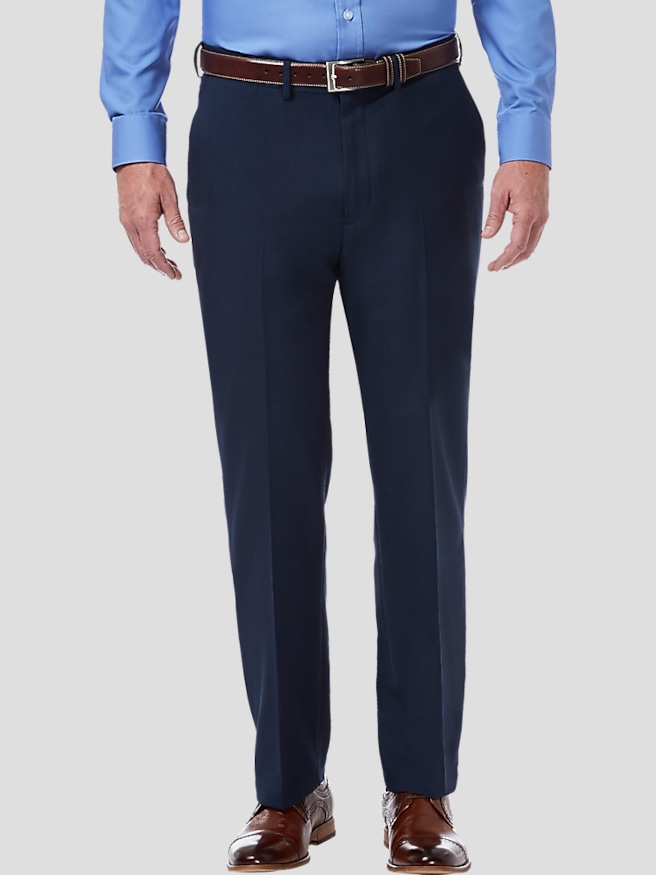
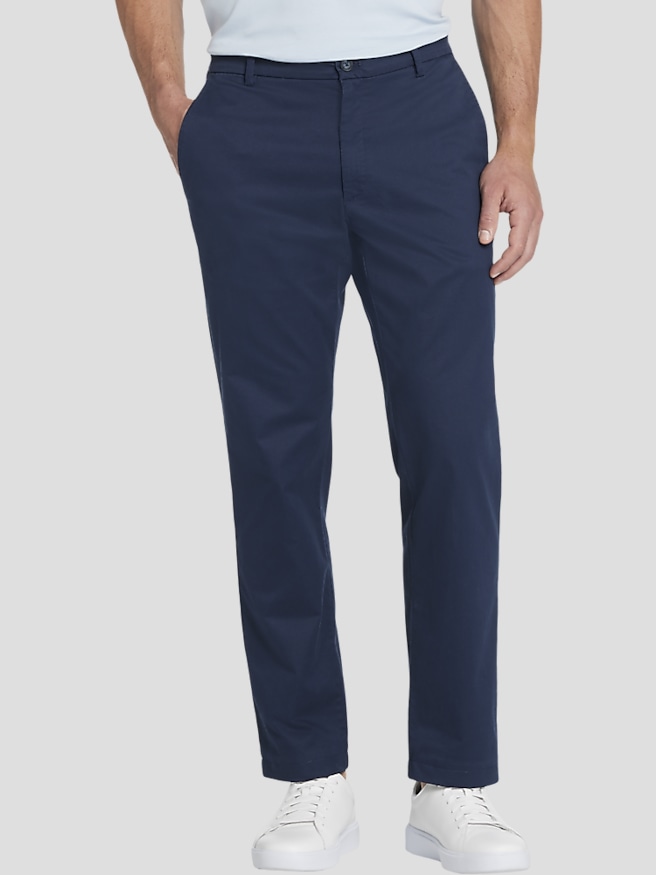
Flex waistband pants are designed to provide extra give at the waist, pairing the appearance of everyday trousers with flexibility for sitting, walking, bending, and moving between activities. That flexibility can come from concealed elastic sections, expandable waistband panels, or a more fully elasticized band, depending on the construction. Some styles have a traditional button-and-zip closure and belt loops, while others use a pull-on design or an adjustable drawstring. A flexible waist does not necessarily mean the entire garment stretches: the waistband and the fabric through the seat and legs can have different amounts of give. This distinction matters during an ordinary day, whether that means sitting through a long meeting, stepping into a car, or taking the stairs between appointments. The appeal is comfort that works with a finished outfit rather than requiring a switch to athletic clothing. Materials help determine how that comfort feels and how the pants look. Cotton-rich fabrics often have a familiar, soft hand and suit relaxed office outfits or weekend plans. Polyester blends can contribute shape retention and resistance to wrinkling, although performance varies with the weave and finishing. A small amount of spandex, also called elastane, can add stretch to the body of the fabric. Wool blends can provide a more tailored drape for dressier settings, with care requirements that deserve attention. Fabric weight and texture matter as much as fiber content: a smooth, closely woven cloth creates a different impression from a textured twill, even when both have flexible waist construction. For men who move between a desk, a commute, and an evening out, flex waistband pants can fill the space between structured dress trousers and relaxed casual pants. The most useful combination is a waistband that yields comfortably, fabric that falls cleanly, and a silhouette appropriate for the setting. Stretch should feel like a little breathing room, not like the pants are being held under tension throughout the day.
Fit remains essential, even with an accommodating waistband. Pants should sit securely at the intended position without digging into the middle, sliding down, or needing a tightly cinched belt to stay in place. The rise—the distance from the crotch seam to the top of the waistband—affects where that position falls and how the pants feel when seated. A waistband that seems comfortable while standing can feel different in a chair, especially if the rise is too short or the seat is too snug. Smooth front pockets, a fly that lies flat, and fabric that does not pull sharply across the thighs are useful signs of a balanced fit. Extra give at the waist cannot compensate for insufficient room through the hips or upper legs. Waist size and waistband flexibility also serve different purposes; Wide Waist Pants are relevant when a larger waist measurement is the priority, rather than stretch alone. Leg shape adds another layer to the overall effect. A straight leg provides a consistent line, while a tapered leg narrows toward the ankle; either can look neat when the proportions work with the wearer’s build and footwear. At the hem, excess fabric can bunch over shoes and interrupt an otherwise clean silhouette. For an office outfit, a tucked-in button-down shirt, a simple belt, and leather shoes can give flexible-waist trousers a polished appearance. With a knit polo or an untucked casual shirt, the same general category can feel more relaxed without looking unfinished. Dark neutral colors are easy to coordinate with patterned shirts and textured jackets, while lighter neutrals create contrast with deeper shirt colors. A visible drawstring or gathered waistband usually reads more casually than a flat-front design with concealed stretch. These details help determine whether the pants belong at a business-casual workplace, a family dinner, or a low-key gathering, regardless of how comfortable they feel.
Care and construction influence how well flex waistband pants hold their shape through repeated wear. The care label is the starting point because a washable cotton blend and a tailored wool blend may need very different treatment. For machine-washable fabrics, following the specified water temperature and drying method helps protect both the cloth and the waistband components. Excessive heat can be hard on stretch fibers and elastic, so hotter washing or drying is not automatically better. Pants labeled for professional cleaning should receive that care rather than being treated like ordinary wash-and-wear clothing. Wrinkle removal also depends on the fabric: an iron setting suitable for sturdy cotton may be too hot for a synthetic blend, and direct heat can leave shine on some surfaces. Beyond laundering, small construction details affect everyday durability. Even stitching, securely attached closures, reinforced pocket openings, and a waistband that returns to its original shape after gentle stretching all contribute to a dependable feel. Fabric recovery matters because pants that stretch comfortably should also settle back into shape instead of remaining loose at the knees or seat. Overstuffed pockets can distort the line of the pants and put unnecessary strain on seams, particularly when carrying a phone, keys, and a wallet together. Letting garments dry completely before storing them and hanging or folding them neatly helps preserve a presentable finish. For travel, flexible waist construction can make extended periods in a car, train, or airplane more comfortable, while wrinkle-resistant fabric may reduce the work needed before a dinner or appointment. For everyday wear, the benefit is simpler: room to sit comfortably at a desk or reach down to tie a shoe without an overly restrictive waistband. Flex waistband pants can also make a practical gift for a man who values comfortable, put-together clothing, provided his waist size, inseam, preferred rise, and usual dress expectations are known. The strongest choice balances ease of movement with the fit, fabric, and care routine that suit his daily life.